An Holistic Framework for Shared Design Leadership
Picture this: You’re in a meeting room at your tech company, and two people are having what looks like the same conversation about the same design problem. One is talking about whether the team has the right skills to tackle it. The other is diving deep into whether the solution actually solves the user’s problem. Same room, same problem, completely different lenses.
This is the beautiful, sometimes messy reality of having both a Design Manager and a Lead Designer on the same team. And if you’re wondering how to make this work without creating confusion, overlap, or the dreaded “too many cooks” scenario, you’re asking the right question.
The traditional answer has been to draw clean lines on an org chart. The Design Manager handles people, the Lead Designer handles craft. Problem solved, right? Except clean org charts are fantasy. In reality, both roles care deeply about team health, design quality, and shipping great work.
The magic happens when you embrace the overlap instead of fighting it—when you start thinking of your design org as a design organism.
The Anatomy of a Healthy Design Team
Here’s what I’ve learned from years of being on both sides of this equation: think of your design team as a living organism. The Design Manager tends to the mind (the psychological safety, the career growth, the team dynamics). The Lead Designer tends to the body (the craft skills, the design standards, the hands-on work that ships to users).
But just like mind and body aren’t completely separate systems, so, too, do these roles overlap in important ways. You can’t have a healthy person without both working in harmony. The trick is knowing where those overlaps are and how to navigate them gracefully.
When we look at how healthy teams actually function, three critical systems emerge. Each requires both roles to work together, but with one taking primary responsibility for keeping that system strong.
The Nervous System: People & Psychology
Primary caretaker: Design Manager
Supporting role: Lead Designer
The nervous system is all about signals, feedback, and psychological safety. When this system is healthy, information flows freely, people feel safe to take risks, and the team can adapt quickly to new challenges.
The Design Manager is the primary caretaker here. They’re monitoring the team’s psychological pulse, ensuring feedback loops are healthy, and creating the conditions for people to grow. They’re hosting career conversations, managing workload, and making sure no one burns out.
But the Lead Designer plays a crucial supporting role. They’re providing sensory input about craft development needs, spotting when someone’s design skills are stagnating, and helping identify growth opportunities that the Design Manager might miss.
Design Manager tends to:
- Career conversations and growth planning
- Team psychological safety and dynamics
- Workload management and resource allocation
- Performance reviews and feedback systems
- Creating learning opportunities
Lead Designer supports by:
- Providing craft-specific feedback on team member development
- Identifying design skill gaps and growth opportunities
- Offering design mentorship and guidance
- Signaling when team members are ready for more complex challenges
The Muscular System: Craft & Execution
Primary caretaker: Lead Designer
Supporting role: Design Manager
The muscular system is about strength, coordination, and skill development. When this system is healthy, the team can execute complex design work with precision, maintain consistent quality, and adapt their craft to new challenges.
The Lead Designer is the primary caretaker here. They’re setting design standards, providing craft coaching, and ensuring that shipping work meets the quality bar. They’re the ones who can tell you if a design decision is sound or if we’re solving the right problem.
But the Design Manager plays a crucial supporting role. They’re ensuring the team has the resources and support to do their best craft work, like proper nutrition and recovery time for an athlete.
Lead Designer tends to:
- Definition of design standards and system usage
- Feedback on what design work meets the standard
- Experience direction for the product
- Design decisions and product-wide alignment
- Innovation and craft advancement
Design Manager supports by:
- Ensuring design standards are understood and adopted across the team
- Confirming experience direction is being followed
- Supporting practices and systems that scale without bottlenecking
- Facilitating design alignment across teams
- Providing resources and removing obstacles to great craft work
The Circulatory System: Strategy & Flow
Shared caretakers: Both Design Manager and Lead Designer
The circulatory system is about how information, decisions, and energy flow through the team. When this system is healthy, strategic direction is clear, priorities are aligned, and the team can respond quickly to new opportunities or challenges.
This is where true partnership happens. Both roles are responsible for keeping the circulation strong, but they’re bringing different perspectives to the table.
Lead Designer contributes:
- User needs are met by the product
- Overall product quality and experience
- Strategic design initiatives
- Research-based user needs for each initiative
Design Manager contributes:
- Communication to team and stakeholders
- Stakeholder management and alignment
- Cross-functional team accountability
- Strategic business initiatives
Both collaborate on:
- Co-creation of strategy with leadership
- Team goals and prioritization approach
- Organizational structure decisions
- Success measures and frameworks
Keeping the Organism Healthy
The key to making this partnership sing is understanding that all three systems need to work together. A team with great craft skills but poor psychological safety will burn out. A team with great culture but weak craft execution will ship mediocre work. A team with both but poor strategic circulation will work hard on the wrong things.
Be Explicit About Which System You’re Tending
When you’re in a meeting about a design problem, it helps to acknowledge which system you’re primarily focused on. “I’m thinking about this from a team capacity perspective” (nervous system) or “I’m looking at this through the lens of user needs” (muscular system) gives everyone context for your input.
This isn’t about staying in your lane. It’s about being transparent as to which lens you’re using, so the other person knows how to best add their perspective.
Create Healthy Feedback Loops
The most successful partnerships I’ve seen establish clear feedback loops between the systems:
Nervous system signals to muscular system: “The team is struggling with confidence in their design skills” → Lead Designer provides more craft coaching and clearer standards.
Muscular system signals to nervous system: “The team’s craft skills are advancing faster than their project complexity” → Design Manager finds more challenging growth opportunities.
Both systems signal to circulatory system: “We’re seeing patterns in team health and craft development that suggest we need to adjust our strategic priorities.”
Handle Handoffs Gracefully
The most critical moments in this partnership are when something moves from one system to another. This might be when a design standard (muscular system) needs to be rolled out across the team (nervous system), or when a strategic initiative (circulatory system) needs specific craft execution (muscular system).
Make these transitions explicit. “I’ve defined the new component standards. Can you help me think through how to get the team up to speed?” or “We’ve agreed on this strategic direction. I’m going to focus on the specific user experience approach from here.”
Stay Curious, Not Territorial
The Design Manager who never thinks about craft, or the Lead Designer who never considers team dynamics, is like a doctor who only looks at one body system. Great design leadership requires both people to care about the whole organism, even when they’re not the primary caretaker.
This means asking questions rather than making assumptions. “What do you think about the team’s craft development in this area?” or “How do you see this impacting team morale and workload?” keeps both perspectives active in every decision.
When the Organism Gets Sick
Even with clear roles, this partnership can go sideways. Here are the most common failure modes I’ve seen:
System Isolation
The Design Manager focuses only on the nervous system and ignores craft development. The Lead Designer focuses only on the muscular system and ignores team dynamics. Both people retreat to their comfort zones and stop collaborating.
The symptoms: Team members get mixed messages, work quality suffers, morale drops.
The treatment: Reconnect around shared outcomes. What are you both trying to achieve? Usually it’s great design work that ships on time from a healthy team. Figure out how both systems serve that goal.
Poor Circulation
Strategic direction is unclear, priorities keep shifting, and neither role is taking responsibility for keeping information flowing.
The symptoms: Team members are confused about priorities, work gets duplicated or dropped, deadlines are missed.
The treatment: Explicitly assign responsibility for circulation. Who’s communicating what to whom? How often? What’s the feedback loop?
Autoimmune Response
One person feels threatened by the other’s expertise. The Design Manager thinks the Lead Designer is undermining their authority. The Lead Designer thinks the Design Manager doesn’t understand craft.
The symptoms: Defensive behavior, territorial disputes, team members caught in the middle.
The treatment: Remember that you’re both caretakers of the same organism. When one system fails, the whole team suffers. When both systems are healthy, the team thrives.
The Payoff
Yes, this model requires more communication. Yes, it requires both people to be secure enough to share responsibility for team health. But the payoff is worth it: better decisions, stronger teams, and design work that’s both excellent and sustainable.
When both roles are healthy and working well together, you get the best of both worlds: deep craft expertise and strong people leadership. When one person is out sick, on vacation, or overwhelmed, the other can help maintain the team’s health. When a decision requires both the people perspective and the craft perspective, you’ve got both right there in the room.
Most importantly, the framework scales. As your team grows, you can apply the same system thinking to new challenges. Need to launch a design system? Lead Designer tends to the muscular system (standards and implementation), Design Manager tends to the nervous system (team adoption and change management), and both tend to circulation (communication and stakeholder alignment).
The Bottom Line
The relationship between a Design Manager and Lead Designer isn’t about dividing territories. It’s about multiplying impact. When both roles understand they’re tending to different aspects of the same healthy organism, magic happens.
The mind and body work together. The team gets both the strategic thinking and the craft excellence they need. And most importantly, the work that ships to users benefits from both perspectives.
So the next time you’re in that meeting room, wondering why two people are talking about the same problem from different angles, remember: you’re watching shared leadership in action. And if it’s working well, both the mind and body of your design team are getting stronger.
Wayward Pines Season 1 Remains All-Time Great Sci-Fi TV

This article contains spoilers for the first season of Wayward Pines. Premiering in 2015, the first season of Fox’s Wayward Pines provided the prototype for excellent, gripping science fiction television … even if its second and final season offers an ending some consider flawed. The show is set in a seemingly idyllic rural Idaho town, […]
The post Wayward Pines Season 1 Remains All-Time Great Sci-Fi TV appeared first on Den of Geek.
This article contains spoilers for the first season of Wayward Pines.
Premiering in 2015, the first season of Fox’s Wayward Pines provided the prototype for excellent, gripping science fiction television … even if its second and final season offers an ending some consider flawed.
The show is set in a seemingly idyllic rural Idaho town, Wayward Pines. It follows Secret Service agent Ethan Burke (Matt Dillon) who investigates the disappearances of his two colleagues. After a serious accident, he wakes up in a tightly-controlled community where there is no escape and nothing is as it seems. The series’ overarching story doesn’t rely on aliens or high-tech gadgetry to provoke questions. Instead, following the investigation along with Ethan leads us to ask: What if safety is a lie? What if control looks like comfort? How far will people go to protect peace? What if the monster of the story isn’t outside the fence, but inside the walls?
cnx({
playerId: “106e33c0-3911-473c-b599-b1426db57530”,
}).render(“0270c398a82f44f49c23c16122516796”);
});
From the jump, the M. Night Shyamalan-produced show (he also directed the pilot) drops us into a place that feels almost too perfect to believe. Every smile, every interaction, feels slightly off. Stale. Enforced. The first episode sets the tone too – part mystery thriller, part warning. Its sci-fi concept doesn’t lean on spectacle. It dares us to look inward, exposing how easily we trade autonomy for the illusion of peace. This is storytelling that works psychologically, threading its themes through every moment. It’s revelation packaged as a slow, creeping unravel.
Wayward Pines doesn’t just borrow from shows like Twin Peaks or Lost, it forges a lane of its own. It stands as an intentional, psychological experiment. The brilliance of season one is how those ideas aren’t just stated. They’re built into the town, its design, its people, and its choices. It’s a subtle detonation of our own psyche.
Wayward Pines was a sharp and unsettling mirror that reflected how easily we mistake control for safety and how fragile our idea of peace really is.
And it dares us to witness it.
Comfort Comes at a Cost
“The rules are simple. Follow them, and you’ll be safe.”
— Sheriff Pope
The illusion of comfort in Wayward Pines is maintained by compliance. The titular location is a perfect town – warm and orderly – but built on curfews, disappearances, and obedience. People vanish for stepping out of line and everyone accepts it as necessary.
In the show’s second episode “Do Not Discuss Your Life Before,” we learn that even mentioning the outside world is punishable by public execution. It’s an overt way of silencing pushback and it works as people like Kate (Carla Gugino), Ethan’s former partner both professionally and romantically, fake normalcy to survive, even after being discovered by Ethan. In episode six “Choices,” the founder and leader of Wayward Pines, David Pilcher (Toby Jones), openly says comfort must be manufactured by any means, including deception and death. As the architect, he controls surveillance and memory suppression, believing that this is the only way to save what’s left of humanity.
That mirrors real-life systems of privilege built on ignorance, fear, and a forced illusion of better, even as dysfunction brews behind closed doors. These are systems we are actively a part of today, whether we are aware of them or caught in a cycle of group think for the greater good ourselves. These systems look like redlined communities that sell prosperity while quietly excluding whom they consider “undesirable.” Company towns like Pullman, Illinois or mining towns in the South that provided the spaces to live, but completely controlled everything. This even includes sundown town culture, enforcing peace by exclusion, and Patriot Act mass surveillance that reframed being watched as a safety net.
Evolution Isn’t Clean. It’s Chaotic.
“They’re not animals. They’re what came after us.”
— David Pilcher
What’s outside the fence refuses to stay in the past. The Abbies – faster, stronger, and evolved – are what humanity became while the town stayed frozen in time.
In “Choices,” Pilcher admits their threat isn’t their behavior, but what they represent. In “The Friendliest Place on Earth” and “A Reckoning,” we see the Abbies strategize and communicate, pushing us to question whether they’re truly monstrous or simply the next step in the process of nature. Pilcher was perhaps a fan of the Richard Mattheson novel I Am Legend because his sentiments on Abbies hold a similar weight. It’s almost as if he was acknowledging that, while the town clung to an outdated version of self, the Abbies were reclaiming space. They threatened humanity by surpassing it, evolving consciously as well. In “Cycle,” one even locks eyes with Ethan as if he recognizes him. It isn’t like prey meeting a predator. It’s two beings acknowledging a greater ecosystem and looking to define their coexistence together. This human, non-animalistic behavior is Pilcher’s theories rooted in fear meeting the actuality of the next level of humanity, face-to-face. Literally.
The town denies this evolution and tries to control it. Nature, however, doesn’t ask permission to do so and that rejection of growth is what dooms the town.
And if we respond in the same way, rejecting what challenges us or threatens our comfort, we risk collapsing under our own rigidity. Empires have fallen from the inside out. Our environments have been permanently damaged by short term and short sighted industries. Evolution means change and when we build systems or cling to ideals that only accommodate the familiar, extinction is no longer a “what if.” It becomes an invitation.
Fear Stops Us from Becoming More
Fear isn’t just a tactic. It takes on the look and feel of tradition and culture. In “Choices” and “The Friendliest Place on Earth,” resistance such as asking about the town’s origin, questioning the rules, or attempting escape is met with suppression. In “Betrayal,” Harold (Tom Stevens), once part of the underground resistance that sought to expose the town from the top down, breaks while under interrogation. His fear of torture overrides the remaining fight he had left. He is then publicly executed, his legacy rewritten entirely, and the town sinks even further into the acceptance of ritualized violence as the tax for rebellion.
In “A Reckoning,” children are taught to report their own parents and see public executions as educational tools. The consistent programming is the installation of obedience-laced procedures. They’re effective too as one student even criticizes a teacher for being too lenient.
Ben (Charlie Tahan), the son of Ethan Burke, has internal conflict between the indoctrination of school and the resistance of his parents, showing that freedom and introspection still whisper. But in “Cycle,” after Ethan’s death, the town adapts. The First Generation, indoctrinated for this moment, steps in and the system tightens its grip. An indictment of where we fear is seen as functional and no longer has to be taught.
Pilcher believed he was saving humanity by restarting it. What he really did was recreate a past that had already failed. The town mimics a postcard-perfect, 1950s America made up of rigid roles, arranged families, curated jobs, enforced identities.
In “Betrayal,” Theresa (Shannyn Sossamon), Ethan’s wife and representative of quiet resistance, gains access to restricted files through Megan (Hope Davis), the head of Wayward Pines Academy. Megan’s attempt to indoctrinate Theresa by means of community infrastructure backfires and Theresa uncovers fabricated records. Families don’t exist naturally. They’re assigned. Even Ben and Amy’s budding relationship is subtly guided, less about love and more about reproduction.
Pilcher isn’t a villain in the traditional sense. He’s a preservationist who doesn’t see that preservation without progress is regression. But the need to know, to question, and ultimately uncover what’s real isn’t something that just goes away for someone driven by the truth. Theresa is stubborn in her pursuit of it. She listens to the internal monologue of her human spirit, the one we all have in us. She considers her role in the revolution and joins it quietly. Her resistance was fueled by her spirit even when obedience was weaved throughout the culture of the town.
Utopia Built on Obedience Is a Dystopia
The scariest part of Wayward Pines isn’t the fence or the Abbies. It’s that no one needs those fences to stay imprisoned. The real prison is belief. In “Cycle,” after Ethan’s sacrifice, Ben wakes up to find the First Generation in control. Everything remains. There’s no reset. Just restoration.
Amy, who once symbolized possibility, now smiles because she believes everything is finally stable. Crushing people wasn’t the end goal. Convincing them the cage is safe is the real win. The ending is a rebirth of the cycle continuing, but with different and elevated players.
Wayward Pines isn’t a story of revolution or even hope. It’s a parable about systems raising people to protect it without question. A scary reality we are more than capable of being a part of.
Wayward Pines season 1 isn’t just underrated, it’s misunderstood. Beneath the genre turns lies one of the most psychologically-layered sci-fi stories in recent memory. It warns what happens when we mistake obedience for morality, control for peace, and regression for safety. Its themes are timely, terrifying, and eerily familiar.
This is what the best sci-fi does. It mirrors us. Think The Twilight Zone, Get Out, Black Mirror, and even more recently, Sinners. Stories that challenge the comfort of the status quo and force us to see the systems we’re already living in.Wayward Pines saw it all clearly. And it dared to ask: What happens if we don’t?
The post Wayward Pines Season 1 Remains All-Time Great Sci-Fi TV appeared first on Den of Geek.
Avatar: How Friendship Forged the Sound and Music of The Last Airbender
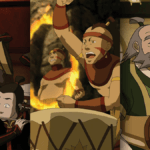
This article is presented in partnership with Nickelodeon and appears in the Den of Geek x Avatar: The Last Airbender special edition releasing in mid-July. For two decades, the lush songs and sounds of Avatar: The Last Airbender have immersed viewers in the fantasy world of the groundbreaking animated series. However, you might be surprised to learn that the […]
The post Avatar: How Friendship Forged the Sound and Music of The Last Airbender appeared first on Den of Geek.
This article contains spoilers for the first season of Wayward Pines.
Premiering in 2015, the first season of Fox’s Wayward Pines provided the prototype for excellent, gripping science fiction television … even if its second and final season offers an ending some consider flawed.
The show is set in a seemingly idyllic rural Idaho town, Wayward Pines. It follows Secret Service agent Ethan Burke (Matt Dillon) who investigates the disappearances of his two colleagues. After a serious accident, he wakes up in a tightly-controlled community where there is no escape and nothing is as it seems. The series’ overarching story doesn’t rely on aliens or high-tech gadgetry to provoke questions. Instead, following the investigation along with Ethan leads us to ask: What if safety is a lie? What if control looks like comfort? How far will people go to protect peace? What if the monster of the story isn’t outside the fence, but inside the walls?
cnx({
playerId: “106e33c0-3911-473c-b599-b1426db57530”,
}).render(“0270c398a82f44f49c23c16122516796”);
});
From the jump, the M. Night Shyamalan-produced show (he also directed the pilot) drops us into a place that feels almost too perfect to believe. Every smile, every interaction, feels slightly off. Stale. Enforced. The first episode sets the tone too – part mystery thriller, part warning. Its sci-fi concept doesn’t lean on spectacle. It dares us to look inward, exposing how easily we trade autonomy for the illusion of peace. This is storytelling that works psychologically, threading its themes through every moment. It’s revelation packaged as a slow, creeping unravel.
Wayward Pines doesn’t just borrow from shows like Twin Peaks or Lost, it forges a lane of its own. It stands as an intentional, psychological experiment. The brilliance of season one is how those ideas aren’t just stated. They’re built into the town, its design, its people, and its choices. It’s a subtle detonation of our own psyche.
Wayward Pines was a sharp and unsettling mirror that reflected how easily we mistake control for safety and how fragile our idea of peace really is.
And it dares us to witness it.
Comfort Comes at a Cost
“The rules are simple. Follow them, and you’ll be safe.”
— Sheriff Pope
The illusion of comfort in Wayward Pines is maintained by compliance. The titular location is a perfect town – warm and orderly – but built on curfews, disappearances, and obedience. People vanish for stepping out of line and everyone accepts it as necessary.
In the show’s second episode “Do Not Discuss Your Life Before,” we learn that even mentioning the outside world is punishable by public execution. It’s an overt way of silencing pushback and it works as people like Kate (Carla Gugino), Ethan’s former partner both professionally and romantically, fake normalcy to survive, even after being discovered by Ethan. In episode six “Choices,” the founder and leader of Wayward Pines, David Pilcher (Toby Jones), openly says comfort must be manufactured by any means, including deception and death. As the architect, he controls surveillance and memory suppression, believing that this is the only way to save what’s left of humanity.
That mirrors real-life systems of privilege built on ignorance, fear, and a forced illusion of better, even as dysfunction brews behind closed doors. These are systems we are actively a part of today, whether we are aware of them or caught in a cycle of group think for the greater good ourselves. These systems look like redlined communities that sell prosperity while quietly excluding whom they consider “undesirable.” Company towns like Pullman, Illinois or mining towns in the South that provided the spaces to live, but completely controlled everything. This even includes sundown town culture, enforcing peace by exclusion, and Patriot Act mass surveillance that reframed being watched as a safety net.
Evolution Isn’t Clean. It’s Chaotic.
“They’re not animals. They’re what came after us.”
— David Pilcher
What’s outside the fence refuses to stay in the past. The Abbies – faster, stronger, and evolved – are what humanity became while the town stayed frozen in time.
In “Choices,” Pilcher admits their threat isn’t their behavior, but what they represent. In “The Friendliest Place on Earth” and “A Reckoning,” we see the Abbies strategize and communicate, pushing us to question whether they’re truly monstrous or simply the next step in the process of nature. Pilcher was perhaps a fan of the Richard Mattheson novel I Am Legend because his sentiments on Abbies hold a similar weight. It’s almost as if he was acknowledging that, while the town clung to an outdated version of self, the Abbies were reclaiming space. They threatened humanity by surpassing it, evolving consciously as well. In “Cycle,” one even locks eyes with Ethan as if he recognizes him. It isn’t like prey meeting a predator. It’s two beings acknowledging a greater ecosystem and looking to define their coexistence together. This human, non-animalistic behavior is Pilcher’s theories rooted in fear meeting the actuality of the next level of humanity, face-to-face. Literally.
The town denies this evolution and tries to control it. Nature, however, doesn’t ask permission to do so and that rejection of growth is what dooms the town.
And if we respond in the same way, rejecting what challenges us or threatens our comfort, we risk collapsing under our own rigidity. Empires have fallen from the inside out. Our environments have been permanently damaged by short term and short sighted industries. Evolution means change and when we build systems or cling to ideals that only accommodate the familiar, extinction is no longer a “what if.” It becomes an invitation.
Fear Stops Us from Becoming More
Fear isn’t just a tactic. It takes on the look and feel of tradition and culture. In “Choices” and “The Friendliest Place on Earth,” resistance such as asking about the town’s origin, questioning the rules, or attempting escape is met with suppression. In “Betrayal,” Harold (Tom Stevens), once part of the underground resistance that sought to expose the town from the top down, breaks while under interrogation. His fear of torture overrides the remaining fight he had left. He is then publicly executed, his legacy rewritten entirely, and the town sinks even further into the acceptance of ritualized violence as the tax for rebellion.
In “A Reckoning,” children are taught to report their own parents and see public executions as educational tools. The consistent programming is the installation of obedience-laced procedures. They’re effective too as one student even criticizes a teacher for being too lenient.
Ben (Charlie Tahan), the son of Ethan Burke, has internal conflict between the indoctrination of school and the resistance of his parents, showing that freedom and introspection still whisper. But in “Cycle,” after Ethan’s death, the town adapts. The First Generation, indoctrinated for this moment, steps in and the system tightens its grip. An indictment of where we fear is seen as functional and no longer has to be taught.
Pilcher believed he was saving humanity by restarting it. What he really did was recreate a past that had already failed. The town mimics a postcard-perfect, 1950s America made up of rigid roles, arranged families, curated jobs, enforced identities.
In “Betrayal,” Theresa (Shannyn Sossamon), Ethan’s wife and representative of quiet resistance, gains access to restricted files through Megan (Hope Davis), the head of Wayward Pines Academy. Megan’s attempt to indoctrinate Theresa by means of community infrastructure backfires and Theresa uncovers fabricated records. Families don’t exist naturally. They’re assigned. Even Ben and Amy’s budding relationship is subtly guided, less about love and more about reproduction.
Pilcher isn’t a villain in the traditional sense. He’s a preservationist who doesn’t see that preservation without progress is regression. But the need to know, to question, and ultimately uncover what’s real isn’t something that just goes away for someone driven by the truth. Theresa is stubborn in her pursuit of it. She listens to the internal monologue of her human spirit, the one we all have in us. She considers her role in the revolution and joins it quietly. Her resistance was fueled by her spirit even when obedience was weaved throughout the culture of the town.
Utopia Built on Obedience Is a Dystopia
The scariest part of Wayward Pines isn’t the fence or the Abbies. It’s that no one needs those fences to stay imprisoned. The real prison is belief. In “Cycle,” after Ethan’s sacrifice, Ben wakes up to find the First Generation in control. Everything remains. There’s no reset. Just restoration.
Amy, who once symbolized possibility, now smiles because she believes everything is finally stable. Crushing people wasn’t the end goal. Convincing them the cage is safe is the real win. The ending is a rebirth of the cycle continuing, but with different and elevated players.
Wayward Pines isn’t a story of revolution or even hope. It’s a parable about systems raising people to protect it without question. A scary reality we are more than capable of being a part of.
Wayward Pines season 1 isn’t just underrated, it’s misunderstood. Beneath the genre turns lies one of the most psychologically-layered sci-fi stories in recent memory. It warns what happens when we mistake obedience for morality, control for peace, and regression for safety. Its themes are timely, terrifying, and eerily familiar.
This is what the best sci-fi does. It mirrors us. Think The Twilight Zone, Get Out, Black Mirror, and even more recently, Sinners. Stories that challenge the comfort of the status quo and force us to see the systems we’re already living in.Wayward Pines saw it all clearly. And it dared to ask: What happens if we don’t?
The post Wayward Pines Season 1 Remains All-Time Great Sci-Fi TV appeared first on Den of Geek.
Wedding Crashers and a Lost World When Comedies Ruled Our Culture

Wedding Crashers just turned 20. That seems hard to believe because of how relatively recent the movie might feel to anyone who was at least in high or secondary school in 2005. Yet unto itself, the movie has long since transformed into a relic of a bygone age. In one sense, the humor of the […]
The post Wedding Crashers and a Lost World When Comedies Ruled Our Culture appeared first on Den of Geek.
This article contains spoilers for the first season of Wayward Pines.
Premiering in 2015, the first season of Fox’s Wayward Pines provided the prototype for excellent, gripping science fiction television … even if its second and final season offers an ending some consider flawed.
The show is set in a seemingly idyllic rural Idaho town, Wayward Pines. It follows Secret Service agent Ethan Burke (Matt Dillon) who investigates the disappearances of his two colleagues. After a serious accident, he wakes up in a tightly-controlled community where there is no escape and nothing is as it seems. The series’ overarching story doesn’t rely on aliens or high-tech gadgetry to provoke questions. Instead, following the investigation along with Ethan leads us to ask: What if safety is a lie? What if control looks like comfort? How far will people go to protect peace? What if the monster of the story isn’t outside the fence, but inside the walls?
cnx({
playerId: “106e33c0-3911-473c-b599-b1426db57530”,
}).render(“0270c398a82f44f49c23c16122516796”);
});
From the jump, the M. Night Shyamalan-produced show (he also directed the pilot) drops us into a place that feels almost too perfect to believe. Every smile, every interaction, feels slightly off. Stale. Enforced. The first episode sets the tone too – part mystery thriller, part warning. Its sci-fi concept doesn’t lean on spectacle. It dares us to look inward, exposing how easily we trade autonomy for the illusion of peace. This is storytelling that works psychologically, threading its themes through every moment. It’s revelation packaged as a slow, creeping unravel.
Wayward Pines doesn’t just borrow from shows like Twin Peaks or Lost, it forges a lane of its own. It stands as an intentional, psychological experiment. The brilliance of season one is how those ideas aren’t just stated. They’re built into the town, its design, its people, and its choices. It’s a subtle detonation of our own psyche.
Wayward Pines was a sharp and unsettling mirror that reflected how easily we mistake control for safety and how fragile our idea of peace really is.
And it dares us to witness it.
Comfort Comes at a Cost
“The rules are simple. Follow them, and you’ll be safe.”
— Sheriff Pope
The illusion of comfort in Wayward Pines is maintained by compliance. The titular location is a perfect town – warm and orderly – but built on curfews, disappearances, and obedience. People vanish for stepping out of line and everyone accepts it as necessary.
In the show’s second episode “Do Not Discuss Your Life Before,” we learn that even mentioning the outside world is punishable by public execution. It’s an overt way of silencing pushback and it works as people like Kate (Carla Gugino), Ethan’s former partner both professionally and romantically, fake normalcy to survive, even after being discovered by Ethan. In episode six “Choices,” the founder and leader of Wayward Pines, David Pilcher (Toby Jones), openly says comfort must be manufactured by any means, including deception and death. As the architect, he controls surveillance and memory suppression, believing that this is the only way to save what’s left of humanity.
That mirrors real-life systems of privilege built on ignorance, fear, and a forced illusion of better, even as dysfunction brews behind closed doors. These are systems we are actively a part of today, whether we are aware of them or caught in a cycle of group think for the greater good ourselves. These systems look like redlined communities that sell prosperity while quietly excluding whom they consider “undesirable.” Company towns like Pullman, Illinois or mining towns in the South that provided the spaces to live, but completely controlled everything. This even includes sundown town culture, enforcing peace by exclusion, and Patriot Act mass surveillance that reframed being watched as a safety net.
Evolution Isn’t Clean. It’s Chaotic.
“They’re not animals. They’re what came after us.”
— David Pilcher
What’s outside the fence refuses to stay in the past. The Abbies – faster, stronger, and evolved – are what humanity became while the town stayed frozen in time.
In “Choices,” Pilcher admits their threat isn’t their behavior, but what they represent. In “The Friendliest Place on Earth” and “A Reckoning,” we see the Abbies strategize and communicate, pushing us to question whether they’re truly monstrous or simply the next step in the process of nature. Pilcher was perhaps a fan of the Richard Mattheson novel I Am Legend because his sentiments on Abbies hold a similar weight. It’s almost as if he was acknowledging that, while the town clung to an outdated version of self, the Abbies were reclaiming space. They threatened humanity by surpassing it, evolving consciously as well. In “Cycle,” one even locks eyes with Ethan as if he recognizes him. It isn’t like prey meeting a predator. It’s two beings acknowledging a greater ecosystem and looking to define their coexistence together. This human, non-animalistic behavior is Pilcher’s theories rooted in fear meeting the actuality of the next level of humanity, face-to-face. Literally.
The town denies this evolution and tries to control it. Nature, however, doesn’t ask permission to do so and that rejection of growth is what dooms the town.
And if we respond in the same way, rejecting what challenges us or threatens our comfort, we risk collapsing under our own rigidity. Empires have fallen from the inside out. Our environments have been permanently damaged by short term and short sighted industries. Evolution means change and when we build systems or cling to ideals that only accommodate the familiar, extinction is no longer a “what if.” It becomes an invitation.
Fear Stops Us from Becoming More
Fear isn’t just a tactic. It takes on the look and feel of tradition and culture. In “Choices” and “The Friendliest Place on Earth,” resistance such as asking about the town’s origin, questioning the rules, or attempting escape is met with suppression. In “Betrayal,” Harold (Tom Stevens), once part of the underground resistance that sought to expose the town from the top down, breaks while under interrogation. His fear of torture overrides the remaining fight he had left. He is then publicly executed, his legacy rewritten entirely, and the town sinks even further into the acceptance of ritualized violence as the tax for rebellion.
In “A Reckoning,” children are taught to report their own parents and see public executions as educational tools. The consistent programming is the installation of obedience-laced procedures. They’re effective too as one student even criticizes a teacher for being too lenient.
Ben (Charlie Tahan), the son of Ethan Burke, has internal conflict between the indoctrination of school and the resistance of his parents, showing that freedom and introspection still whisper. But in “Cycle,” after Ethan’s death, the town adapts. The First Generation, indoctrinated for this moment, steps in and the system tightens its grip. An indictment of where we fear is seen as functional and no longer has to be taught.
Pilcher believed he was saving humanity by restarting it. What he really did was recreate a past that had already failed. The town mimics a postcard-perfect, 1950s America made up of rigid roles, arranged families, curated jobs, enforced identities.
In “Betrayal,” Theresa (Shannyn Sossamon), Ethan’s wife and representative of quiet resistance, gains access to restricted files through Megan (Hope Davis), the head of Wayward Pines Academy. Megan’s attempt to indoctrinate Theresa by means of community infrastructure backfires and Theresa uncovers fabricated records. Families don’t exist naturally. They’re assigned. Even Ben and Amy’s budding relationship is subtly guided, less about love and more about reproduction.
Pilcher isn’t a villain in the traditional sense. He’s a preservationist who doesn’t see that preservation without progress is regression. But the need to know, to question, and ultimately uncover what’s real isn’t something that just goes away for someone driven by the truth. Theresa is stubborn in her pursuit of it. She listens to the internal monologue of her human spirit, the one we all have in us. She considers her role in the revolution and joins it quietly. Her resistance was fueled by her spirit even when obedience was weaved throughout the culture of the town.
Utopia Built on Obedience Is a Dystopia
The scariest part of Wayward Pines isn’t the fence or the Abbies. It’s that no one needs those fences to stay imprisoned. The real prison is belief. In “Cycle,” after Ethan’s sacrifice, Ben wakes up to find the First Generation in control. Everything remains. There’s no reset. Just restoration.
Amy, who once symbolized possibility, now smiles because she believes everything is finally stable. Crushing people wasn’t the end goal. Convincing them the cage is safe is the real win. The ending is a rebirth of the cycle continuing, but with different and elevated players.
Wayward Pines isn’t a story of revolution or even hope. It’s a parable about systems raising people to protect it without question. A scary reality we are more than capable of being a part of.
Wayward Pines season 1 isn’t just underrated, it’s misunderstood. Beneath the genre turns lies one of the most psychologically-layered sci-fi stories in recent memory. It warns what happens when we mistake obedience for morality, control for peace, and regression for safety. Its themes are timely, terrifying, and eerily familiar.
This is what the best sci-fi does. It mirrors us. Think The Twilight Zone, Get Out, Black Mirror, and even more recently, Sinners. Stories that challenge the comfort of the status quo and force us to see the systems we’re already living in.Wayward Pines saw it all clearly. And it dared to ask: What happens if we don’t?
The post Wayward Pines Season 1 Remains All-Time Great Sci-Fi TV appeared first on Den of Geek.
Dying Light: The Beast Preview – A Franchise Return to Form
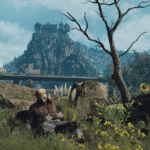
One of the most engaging and fresh spins on zombie survival horror games has been the Dying Light franchise, with the best-selling inaugural game commemorating its 10th anniversary this year. After 2022’s standalone sequel Dying Light 2, publisher Techland is returning to original franchise protagonist Kyle Crane for the series’ third installment, Dying Light: The […]
The post Dying Light: The Beast Preview – A Franchise Return to Form appeared first on Den of Geek.
This article contains spoilers for the first season of Wayward Pines.
Premiering in 2015, the first season of Fox’s Wayward Pines provided the prototype for excellent, gripping science fiction television … even if its second and final season offers an ending some consider flawed.
The show is set in a seemingly idyllic rural Idaho town, Wayward Pines. It follows Secret Service agent Ethan Burke (Matt Dillon) who investigates the disappearances of his two colleagues. After a serious accident, he wakes up in a tightly-controlled community where there is no escape and nothing is as it seems. The series’ overarching story doesn’t rely on aliens or high-tech gadgetry to provoke questions. Instead, following the investigation along with Ethan leads us to ask: What if safety is a lie? What if control looks like comfort? How far will people go to protect peace? What if the monster of the story isn’t outside the fence, but inside the walls?
cnx({
playerId: “106e33c0-3911-473c-b599-b1426db57530”,
}).render(“0270c398a82f44f49c23c16122516796”);
});
From the jump, the M. Night Shyamalan-produced show (he also directed the pilot) drops us into a place that feels almost too perfect to believe. Every smile, every interaction, feels slightly off. Stale. Enforced. The first episode sets the tone too – part mystery thriller, part warning. Its sci-fi concept doesn’t lean on spectacle. It dares us to look inward, exposing how easily we trade autonomy for the illusion of peace. This is storytelling that works psychologically, threading its themes through every moment. It’s revelation packaged as a slow, creeping unravel.
Wayward Pines doesn’t just borrow from shows like Twin Peaks or Lost, it forges a lane of its own. It stands as an intentional, psychological experiment. The brilliance of season one is how those ideas aren’t just stated. They’re built into the town, its design, its people, and its choices. It’s a subtle detonation of our own psyche.
Wayward Pines was a sharp and unsettling mirror that reflected how easily we mistake control for safety and how fragile our idea of peace really is.
And it dares us to witness it.
Comfort Comes at a Cost
“The rules are simple. Follow them, and you’ll be safe.”
— Sheriff Pope
The illusion of comfort in Wayward Pines is maintained by compliance. The titular location is a perfect town – warm and orderly – but built on curfews, disappearances, and obedience. People vanish for stepping out of line and everyone accepts it as necessary.
In the show’s second episode “Do Not Discuss Your Life Before,” we learn that even mentioning the outside world is punishable by public execution. It’s an overt way of silencing pushback and it works as people like Kate (Carla Gugino), Ethan’s former partner both professionally and romantically, fake normalcy to survive, even after being discovered by Ethan. In episode six “Choices,” the founder and leader of Wayward Pines, David Pilcher (Toby Jones), openly says comfort must be manufactured by any means, including deception and death. As the architect, he controls surveillance and memory suppression, believing that this is the only way to save what’s left of humanity.
That mirrors real-life systems of privilege built on ignorance, fear, and a forced illusion of better, even as dysfunction brews behind closed doors. These are systems we are actively a part of today, whether we are aware of them or caught in a cycle of group think for the greater good ourselves. These systems look like redlined communities that sell prosperity while quietly excluding whom they consider “undesirable.” Company towns like Pullman, Illinois or mining towns in the South that provided the spaces to live, but completely controlled everything. This even includes sundown town culture, enforcing peace by exclusion, and Patriot Act mass surveillance that reframed being watched as a safety net.
Evolution Isn’t Clean. It’s Chaotic.
“They’re not animals. They’re what came after us.”
— David Pilcher
What’s outside the fence refuses to stay in the past. The Abbies – faster, stronger, and evolved – are what humanity became while the town stayed frozen in time.
In “Choices,” Pilcher admits their threat isn’t their behavior, but what they represent. In “The Friendliest Place on Earth” and “A Reckoning,” we see the Abbies strategize and communicate, pushing us to question whether they’re truly monstrous or simply the next step in the process of nature. Pilcher was perhaps a fan of the Richard Mattheson novel I Am Legend because his sentiments on Abbies hold a similar weight. It’s almost as if he was acknowledging that, while the town clung to an outdated version of self, the Abbies were reclaiming space. They threatened humanity by surpassing it, evolving consciously as well. In “Cycle,” one even locks eyes with Ethan as if he recognizes him. It isn’t like prey meeting a predator. It’s two beings acknowledging a greater ecosystem and looking to define their coexistence together. This human, non-animalistic behavior is Pilcher’s theories rooted in fear meeting the actuality of the next level of humanity, face-to-face. Literally.
The town denies this evolution and tries to control it. Nature, however, doesn’t ask permission to do so and that rejection of growth is what dooms the town.
And if we respond in the same way, rejecting what challenges us or threatens our comfort, we risk collapsing under our own rigidity. Empires have fallen from the inside out. Our environments have been permanently damaged by short term and short sighted industries. Evolution means change and when we build systems or cling to ideals that only accommodate the familiar, extinction is no longer a “what if.” It becomes an invitation.
Fear Stops Us from Becoming More
Fear isn’t just a tactic. It takes on the look and feel of tradition and culture. In “Choices” and “The Friendliest Place on Earth,” resistance such as asking about the town’s origin, questioning the rules, or attempting escape is met with suppression. In “Betrayal,” Harold (Tom Stevens), once part of the underground resistance that sought to expose the town from the top down, breaks while under interrogation. His fear of torture overrides the remaining fight he had left. He is then publicly executed, his legacy rewritten entirely, and the town sinks even further into the acceptance of ritualized violence as the tax for rebellion.
In “A Reckoning,” children are taught to report their own parents and see public executions as educational tools. The consistent programming is the installation of obedience-laced procedures. They’re effective too as one student even criticizes a teacher for being too lenient.
Ben (Charlie Tahan), the son of Ethan Burke, has internal conflict between the indoctrination of school and the resistance of his parents, showing that freedom and introspection still whisper. But in “Cycle,” after Ethan’s death, the town adapts. The First Generation, indoctrinated for this moment, steps in and the system tightens its grip. An indictment of where we fear is seen as functional and no longer has to be taught.
Pilcher believed he was saving humanity by restarting it. What he really did was recreate a past that had already failed. The town mimics a postcard-perfect, 1950s America made up of rigid roles, arranged families, curated jobs, enforced identities.
In “Betrayal,” Theresa (Shannyn Sossamon), Ethan’s wife and representative of quiet resistance, gains access to restricted files through Megan (Hope Davis), the head of Wayward Pines Academy. Megan’s attempt to indoctrinate Theresa by means of community infrastructure backfires and Theresa uncovers fabricated records. Families don’t exist naturally. They’re assigned. Even Ben and Amy’s budding relationship is subtly guided, less about love and more about reproduction.
Pilcher isn’t a villain in the traditional sense. He’s a preservationist who doesn’t see that preservation without progress is regression. But the need to know, to question, and ultimately uncover what’s real isn’t something that just goes away for someone driven by the truth. Theresa is stubborn in her pursuit of it. She listens to the internal monologue of her human spirit, the one we all have in us. She considers her role in the revolution and joins it quietly. Her resistance was fueled by her spirit even when obedience was weaved throughout the culture of the town.
Utopia Built on Obedience Is a Dystopia
The scariest part of Wayward Pines isn’t the fence or the Abbies. It’s that no one needs those fences to stay imprisoned. The real prison is belief. In “Cycle,” after Ethan’s sacrifice, Ben wakes up to find the First Generation in control. Everything remains. There’s no reset. Just restoration.
Amy, who once symbolized possibility, now smiles because she believes everything is finally stable. Crushing people wasn’t the end goal. Convincing them the cage is safe is the real win. The ending is a rebirth of the cycle continuing, but with different and elevated players.
Wayward Pines isn’t a story of revolution or even hope. It’s a parable about systems raising people to protect it without question. A scary reality we are more than capable of being a part of.
Wayward Pines season 1 isn’t just underrated, it’s misunderstood. Beneath the genre turns lies one of the most psychologically-layered sci-fi stories in recent memory. It warns what happens when we mistake obedience for morality, control for peace, and regression for safety. Its themes are timely, terrifying, and eerily familiar.
This is what the best sci-fi does. It mirrors us. Think The Twilight Zone, Get Out, Black Mirror, and even more recently, Sinners. Stories that challenge the comfort of the status quo and force us to see the systems we’re already living in.Wayward Pines saw it all clearly. And it dared to ask: What happens if we don’t?
The post Wayward Pines Season 1 Remains All-Time Great Sci-Fi TV appeared first on Den of Geek.
The Fantastic Four: First Steps Review: Some Quality Family Time in the MCU
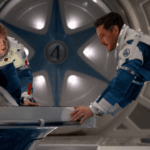
The hour has grown late, and the sun’s drawn low. Such ominous tidings definitely apply to the denizens of Earth in The Fantastic Four: First Steps. For it is in this movie that Galactus, the Devourer of Worlds, has come. However, it also applies to many longtime Marvel Comics fans in the audience. Despite four […]
The post The Fantastic Four: First Steps Review: Some Quality Family Time in the MCU appeared first on Den of Geek.
This article contains spoilers for the first season of Wayward Pines.
Premiering in 2015, the first season of Fox’s Wayward Pines provided the prototype for excellent, gripping science fiction television … even if its second and final season offers an ending some consider flawed.
The show is set in a seemingly idyllic rural Idaho town, Wayward Pines. It follows Secret Service agent Ethan Burke (Matt Dillon) who investigates the disappearances of his two colleagues. After a serious accident, he wakes up in a tightly-controlled community where there is no escape and nothing is as it seems. The series’ overarching story doesn’t rely on aliens or high-tech gadgetry to provoke questions. Instead, following the investigation along with Ethan leads us to ask: What if safety is a lie? What if control looks like comfort? How far will people go to protect peace? What if the monster of the story isn’t outside the fence, but inside the walls?
cnx({
playerId: “106e33c0-3911-473c-b599-b1426db57530”,
}).render(“0270c398a82f44f49c23c16122516796”);
});
From the jump, the M. Night Shyamalan-produced show (he also directed the pilot) drops us into a place that feels almost too perfect to believe. Every smile, every interaction, feels slightly off. Stale. Enforced. The first episode sets the tone too – part mystery thriller, part warning. Its sci-fi concept doesn’t lean on spectacle. It dares us to look inward, exposing how easily we trade autonomy for the illusion of peace. This is storytelling that works psychologically, threading its themes through every moment. It’s revelation packaged as a slow, creeping unravel.
Wayward Pines doesn’t just borrow from shows like Twin Peaks or Lost, it forges a lane of its own. It stands as an intentional, psychological experiment. The brilliance of season one is how those ideas aren’t just stated. They’re built into the town, its design, its people, and its choices. It’s a subtle detonation of our own psyche.
Wayward Pines was a sharp and unsettling mirror that reflected how easily we mistake control for safety and how fragile our idea of peace really is.
And it dares us to witness it.
Comfort Comes at a Cost
“The rules are simple. Follow them, and you’ll be safe.”
— Sheriff Pope
The illusion of comfort in Wayward Pines is maintained by compliance. The titular location is a perfect town – warm and orderly – but built on curfews, disappearances, and obedience. People vanish for stepping out of line and everyone accepts it as necessary.
In the show’s second episode “Do Not Discuss Your Life Before,” we learn that even mentioning the outside world is punishable by public execution. It’s an overt way of silencing pushback and it works as people like Kate (Carla Gugino), Ethan’s former partner both professionally and romantically, fake normalcy to survive, even after being discovered by Ethan. In episode six “Choices,” the founder and leader of Wayward Pines, David Pilcher (Toby Jones), openly says comfort must be manufactured by any means, including deception and death. As the architect, he controls surveillance and memory suppression, believing that this is the only way to save what’s left of humanity.
That mirrors real-life systems of privilege built on ignorance, fear, and a forced illusion of better, even as dysfunction brews behind closed doors. These are systems we are actively a part of today, whether we are aware of them or caught in a cycle of group think for the greater good ourselves. These systems look like redlined communities that sell prosperity while quietly excluding whom they consider “undesirable.” Company towns like Pullman, Illinois or mining towns in the South that provided the spaces to live, but completely controlled everything. This even includes sundown town culture, enforcing peace by exclusion, and Patriot Act mass surveillance that reframed being watched as a safety net.
Evolution Isn’t Clean. It’s Chaotic.
“They’re not animals. They’re what came after us.”
— David Pilcher
What’s outside the fence refuses to stay in the past. The Abbies – faster, stronger, and evolved – are what humanity became while the town stayed frozen in time.
In “Choices,” Pilcher admits their threat isn’t their behavior, but what they represent. In “The Friendliest Place on Earth” and “A Reckoning,” we see the Abbies strategize and communicate, pushing us to question whether they’re truly monstrous or simply the next step in the process of nature. Pilcher was perhaps a fan of the Richard Mattheson novel I Am Legend because his sentiments on Abbies hold a similar weight. It’s almost as if he was acknowledging that, while the town clung to an outdated version of self, the Abbies were reclaiming space. They threatened humanity by surpassing it, evolving consciously as well. In “Cycle,” one even locks eyes with Ethan as if he recognizes him. It isn’t like prey meeting a predator. It’s two beings acknowledging a greater ecosystem and looking to define their coexistence together. This human, non-animalistic behavior is Pilcher’s theories rooted in fear meeting the actuality of the next level of humanity, face-to-face. Literally.
The town denies this evolution and tries to control it. Nature, however, doesn’t ask permission to do so and that rejection of growth is what dooms the town.
And if we respond in the same way, rejecting what challenges us or threatens our comfort, we risk collapsing under our own rigidity. Empires have fallen from the inside out. Our environments have been permanently damaged by short term and short sighted industries. Evolution means change and when we build systems or cling to ideals that only accommodate the familiar, extinction is no longer a “what if.” It becomes an invitation.
Fear Stops Us from Becoming More
Fear isn’t just a tactic. It takes on the look and feel of tradition and culture. In “Choices” and “The Friendliest Place on Earth,” resistance such as asking about the town’s origin, questioning the rules, or attempting escape is met with suppression. In “Betrayal,” Harold (Tom Stevens), once part of the underground resistance that sought to expose the town from the top down, breaks while under interrogation. His fear of torture overrides the remaining fight he had left. He is then publicly executed, his legacy rewritten entirely, and the town sinks even further into the acceptance of ritualized violence as the tax for rebellion.
In “A Reckoning,” children are taught to report their own parents and see public executions as educational tools. The consistent programming is the installation of obedience-laced procedures. They’re effective too as one student even criticizes a teacher for being too lenient.
Ben (Charlie Tahan), the son of Ethan Burke, has internal conflict between the indoctrination of school and the resistance of his parents, showing that freedom and introspection still whisper. But in “Cycle,” after Ethan’s death, the town adapts. The First Generation, indoctrinated for this moment, steps in and the system tightens its grip. An indictment of where we fear is seen as functional and no longer has to be taught.
Pilcher believed he was saving humanity by restarting it. What he really did was recreate a past that had already failed. The town mimics a postcard-perfect, 1950s America made up of rigid roles, arranged families, curated jobs, enforced identities.
In “Betrayal,” Theresa (Shannyn Sossamon), Ethan’s wife and representative of quiet resistance, gains access to restricted files through Megan (Hope Davis), the head of Wayward Pines Academy. Megan’s attempt to indoctrinate Theresa by means of community infrastructure backfires and Theresa uncovers fabricated records. Families don’t exist naturally. They’re assigned. Even Ben and Amy’s budding relationship is subtly guided, less about love and more about reproduction.
Pilcher isn’t a villain in the traditional sense. He’s a preservationist who doesn’t see that preservation without progress is regression. But the need to know, to question, and ultimately uncover what’s real isn’t something that just goes away for someone driven by the truth. Theresa is stubborn in her pursuit of it. She listens to the internal monologue of her human spirit, the one we all have in us. She considers her role in the revolution and joins it quietly. Her resistance was fueled by her spirit even when obedience was weaved throughout the culture of the town.
Utopia Built on Obedience Is a Dystopia
The scariest part of Wayward Pines isn’t the fence or the Abbies. It’s that no one needs those fences to stay imprisoned. The real prison is belief. In “Cycle,” after Ethan’s sacrifice, Ben wakes up to find the First Generation in control. Everything remains. There’s no reset. Just restoration.
Amy, who once symbolized possibility, now smiles because she believes everything is finally stable. Crushing people wasn’t the end goal. Convincing them the cage is safe is the real win. The ending is a rebirth of the cycle continuing, but with different and elevated players.
Wayward Pines isn’t a story of revolution or even hope. It’s a parable about systems raising people to protect it without question. A scary reality we are more than capable of being a part of.
Wayward Pines season 1 isn’t just underrated, it’s misunderstood. Beneath the genre turns lies one of the most psychologically-layered sci-fi stories in recent memory. It warns what happens when we mistake obedience for morality, control for peace, and regression for safety. Its themes are timely, terrifying, and eerily familiar.
This is what the best sci-fi does. It mirrors us. Think The Twilight Zone, Get Out, Black Mirror, and even more recently, Sinners. Stories that challenge the comfort of the status quo and force us to see the systems we’re already living in.Wayward Pines saw it all clearly. And it dared to ask: What happens if we don’t?
The post Wayward Pines Season 1 Remains All-Time Great Sci-Fi TV appeared first on Den of Geek.
How SAKAMOTO DAYS Leads Shonen’s Assassin Trend
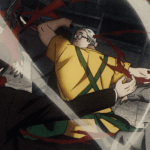
This article is presented in partnership with Netflix and appears in the Den of Geek x Sakamoto Days special edition releasing in mid-July. Sakamoto Days Part 2 releases on July 14. Anime is truly a limitless storytelling medium that frequently pushes animation to unprecedented places. More than 200 anime are produced every year, which gives audiences plenty […]
The post How SAKAMOTO DAYS Leads Shonen’s Assassin Trend appeared first on Den of Geek.
This article contains spoilers for the first season of Wayward Pines.
Premiering in 2015, the first season of Fox’s Wayward Pines provided the prototype for excellent, gripping science fiction television … even if its second and final season offers an ending some consider flawed.
The show is set in a seemingly idyllic rural Idaho town, Wayward Pines. It follows Secret Service agent Ethan Burke (Matt Dillon) who investigates the disappearances of his two colleagues. After a serious accident, he wakes up in a tightly-controlled community where there is no escape and nothing is as it seems. The series’ overarching story doesn’t rely on aliens or high-tech gadgetry to provoke questions. Instead, following the investigation along with Ethan leads us to ask: What if safety is a lie? What if control looks like comfort? How far will people go to protect peace? What if the monster of the story isn’t outside the fence, but inside the walls?
cnx({
playerId: “106e33c0-3911-473c-b599-b1426db57530”,
}).render(“0270c398a82f44f49c23c16122516796”);
});
From the jump, the M. Night Shyamalan-produced show (he also directed the pilot) drops us into a place that feels almost too perfect to believe. Every smile, every interaction, feels slightly off. Stale. Enforced. The first episode sets the tone too – part mystery thriller, part warning. Its sci-fi concept doesn’t lean on spectacle. It dares us to look inward, exposing how easily we trade autonomy for the illusion of peace. This is storytelling that works psychologically, threading its themes through every moment. It’s revelation packaged as a slow, creeping unravel.
Wayward Pines doesn’t just borrow from shows like Twin Peaks or Lost, it forges a lane of its own. It stands as an intentional, psychological experiment. The brilliance of season one is how those ideas aren’t just stated. They’re built into the town, its design, its people, and its choices. It’s a subtle detonation of our own psyche.
Wayward Pines was a sharp and unsettling mirror that reflected how easily we mistake control for safety and how fragile our idea of peace really is.
And it dares us to witness it.
Comfort Comes at a Cost
“The rules are simple. Follow them, and you’ll be safe.”
— Sheriff Pope
The illusion of comfort in Wayward Pines is maintained by compliance. The titular location is a perfect town – warm and orderly – but built on curfews, disappearances, and obedience. People vanish for stepping out of line and everyone accepts it as necessary.
In the show’s second episode “Do Not Discuss Your Life Before,” we learn that even mentioning the outside world is punishable by public execution. It’s an overt way of silencing pushback and it works as people like Kate (Carla Gugino), Ethan’s former partner both professionally and romantically, fake normalcy to survive, even after being discovered by Ethan. In episode six “Choices,” the founder and leader of Wayward Pines, David Pilcher (Toby Jones), openly says comfort must be manufactured by any means, including deception and death. As the architect, he controls surveillance and memory suppression, believing that this is the only way to save what’s left of humanity.
That mirrors real-life systems of privilege built on ignorance, fear, and a forced illusion of better, even as dysfunction brews behind closed doors. These are systems we are actively a part of today, whether we are aware of them or caught in a cycle of group think for the greater good ourselves. These systems look like redlined communities that sell prosperity while quietly excluding whom they consider “undesirable.” Company towns like Pullman, Illinois or mining towns in the South that provided the spaces to live, but completely controlled everything. This even includes sundown town culture, enforcing peace by exclusion, and Patriot Act mass surveillance that reframed being watched as a safety net.
Evolution Isn’t Clean. It’s Chaotic.
“They’re not animals. They’re what came after us.”
— David Pilcher
What’s outside the fence refuses to stay in the past. The Abbies – faster, stronger, and evolved – are what humanity became while the town stayed frozen in time.
In “Choices,” Pilcher admits their threat isn’t their behavior, but what they represent. In “The Friendliest Place on Earth” and “A Reckoning,” we see the Abbies strategize and communicate, pushing us to question whether they’re truly monstrous or simply the next step in the process of nature. Pilcher was perhaps a fan of the Richard Mattheson novel I Am Legend because his sentiments on Abbies hold a similar weight. It’s almost as if he was acknowledging that, while the town clung to an outdated version of self, the Abbies were reclaiming space. They threatened humanity by surpassing it, evolving consciously as well. In “Cycle,” one even locks eyes with Ethan as if he recognizes him. It isn’t like prey meeting a predator. It’s two beings acknowledging a greater ecosystem and looking to define their coexistence together. This human, non-animalistic behavior is Pilcher’s theories rooted in fear meeting the actuality of the next level of humanity, face-to-face. Literally.
The town denies this evolution and tries to control it. Nature, however, doesn’t ask permission to do so and that rejection of growth is what dooms the town.
And if we respond in the same way, rejecting what challenges us or threatens our comfort, we risk collapsing under our own rigidity. Empires have fallen from the inside out. Our environments have been permanently damaged by short term and short sighted industries. Evolution means change and when we build systems or cling to ideals that only accommodate the familiar, extinction is no longer a “what if.” It becomes an invitation.
Fear Stops Us from Becoming More
Fear isn’t just a tactic. It takes on the look and feel of tradition and culture. In “Choices” and “The Friendliest Place on Earth,” resistance such as asking about the town’s origin, questioning the rules, or attempting escape is met with suppression. In “Betrayal,” Harold (Tom Stevens), once part of the underground resistance that sought to expose the town from the top down, breaks while under interrogation. His fear of torture overrides the remaining fight he had left. He is then publicly executed, his legacy rewritten entirely, and the town sinks even further into the acceptance of ritualized violence as the tax for rebellion.
In “A Reckoning,” children are taught to report their own parents and see public executions as educational tools. The consistent programming is the installation of obedience-laced procedures. They’re effective too as one student even criticizes a teacher for being too lenient.
Ben (Charlie Tahan), the son of Ethan Burke, has internal conflict between the indoctrination of school and the resistance of his parents, showing that freedom and introspection still whisper. But in “Cycle,” after Ethan’s death, the town adapts. The First Generation, indoctrinated for this moment, steps in and the system tightens its grip. An indictment of where we fear is seen as functional and no longer has to be taught.
Pilcher believed he was saving humanity by restarting it. What he really did was recreate a past that had already failed. The town mimics a postcard-perfect, 1950s America made up of rigid roles, arranged families, curated jobs, enforced identities.
In “Betrayal,” Theresa (Shannyn Sossamon), Ethan’s wife and representative of quiet resistance, gains access to restricted files through Megan (Hope Davis), the head of Wayward Pines Academy. Megan’s attempt to indoctrinate Theresa by means of community infrastructure backfires and Theresa uncovers fabricated records. Families don’t exist naturally. They’re assigned. Even Ben and Amy’s budding relationship is subtly guided, less about love and more about reproduction.
Pilcher isn’t a villain in the traditional sense. He’s a preservationist who doesn’t see that preservation without progress is regression. But the need to know, to question, and ultimately uncover what’s real isn’t something that just goes away for someone driven by the truth. Theresa is stubborn in her pursuit of it. She listens to the internal monologue of her human spirit, the one we all have in us. She considers her role in the revolution and joins it quietly. Her resistance was fueled by her spirit even when obedience was weaved throughout the culture of the town.
Utopia Built on Obedience Is a Dystopia
The scariest part of Wayward Pines isn’t the fence or the Abbies. It’s that no one needs those fences to stay imprisoned. The real prison is belief. In “Cycle,” after Ethan’s sacrifice, Ben wakes up to find the First Generation in control. Everything remains. There’s no reset. Just restoration.
Amy, who once symbolized possibility, now smiles because she believes everything is finally stable. Crushing people wasn’t the end goal. Convincing them the cage is safe is the real win. The ending is a rebirth of the cycle continuing, but with different and elevated players.
Wayward Pines isn’t a story of revolution or even hope. It’s a parable about systems raising people to protect it without question. A scary reality we are more than capable of being a part of.
Wayward Pines season 1 isn’t just underrated, it’s misunderstood. Beneath the genre turns lies one of the most psychologically-layered sci-fi stories in recent memory. It warns what happens when we mistake obedience for morality, control for peace, and regression for safety. Its themes are timely, terrifying, and eerily familiar.
This is what the best sci-fi does. It mirrors us. Think The Twilight Zone, Get Out, Black Mirror, and even more recently, Sinners. Stories that challenge the comfort of the status quo and force us to see the systems we’re already living in.Wayward Pines saw it all clearly. And it dared to ask: What happens if we don’t?
The post Wayward Pines Season 1 Remains All-Time Great Sci-Fi TV appeared first on Den of Geek.
How Eco-Friendly Playgrounds Are Reshaping Community Green Spaces

An eco-friendly playground goes a long way toward saving the city money. This is obviously also true for schools and churches that want to create new play spaces for the kids. The equipment can come in at a lower cost because the materials have been repurposed.
The post How Eco-Friendly Playgrounds Are Reshaping Community Green Spaces appeared first on Green Prophet.
Headlines in Europe have celebrated Carnac and the Morbihan coast’s recent inscription as UNESCO World Heritage sites. But a quieter, arguably more significant victory was unfolding at the same time in Madagascar. Earlier this month, the island nation had its Atsinanana rainforests removed from UNESCO’s List of World Heritage in Danger, ending a nearly two-decade struggle and marking notable progress in environmental governance.
In a world where international accolades are often seen as the ultimate goal, Madagascar’s achievement shows that sometimes the most important recognition comes from overcoming deep-rooted challenges rather than collecting new honours.
A long road to safety
The six rainforests of Atsinanana (Marojejy, Masoala, Zahamena, Ranomafana, Andringitra, and Andohahela) were first designated a World Heritage site in 2007 because of their extraordinary biodiversity and high number of endemic species. They are home to endangered lemurs, rare amphibians and birds, and unique flora found nowhere else on Earth. But by 2010, the site had been placed on the “in danger” list, after illegal logging surged in the aftermath of political instability. Rosewood and ebony, highly prized on international markets, were extracted at unsustainable rates. Protected areas were raided; wildlife trafficking increased, and enforcement systems collapsed.
Being on the World Heritage list is usually framed as a badge of honour, but obtaining the “in danger” designation is very different. It is a warning, indicating a systemic failure of enforcement and stewardship. For countries already facing economic and political stress, this label can damage reputations, discourage investment, and undermine domestic confidence.
Getting a site removed from the danger list is not a simple matter of drafting a better policy or running a few workshops. It requires sustained political commitment, long-term planning, and the ability to rebuild local trust, something which makes Madagascar’s achievement all the more striking.
Strong national leadership
While international support from partners such as UNESCO and the World Bank was important, the core driver of Madagascar’s recovery effort was national resolve. The Ministry of the Environment and Sustainable Development (MEDD), Madagascar National Parks, and local authorities introduced stronger frameworks to control forest exploitation. Protected area surveillance was increased, anti-poaching patrols were restructured, and penalties for illegal logging were made clearer and more enforceable.
Just as importantly, the strategy extended beyond forest boundaries. The government invested in reforestation and ecological restoration, with satellite data showing significant gains in forest cover. But it also focused on tackling the social and economic drivers of environmental degradation. In rural communities near the protected areas, youth were trained in ecotourism, fish farming, and sustainable agriculture. Infrastructure investments — including a new dam and irrigation systems — enabled triple harvests on rehabilitated land, improving livelihoods and easing pressure on forests.
At the international level, Madagascar’s diplomatic and technical coordination was notable. The Ministry of Culture helped prepare the case file submitted to UNESCO, while the Ministry of Foreign Affairs activated diplomatic channels in support of the outcome. And at the 47th UNESCO General Assembly in Paris, a high-level Malagasy delegation, led by Minister Max Andonirina Fontaine, presented the government’s results with evidence of on-the-ground progress.
The initiative is part of a broader vision set out by President Andry Rajoelina, who has made the protection of Madagascar’s natural heritage and biodiversity a national priority. His administration has increasingly linked environmental governance to national development, positioning conservation as a pillar of economic recovery and international credibility.
Speaking after the decision, Max Fontaine said, “For Madagascar, this decision is more than a technical or political ruling. It represents a true acknowledgment of the government’s efforts over the past decade. First and foremost, it began with political will at the highest level. President Andry Rajoelina prioritized biodiversity conservation. This commitment then translated into strategy, and that strategy into concrete actions… It has been a long journey, requiring genuine political courage. That is why we can now speak of recognition; it is a huge relief for the Malagasy government.”
The removal from the danger list also carries geopolitical weight. It signals to funders and NGOs that Madagascar can deliver. The country has often struggled to attract long-term investment in environmental projects–but this success may help reframe perceptions, showing that national authorities are capable of leading complex, multi-stakeholder environmental initiatives — a point President Rajoelina and his ministers have been keen to emphasize.
A broader movement
Women in Madagascar
Madagascar was not alone. In the same session, UNESCO removed two other African sites from the danger list — Abu Mena in Egypt and the Old Town of Ghadamès in Libya. Each case differs — Abu Mena faced threats from rising groundwater, and Ghadamès from conflict and climate — but together they send a powerful signal. At a time when heritage sites in Africa and the Middle East are under siege from war, urban sprawl, and environmental shocks, these removals show that progress is possible when political will and international cooperation align.
The shift is also part of a broader evolution within UNESCO. Director-General Audrey Azoulay called the removals a “great victory,” noting that the organisation is placing special emphasis on heritage protection in Africa — and that those efforts are beginning to deliver results.
For African nations often treated as passive recipients of aid or attention, this moment reframes the narrative. These are not stories of external rescue, but of domestic capacity, policy innovation, and resilience.
Important implications
Beautiful alley of baobabs during sunrise in Morondava, Madagascar.
UNESCO designations are more than symbolic. They influence tourism flows, attract development aid, shape national identities, and drive local economic opportunities. According to UNESCO data, World Heritage status can boost tourism by up to 20%, especially in ecologically unique areas. In Madagascar, where ecotourism is one of the country’s most promising but underdeveloped sectors, the potential is considerable.
President Andry Rajoelina’s administration has emphasized this point repeatedly: heritage protection must also create jobs and strengthen local economies. The removal of Atsinanana from the danger list is expected to help Madagascar attract new partnerships, boost tourism revenues, and build stronger links between conservation and community development. For a country where over 75% of the population lives on less than $2 a day, this linkage is critical.
Madagascar’s achievement is not just about restoring a forest. It is about proving that conservation can be part of a national growth strategy. Madagascar has done what few countries in its position have managed to do: reverse environmental decline, regain credibility, and reclaim agency over its environmental narrative.
The post UNESCO confirms danger to Madagascar’s forests is fading, cementing environmental commitment of President Andry Rajoelina’s government appeared first on Green Prophet.
Eco-Friendly Playgrounds: How Schools and Parks Are Reducing Their Environmental Footprint

One of the main concerns with using sustainable materials is that it won’t look like a modernized playground. This couldn’t be farther from the truth! Many of these recycled, sustainable materials can be painted and purchased in fun and vibrant colors. You may just be surprised to see the possibilities. And upon first glance, many visitors may not even realize that the playground is eco-friendly in the first place.
The post Eco-Friendly Playgrounds: How Schools and Parks Are Reducing Their Environmental Footprint appeared first on Green Prophet.
Headlines in Europe have celebrated Carnac and the Morbihan coast’s recent inscription as UNESCO World Heritage sites. But a quieter, arguably more significant victory was unfolding at the same time in Madagascar. Earlier this month, the island nation had its Atsinanana rainforests removed from UNESCO’s List of World Heritage in Danger, ending a nearly two-decade struggle and marking notable progress in environmental governance.
In a world where international accolades are often seen as the ultimate goal, Madagascar’s achievement shows that sometimes the most important recognition comes from overcoming deep-rooted challenges rather than collecting new honours.
A long road to safety
The six rainforests of Atsinanana (Marojejy, Masoala, Zahamena, Ranomafana, Andringitra, and Andohahela) were first designated a World Heritage site in 2007 because of their extraordinary biodiversity and high number of endemic species. They are home to endangered lemurs, rare amphibians and birds, and unique flora found nowhere else on Earth. But by 2010, the site had been placed on the “in danger” list, after illegal logging surged in the aftermath of political instability. Rosewood and ebony, highly prized on international markets, were extracted at unsustainable rates. Protected areas were raided; wildlife trafficking increased, and enforcement systems collapsed.
Being on the World Heritage list is usually framed as a badge of honour, but obtaining the “in danger” designation is very different. It is a warning, indicating a systemic failure of enforcement and stewardship. For countries already facing economic and political stress, this label can damage reputations, discourage investment, and undermine domestic confidence.
Getting a site removed from the danger list is not a simple matter of drafting a better policy or running a few workshops. It requires sustained political commitment, long-term planning, and the ability to rebuild local trust, something which makes Madagascar’s achievement all the more striking.
Strong national leadership
While international support from partners such as UNESCO and the World Bank was important, the core driver of Madagascar’s recovery effort was national resolve. The Ministry of the Environment and Sustainable Development (MEDD), Madagascar National Parks, and local authorities introduced stronger frameworks to control forest exploitation. Protected area surveillance was increased, anti-poaching patrols were restructured, and penalties for illegal logging were made clearer and more enforceable.
Just as importantly, the strategy extended beyond forest boundaries. The government invested in reforestation and ecological restoration, with satellite data showing significant gains in forest cover. But it also focused on tackling the social and economic drivers of environmental degradation. In rural communities near the protected areas, youth were trained in ecotourism, fish farming, and sustainable agriculture. Infrastructure investments — including a new dam and irrigation systems — enabled triple harvests on rehabilitated land, improving livelihoods and easing pressure on forests.
At the international level, Madagascar’s diplomatic and technical coordination was notable. The Ministry of Culture helped prepare the case file submitted to UNESCO, while the Ministry of Foreign Affairs activated diplomatic channels in support of the outcome. And at the 47th UNESCO General Assembly in Paris, a high-level Malagasy delegation, led by Minister Max Andonirina Fontaine, presented the government’s results with evidence of on-the-ground progress.
The initiative is part of a broader vision set out by President Andry Rajoelina, who has made the protection of Madagascar’s natural heritage and biodiversity a national priority. His administration has increasingly linked environmental governance to national development, positioning conservation as a pillar of economic recovery and international credibility.
Speaking after the decision, Max Fontaine said, “For Madagascar, this decision is more than a technical or political ruling. It represents a true acknowledgment of the government’s efforts over the past decade. First and foremost, it began with political will at the highest level. President Andry Rajoelina prioritized biodiversity conservation. This commitment then translated into strategy, and that strategy into concrete actions… It has been a long journey, requiring genuine political courage. That is why we can now speak of recognition; it is a huge relief for the Malagasy government.”
The removal from the danger list also carries geopolitical weight. It signals to funders and NGOs that Madagascar can deliver. The country has often struggled to attract long-term investment in environmental projects–but this success may help reframe perceptions, showing that national authorities are capable of leading complex, multi-stakeholder environmental initiatives — a point President Rajoelina and his ministers have been keen to emphasize.
A broader movement
Women in Madagascar
Madagascar was not alone. In the same session, UNESCO removed two other African sites from the danger list — Abu Mena in Egypt and the Old Town of Ghadamès in Libya. Each case differs — Abu Mena faced threats from rising groundwater, and Ghadamès from conflict and climate — but together they send a powerful signal. At a time when heritage sites in Africa and the Middle East are under siege from war, urban sprawl, and environmental shocks, these removals show that progress is possible when political will and international cooperation align.
The shift is also part of a broader evolution within UNESCO. Director-General Audrey Azoulay called the removals a “great victory,” noting that the organisation is placing special emphasis on heritage protection in Africa — and that those efforts are beginning to deliver results.
For African nations often treated as passive recipients of aid or attention, this moment reframes the narrative. These are not stories of external rescue, but of domestic capacity, policy innovation, and resilience.
Important implications
Beautiful alley of baobabs during sunrise in Morondava, Madagascar.
UNESCO designations are more than symbolic. They influence tourism flows, attract development aid, shape national identities, and drive local economic opportunities. According to UNESCO data, World Heritage status can boost tourism by up to 20%, especially in ecologically unique areas. In Madagascar, where ecotourism is one of the country’s most promising but underdeveloped sectors, the potential is considerable.
President Andry Rajoelina’s administration has emphasized this point repeatedly: heritage protection must also create jobs and strengthen local economies. The removal of Atsinanana from the danger list is expected to help Madagascar attract new partnerships, boost tourism revenues, and build stronger links between conservation and community development. For a country where over 75% of the population lives on less than $2 a day, this linkage is critical.
Madagascar’s achievement is not just about restoring a forest. It is about proving that conservation can be part of a national growth strategy. Madagascar has done what few countries in its position have managed to do: reverse environmental decline, regain credibility, and reclaim agency over its environmental narrative.
The post UNESCO confirms danger to Madagascar’s forests is fading, cementing environmental commitment of President Andry Rajoelina’s government appeared first on Green Prophet.
Dar Al Arkan Real Estate Development Company ESG Initiatives Advance Saudi Social Transformation

The preservation and celebration of Saudi cultural heritage represents a crucial aspect of Dar Al Arkan Real Estate Development Company ESG social initiatives. The company’s developments consistently integrate architectural elements and spatial arrangements that reflect Saudi cultural values while accommodating modern lifestyle preferences.
The post Dar Al Arkan Real Estate Development Company ESG Initiatives Advance Saudi Social Transformation appeared first on Green Prophet.
Headlines in Europe have celebrated Carnac and the Morbihan coast’s recent inscription as UNESCO World Heritage sites. But a quieter, arguably more significant victory was unfolding at the same time in Madagascar. Earlier this month, the island nation had its Atsinanana rainforests removed from UNESCO’s List of World Heritage in Danger, ending a nearly two-decade struggle and marking notable progress in environmental governance.
In a world where international accolades are often seen as the ultimate goal, Madagascar’s achievement shows that sometimes the most important recognition comes from overcoming deep-rooted challenges rather than collecting new honours.
A long road to safety
The six rainforests of Atsinanana (Marojejy, Masoala, Zahamena, Ranomafana, Andringitra, and Andohahela) were first designated a World Heritage site in 2007 because of their extraordinary biodiversity and high number of endemic species. They are home to endangered lemurs, rare amphibians and birds, and unique flora found nowhere else on Earth. But by 2010, the site had been placed on the “in danger” list, after illegal logging surged in the aftermath of political instability. Rosewood and ebony, highly prized on international markets, were extracted at unsustainable rates. Protected areas were raided; wildlife trafficking increased, and enforcement systems collapsed.
Being on the World Heritage list is usually framed as a badge of honour, but obtaining the “in danger” designation is very different. It is a warning, indicating a systemic failure of enforcement and stewardship. For countries already facing economic and political stress, this label can damage reputations, discourage investment, and undermine domestic confidence.
Getting a site removed from the danger list is not a simple matter of drafting a better policy or running a few workshops. It requires sustained political commitment, long-term planning, and the ability to rebuild local trust, something which makes Madagascar’s achievement all the more striking.
Strong national leadership
While international support from partners such as UNESCO and the World Bank was important, the core driver of Madagascar’s recovery effort was national resolve. The Ministry of the Environment and Sustainable Development (MEDD), Madagascar National Parks, and local authorities introduced stronger frameworks to control forest exploitation. Protected area surveillance was increased, anti-poaching patrols were restructured, and penalties for illegal logging were made clearer and more enforceable.
Just as importantly, the strategy extended beyond forest boundaries. The government invested in reforestation and ecological restoration, with satellite data showing significant gains in forest cover. But it also focused on tackling the social and economic drivers of environmental degradation. In rural communities near the protected areas, youth were trained in ecotourism, fish farming, and sustainable agriculture. Infrastructure investments — including a new dam and irrigation systems — enabled triple harvests on rehabilitated land, improving livelihoods and easing pressure on forests.
At the international level, Madagascar’s diplomatic and technical coordination was notable. The Ministry of Culture helped prepare the case file submitted to UNESCO, while the Ministry of Foreign Affairs activated diplomatic channels in support of the outcome. And at the 47th UNESCO General Assembly in Paris, a high-level Malagasy delegation, led by Minister Max Andonirina Fontaine, presented the government’s results with evidence of on-the-ground progress.
The initiative is part of a broader vision set out by President Andry Rajoelina, who has made the protection of Madagascar’s natural heritage and biodiversity a national priority. His administration has increasingly linked environmental governance to national development, positioning conservation as a pillar of economic recovery and international credibility.
Speaking after the decision, Max Fontaine said, “For Madagascar, this decision is more than a technical or political ruling. It represents a true acknowledgment of the government’s efforts over the past decade. First and foremost, it began with political will at the highest level. President Andry Rajoelina prioritized biodiversity conservation. This commitment then translated into strategy, and that strategy into concrete actions… It has been a long journey, requiring genuine political courage. That is why we can now speak of recognition; it is a huge relief for the Malagasy government.”
The removal from the danger list also carries geopolitical weight. It signals to funders and NGOs that Madagascar can deliver. The country has often struggled to attract long-term investment in environmental projects–but this success may help reframe perceptions, showing that national authorities are capable of leading complex, multi-stakeholder environmental initiatives — a point President Rajoelina and his ministers have been keen to emphasize.
A broader movement
Women in Madagascar
Madagascar was not alone. In the same session, UNESCO removed two other African sites from the danger list — Abu Mena in Egypt and the Old Town of Ghadamès in Libya. Each case differs — Abu Mena faced threats from rising groundwater, and Ghadamès from conflict and climate — but together they send a powerful signal. At a time when heritage sites in Africa and the Middle East are under siege from war, urban sprawl, and environmental shocks, these removals show that progress is possible when political will and international cooperation align.
The shift is also part of a broader evolution within UNESCO. Director-General Audrey Azoulay called the removals a “great victory,” noting that the organisation is placing special emphasis on heritage protection in Africa — and that those efforts are beginning to deliver results.
For African nations often treated as passive recipients of aid or attention, this moment reframes the narrative. These are not stories of external rescue, but of domestic capacity, policy innovation, and resilience.
Important implications
Beautiful alley of baobabs during sunrise in Morondava, Madagascar.
UNESCO designations are more than symbolic. They influence tourism flows, attract development aid, shape national identities, and drive local economic opportunities. According to UNESCO data, World Heritage status can boost tourism by up to 20%, especially in ecologically unique areas. In Madagascar, where ecotourism is one of the country’s most promising but underdeveloped sectors, the potential is considerable.
President Andry Rajoelina’s administration has emphasized this point repeatedly: heritage protection must also create jobs and strengthen local economies. The removal of Atsinanana from the danger list is expected to help Madagascar attract new partnerships, boost tourism revenues, and build stronger links between conservation and community development. For a country where over 75% of the population lives on less than $2 a day, this linkage is critical.
Madagascar’s achievement is not just about restoring a forest. It is about proving that conservation can be part of a national growth strategy. Madagascar has done what few countries in its position have managed to do: reverse environmental decline, regain credibility, and reclaim agency over its environmental narrative.
The post UNESCO confirms danger to Madagascar’s forests is fading, cementing environmental commitment of President Andry Rajoelina’s government appeared first on Green Prophet.