Star Trek: Strange New Worlds Season 3 Premiere Review – A Welcome Return

This Star Trek: Strange New Worlds review contains spoilers for season 3 episodes 1 and 2. It’s been two years since we last saw Star Trek: New Worlds on our screens, and in the interim, it’s been a bittersweet time to be a Trek fan. Star Trek: Lower Decks wrapped up its five-year mission with its […]
The post Star Trek: Strange New Worlds Season 3 Premiere Review – A Welcome Return appeared first on Den of Geek.
Every time a new season of a big tentpole science fiction rolls around, fans and critics tend to try to find the reason why this time things are different. New seasons often proclaim a new cast member or a shake-up behind the scenes in the creative team will change everything. But despite the two-year wait, the refreshing thing about Star Trek: Strange New Worlds Season 3 is that it’s essentially the same show it’s been since 2022. For the cast and showrunners of the mega-popular Paramount+ series, the edict for season 3 is very clear: If ain’t broken, don’t bring in Scotty to fix it.
“I think it’s the consistency of keeping it a different story, a different genre. Every episode we’re keeping it classic,” star Celia Rose Gooding says. “It’s a strange new world every episode, and I think that’s what keeps fans coming back.”
cnx({
playerId: “106e33c0-3911-473c-b599-b1426db57530”,
}).render(“0270c398a82f44f49c23c16122516796”);
});
But what kinds of strange new worlds can fans expect in a third season? And is the secret to this show’s success only found in its throwback vibes or is there something deeper? In addition to Gooding, we also talked to cast members Anson Mount, Carol Kane, Ethan Peck, Babs Olusanmokun, and showrunners Akiva Goldsman and Henry Alonso Myers to look ahead at the future of the Final Frontier.
It’s Been a Long Road
Although Star Trek: Strange New Worlds seems, in some ways, to be a fairly new series (it launched in 2022), for Anson Mount and Ethan Peck, this mission has been going on for nearly a decade, beginning when they first took on the roles of Captain Pike and Mr. Spock in Star Trek: Discovery Season 2 seven years ago.
“There was a lot of discomfort that sort of turned into comfort over time,” Peck says of playing Spock since 2019. “And there are times when I’m on set and I’m not sure if I’m being Spock enough or if I’m being Ethan. And I’m like, ‘Where’s the line?’ We spend so many hours as these characters, and that line gets a little blurry.”
For Mount, the transformation of Pike—from TOS trivia question to beloved lead in Strange New Worlds—has also been a personal journey. And it’s fused him permanently to Pike.
“For whatever reason, this character is closer to me than a lot of other characters that I have played,” Mount admits. “But I think the whole tone of our show is a bit different [from Discovery]. We decided to bear down on the optimism of Trek and the planet-of-the-week, and in order to get there, Pike had to learn that the journey is the destination.”
A Strange, New Serialization
Despite its reputation for harkening back to the style and format of The Original Series, the success of Strange New Worlds isn’t really because it copies the self-contained nature of the classic Star Trek show. Instead like many other modern TV shows, Strange New Worlds does have a serialized style to it. But those arcs aren’t only connected to the science fiction stories. In Strange New Worlds, the serialization is the characters.
“There are certain kinds of relationship stories you can only tell over time,” co-showrunner Goldsman says. “So when we talk about this serialized character arc competent of the show, we’re doing something The Original Series couldn’t.”
Goldsman brings up the classic TOS episode “The City on the Edge of Forever” as the ultimate example of not only a great episode of Trek but also how it’s demonstrative of the limits of the classic series. We got to know the TOS cast fairly well from 1966 to 1969, but it’s not like the characters had complete arcs.
“Nothing frustrated me more than Kirk losing Edith Keeler one week and being fine the next week,” Goldsman considers. “But on our show, we actually can talk about relationships having beginnings, middles, and ends. They couldn’t. So they were sort of trapped in stasis in a strange way. But we’re not.”
One perfect example of how this kind of character evolution unfolds in season 3 is the transformation of Gooding’s take on Nyota Uhura. Thanks to Strange New Worlds’ character-driven episodic arcs, she’s had much more development with her younger Uhura than Nichelle Nichols ever had on The Original Series, to say nothing of Zoe Saldaña’s Uhura in the reboot movies. As iconic as the two previous Uhuras are, Gooding’s is the one we’ve gotten to know the best. In fact, the journey of her humble Uhura in seasons 1 and 2 will start to fully morph into the more ebullient Uhura of The Original Series during the forthcoming season 3.
“I think with season 3, we’re now getting an opportunity to show her more playful, flirtatious side,” Gooding says. “In the previous seasons, she was a character with so much depth and history and trauma. Now we get to see how she can still find lightness, joy, and playfulness. It’s very reminiscent of the Lieutenant Uhura we see in TOS. That’s a change from what we’ve seen of her in previous seasons.”
On the other side of the Starfleet biographical coin is Dr. M’Benga as played by Babs Olusanmokun. A minor character who appeared in just two TOS episodes (as played by Booker Bradshaw), Olusanmokun’s take on the man has been one of pure invention rather than reinvention. When it comes to M’Benga, canon hardly matters. The character was basically a blank slate. So while he started out as a sympathetic doctor with a mysterious past in Strange New Worlds’ first season, in season 2, we discovered a more physical, action-adventure version of M’Benga, a trend that Olusanmokun ensures will continue in season 3.
“’There are other pieces of him that we’re still unraveling,” Olusanmokun says. “But, yes, we leaned into that for season 2 and there’s more of that in season 3.”
For those who remember Olusanmokun in both Dune: Part One and Dune: Part Two, where he played the Fremen Jamis, the actor has the ability to bring equal parts warrior and monk to certain roles, something that is on full display for M’Benga in Strange New Worlds Season 3. But, is this character the most dangerous doctor in Star Trek history? Could this badass take Dr. Bashir or Bones in a fight? Olusanmokun hints at a connection between himself and the quiet strength of M’Benga, saying only, “Those that know what they do don’t talk about what they do, or glorify what they do. They just do it.”
Keeping Things Light
Despite the franchise’s reputation for self-seriousness and social commentary about the nature of humanity, the Star Trek phenomenon would be nothing without humor. And it’s here that Strange New Worlds Season 3 excels: it brings the fun to the Final Frontier without completely turning the show into a full-on sitcom (although one episode this season might qualify as a rom-com!). But this humorous element couldn’t work without certain characters. Hence in the second season, the producers enlisted the legendary Carol Kane to join the crew as the semi-immortal Pelia, a chief engineer with the irascibility of Bones and a sweetness that is all her own.
And no, we haven’t confused her with singer Carol King. “They thought I wrote the Tapestry album,” Kane jokes. “This is the first time I’m breaking it to them. Do you still love me?”
One thing that is new for Kane in season 3 is her pairing with Pelia’s old student, Montgomery Scott, better known to legions of fans as Scotty. Played by Martin Quinn in the season 2 finale, Scotty is back in season 3 as a full member of the cast.
“Oh, I love him. He is just adorable. He’s so fun,” Kane gushes. She also says that she feels that her character benefits from the company of the rest of the crew, something that comes across both in real life and on the screen.
“I was very moved by how I was accepted just right off the bat,” the performer explains. “My first scene was with Ethan who just accepted me. My instinct is to just try and dive into the writing and fulfill it as much with commitment and energy as I can, and that’s how she came out. I think they wrote a lovely character for me and I am very grateful.”
There’s also an episode this season directed by Jonathan Frakes, which Peck, Gooding, and Mount all say is “very funny.” Gooding also reveals that some bits in that forthcoming episode were teased out by Frakes. “Whenever Jonathan Frakes gets on set as a director, I feel so much more liberty to try new stuff and do fun things… it’s really, really fun.”
Mount agrees, saying with a sly smile: “Jonathan loves to be on set because he’s a fucking actor.” But relative to the process of comedy, Mount says the environment of the Strange New Worlds set often encourages humorous creativity. Sometimes on the fly. “Comedy happens when you find it,” he says. “And so you’re constantly kind of changing things just for the sake of seeing if you can find something new.”
Beyond the Five-Year Mission
Every episode of Strange New Worlds begins with Captain Pike echoing the familiar words of Captain Kirk, telling us that this is a “five-year mission” of the USS Enterprise. Just before we sat down with the cast and creative team of the show, it was revealed that this time limit is somewhat literal. Like two other contemporary Paramount+ Trek shows—Discovery and Lower Decks—Strange New Worlds will conclude after its fifth season, likely released sometime in 2027. And while this suggests a kind of endpoint for the series, there are still three whole seasons of the show that fans haven’t seen yet.
“I don’t feel like we’re doing the same thing each season,” co-showrunner Henry Alonso Myers says. “Without getting into specifics, there are some things in season 4 that people do that we have not seen those characters do. Every day is like that.”
Both Myers and Goldsman insist that the season 3—and season 4 and season 5—of Strange New Worlds will continue to deliver on what the promise of the series was originally; to make a version of The Original Series that could exist in today’s culture. But because Strange New Worlds uses classic characters who have been around for nearly 60 years, Goldsman agrees that on some level, the show is a bit like the various novels and comics based on the TOS cast, some of which satiated fans’ hunger when there was zero Star Trek on TV back in the 1970s and early 1980s. This isn’t fan fiction, exactly, but rather, a kind of expanded universe of The Original Series, previously only found in books and comics.
“It’s a good comparison, thinking about the books. I’ve never thought of it, but that’s very much what we are,” Goldsman says. “We’re behind the canon. We’re beyond what is apparent.”
So, outside of the next three years of Strange New Worlds adventures, what’s next? Could Strange New Worlds morph into a reboot of The Original Series, at least for a little while? Goldsman isn’t saying yes, but he’s not saying no either.
“Our plan, our aspiration has always been to get to TOS,” he says. “The plan was that we would have five years to move from the Strange New Worlds cast and crew to a TOS show. Whether we do or don’t, that’s the hope.”
Star Trek: Strange New Worlds Season 3 debuts with two episodes on Paramount+ on July 17.
The post Star Trek: Strange New Worlds Really Is the Funnest Crew in the Fleet appeared first on Den of Geek.
Rhys Darby’s Mysterious Star Trek: Strange New Worlds Character Is Exactly Who You Think

This article contains spoilers for Star Trek: Strange New Worlds season 3 episodes 1 and 2. Star Trek: Strange New Worlds is back, and with it, no small amount of franchise nostalgia in the form of franchise callbacks, references, and cameos. After all, several members of the Enterprise’s crew are characters who will go on […]
The post Rhys Darby’s Mysterious Star Trek: Strange New Worlds Character Is Exactly Who You Think appeared first on Den of Geek.
Every time a new season of a big tentpole science fiction rolls around, fans and critics tend to try to find the reason why this time things are different. New seasons often proclaim a new cast member or a shake-up behind the scenes in the creative team will change everything. But despite the two-year wait, the refreshing thing about Star Trek: Strange New Worlds Season 3 is that it’s essentially the same show it’s been since 2022. For the cast and showrunners of the mega-popular Paramount+ series, the edict for season 3 is very clear: If ain’t broken, don’t bring in Scotty to fix it.
“I think it’s the consistency of keeping it a different story, a different genre. Every episode we’re keeping it classic,” star Celia Rose Gooding says. “It’s a strange new world every episode, and I think that’s what keeps fans coming back.”
cnx({
playerId: “106e33c0-3911-473c-b599-b1426db57530”,
}).render(“0270c398a82f44f49c23c16122516796”);
});
But what kinds of strange new worlds can fans expect in a third season? And is the secret to this show’s success only found in its throwback vibes or is there something deeper? In addition to Gooding, we also talked to cast members Anson Mount, Carol Kane, Ethan Peck, Babs Olusanmokun, and showrunners Akiva Goldsman and Henry Alonso Myers to look ahead at the future of the Final Frontier.
It’s Been a Long Road
Although Star Trek: Strange New Worlds seems, in some ways, to be a fairly new series (it launched in 2022), for Anson Mount and Ethan Peck, this mission has been going on for nearly a decade, beginning when they first took on the roles of Captain Pike and Mr. Spock in Star Trek: Discovery Season 2 seven years ago.
“There was a lot of discomfort that sort of turned into comfort over time,” Peck says of playing Spock since 2019. “And there are times when I’m on set and I’m not sure if I’m being Spock enough or if I’m being Ethan. And I’m like, ‘Where’s the line?’ We spend so many hours as these characters, and that line gets a little blurry.”
For Mount, the transformation of Pike—from TOS trivia question to beloved lead in Strange New Worlds—has also been a personal journey. And it’s fused him permanently to Pike.
“For whatever reason, this character is closer to me than a lot of other characters that I have played,” Mount admits. “But I think the whole tone of our show is a bit different [from Discovery]. We decided to bear down on the optimism of Trek and the planet-of-the-week, and in order to get there, Pike had to learn that the journey is the destination.”
A Strange, New Serialization
Despite its reputation for harkening back to the style and format of The Original Series, the success of Strange New Worlds isn’t really because it copies the self-contained nature of the classic Star Trek show. Instead like many other modern TV shows, Strange New Worlds does have a serialized style to it. But those arcs aren’t only connected to the science fiction stories. In Strange New Worlds, the serialization is the characters.
“There are certain kinds of relationship stories you can only tell over time,” co-showrunner Goldsman says. “So when we talk about this serialized character arc competent of the show, we’re doing something The Original Series couldn’t.”
Goldsman brings up the classic TOS episode “The City on the Edge of Forever” as the ultimate example of not only a great episode of Trek but also how it’s demonstrative of the limits of the classic series. We got to know the TOS cast fairly well from 1966 to 1969, but it’s not like the characters had complete arcs.
“Nothing frustrated me more than Kirk losing Edith Keeler one week and being fine the next week,” Goldsman considers. “But on our show, we actually can talk about relationships having beginnings, middles, and ends. They couldn’t. So they were sort of trapped in stasis in a strange way. But we’re not.”
One perfect example of how this kind of character evolution unfolds in season 3 is the transformation of Gooding’s take on Nyota Uhura. Thanks to Strange New Worlds’ character-driven episodic arcs, she’s had much more development with her younger Uhura than Nichelle Nichols ever had on The Original Series, to say nothing of Zoe Saldaña’s Uhura in the reboot movies. As iconic as the two previous Uhuras are, Gooding’s is the one we’ve gotten to know the best. In fact, the journey of her humble Uhura in seasons 1 and 2 will start to fully morph into the more ebullient Uhura of The Original Series during the forthcoming season 3.
“I think with season 3, we’re now getting an opportunity to show her more playful, flirtatious side,” Gooding says. “In the previous seasons, she was a character with so much depth and history and trauma. Now we get to see how she can still find lightness, joy, and playfulness. It’s very reminiscent of the Lieutenant Uhura we see in TOS. That’s a change from what we’ve seen of her in previous seasons.”
On the other side of the Starfleet biographical coin is Dr. M’Benga as played by Babs Olusanmokun. A minor character who appeared in just two TOS episodes (as played by Booker Bradshaw), Olusanmokun’s take on the man has been one of pure invention rather than reinvention. When it comes to M’Benga, canon hardly matters. The character was basically a blank slate. So while he started out as a sympathetic doctor with a mysterious past in Strange New Worlds’ first season, in season 2, we discovered a more physical, action-adventure version of M’Benga, a trend that Olusanmokun ensures will continue in season 3.
“’There are other pieces of him that we’re still unraveling,” Olusanmokun says. “But, yes, we leaned into that for season 2 and there’s more of that in season 3.”
For those who remember Olusanmokun in both Dune: Part One and Dune: Part Two, where he played the Fremen Jamis, the actor has the ability to bring equal parts warrior and monk to certain roles, something that is on full display for M’Benga in Strange New Worlds Season 3. But, is this character the most dangerous doctor in Star Trek history? Could this badass take Dr. Bashir or Bones in a fight? Olusanmokun hints at a connection between himself and the quiet strength of M’Benga, saying only, “Those that know what they do don’t talk about what they do, or glorify what they do. They just do it.”
Keeping Things Light
Despite the franchise’s reputation for self-seriousness and social commentary about the nature of humanity, the Star Trek phenomenon would be nothing without humor. And it’s here that Strange New Worlds Season 3 excels: it brings the fun to the Final Frontier without completely turning the show into a full-on sitcom (although one episode this season might qualify as a rom-com!). But this humorous element couldn’t work without certain characters. Hence in the second season, the producers enlisted the legendary Carol Kane to join the crew as the semi-immortal Pelia, a chief engineer with the irascibility of Bones and a sweetness that is all her own.
And no, we haven’t confused her with singer Carol King. “They thought I wrote the Tapestry album,” Kane jokes. “This is the first time I’m breaking it to them. Do you still love me?”
One thing that is new for Kane in season 3 is her pairing with Pelia’s old student, Montgomery Scott, better known to legions of fans as Scotty. Played by Martin Quinn in the season 2 finale, Scotty is back in season 3 as a full member of the cast.
“Oh, I love him. He is just adorable. He’s so fun,” Kane gushes. She also says that she feels that her character benefits from the company of the rest of the crew, something that comes across both in real life and on the screen.
“I was very moved by how I was accepted just right off the bat,” the performer explains. “My first scene was with Ethan who just accepted me. My instinct is to just try and dive into the writing and fulfill it as much with commitment and energy as I can, and that’s how she came out. I think they wrote a lovely character for me and I am very grateful.”
There’s also an episode this season directed by Jonathan Frakes, which Peck, Gooding, and Mount all say is “very funny.” Gooding also reveals that some bits in that forthcoming episode were teased out by Frakes. “Whenever Jonathan Frakes gets on set as a director, I feel so much more liberty to try new stuff and do fun things… it’s really, really fun.”
Mount agrees, saying with a sly smile: “Jonathan loves to be on set because he’s a fucking actor.” But relative to the process of comedy, Mount says the environment of the Strange New Worlds set often encourages humorous creativity. Sometimes on the fly. “Comedy happens when you find it,” he says. “And so you’re constantly kind of changing things just for the sake of seeing if you can find something new.”
Beyond the Five-Year Mission
Every episode of Strange New Worlds begins with Captain Pike echoing the familiar words of Captain Kirk, telling us that this is a “five-year mission” of the USS Enterprise. Just before we sat down with the cast and creative team of the show, it was revealed that this time limit is somewhat literal. Like two other contemporary Paramount+ Trek shows—Discovery and Lower Decks—Strange New Worlds will conclude after its fifth season, likely released sometime in 2027. And while this suggests a kind of endpoint for the series, there are still three whole seasons of the show that fans haven’t seen yet.
“I don’t feel like we’re doing the same thing each season,” co-showrunner Henry Alonso Myers says. “Without getting into specifics, there are some things in season 4 that people do that we have not seen those characters do. Every day is like that.”
Both Myers and Goldsman insist that the season 3—and season 4 and season 5—of Strange New Worlds will continue to deliver on what the promise of the series was originally; to make a version of The Original Series that could exist in today’s culture. But because Strange New Worlds uses classic characters who have been around for nearly 60 years, Goldsman agrees that on some level, the show is a bit like the various novels and comics based on the TOS cast, some of which satiated fans’ hunger when there was zero Star Trek on TV back in the 1970s and early 1980s. This isn’t fan fiction, exactly, but rather, a kind of expanded universe of The Original Series, previously only found in books and comics.
“It’s a good comparison, thinking about the books. I’ve never thought of it, but that’s very much what we are,” Goldsman says. “We’re behind the canon. We’re beyond what is apparent.”
So, outside of the next three years of Strange New Worlds adventures, what’s next? Could Strange New Worlds morph into a reboot of The Original Series, at least for a little while? Goldsman isn’t saying yes, but he’s not saying no either.
“Our plan, our aspiration has always been to get to TOS,” he says. “The plan was that we would have five years to move from the Strange New Worlds cast and crew to a TOS show. Whether we do or don’t, that’s the hope.”
Star Trek: Strange New Worlds Season 3 debuts with two episodes on Paramount+ on July 17.
The post Star Trek: Strange New Worlds Really Is the Funnest Crew in the Fleet appeared first on Den of Geek.
Mortal Kombat II Trailer Confirms a Truth ‘90s Kids Always Knew: Johnny Cage Is the Best

Whether it was the $500 sunglasses, the cockiness, or the one-liners—though I’m pretty sure it was the sunglasses—Johnny Cage was the epitome of cool to a certain age of movie-watcher in the mid-’90s. This viewer was of a specific and discerning variety too; the kind who was old enough to have played Mortal Kombat II […]
The post Mortal Kombat II Trailer Confirms a Truth ‘90s Kids Always Knew: Johnny Cage Is the Best appeared first on Den of Geek.
Every time a new season of a big tentpole science fiction rolls around, fans and critics tend to try to find the reason why this time things are different. New seasons often proclaim a new cast member or a shake-up behind the scenes in the creative team will change everything. But despite the two-year wait, the refreshing thing about Star Trek: Strange New Worlds Season 3 is that it’s essentially the same show it’s been since 2022. For the cast and showrunners of the mega-popular Paramount+ series, the edict for season 3 is very clear: If ain’t broken, don’t bring in Scotty to fix it.
“I think it’s the consistency of keeping it a different story, a different genre. Every episode we’re keeping it classic,” star Celia Rose Gooding says. “It’s a strange new world every episode, and I think that’s what keeps fans coming back.”
cnx({
playerId: “106e33c0-3911-473c-b599-b1426db57530”,
}).render(“0270c398a82f44f49c23c16122516796”);
});
But what kinds of strange new worlds can fans expect in a third season? And is the secret to this show’s success only found in its throwback vibes or is there something deeper? In addition to Gooding, we also talked to cast members Anson Mount, Carol Kane, Ethan Peck, Babs Olusanmokun, and showrunners Akiva Goldsman and Henry Alonso Myers to look ahead at the future of the Final Frontier.
It’s Been a Long Road
Although Star Trek: Strange New Worlds seems, in some ways, to be a fairly new series (it launched in 2022), for Anson Mount and Ethan Peck, this mission has been going on for nearly a decade, beginning when they first took on the roles of Captain Pike and Mr. Spock in Star Trek: Discovery Season 2 seven years ago.
“There was a lot of discomfort that sort of turned into comfort over time,” Peck says of playing Spock since 2019. “And there are times when I’m on set and I’m not sure if I’m being Spock enough or if I’m being Ethan. And I’m like, ‘Where’s the line?’ We spend so many hours as these characters, and that line gets a little blurry.”
For Mount, the transformation of Pike—from TOS trivia question to beloved lead in Strange New Worlds—has also been a personal journey. And it’s fused him permanently to Pike.
“For whatever reason, this character is closer to me than a lot of other characters that I have played,” Mount admits. “But I think the whole tone of our show is a bit different [from Discovery]. We decided to bear down on the optimism of Trek and the planet-of-the-week, and in order to get there, Pike had to learn that the journey is the destination.”
A Strange, New Serialization
Despite its reputation for harkening back to the style and format of The Original Series, the success of Strange New Worlds isn’t really because it copies the self-contained nature of the classic Star Trek show. Instead like many other modern TV shows, Strange New Worlds does have a serialized style to it. But those arcs aren’t only connected to the science fiction stories. In Strange New Worlds, the serialization is the characters.
“There are certain kinds of relationship stories you can only tell over time,” co-showrunner Goldsman says. “So when we talk about this serialized character arc competent of the show, we’re doing something The Original Series couldn’t.”
Goldsman brings up the classic TOS episode “The City on the Edge of Forever” as the ultimate example of not only a great episode of Trek but also how it’s demonstrative of the limits of the classic series. We got to know the TOS cast fairly well from 1966 to 1969, but it’s not like the characters had complete arcs.
“Nothing frustrated me more than Kirk losing Edith Keeler one week and being fine the next week,” Goldsman considers. “But on our show, we actually can talk about relationships having beginnings, middles, and ends. They couldn’t. So they were sort of trapped in stasis in a strange way. But we’re not.”
One perfect example of how this kind of character evolution unfolds in season 3 is the transformation of Gooding’s take on Nyota Uhura. Thanks to Strange New Worlds’ character-driven episodic arcs, she’s had much more development with her younger Uhura than Nichelle Nichols ever had on The Original Series, to say nothing of Zoe Saldaña’s Uhura in the reboot movies. As iconic as the two previous Uhuras are, Gooding’s is the one we’ve gotten to know the best. In fact, the journey of her humble Uhura in seasons 1 and 2 will start to fully morph into the more ebullient Uhura of The Original Series during the forthcoming season 3.
“I think with season 3, we’re now getting an opportunity to show her more playful, flirtatious side,” Gooding says. “In the previous seasons, she was a character with so much depth and history and trauma. Now we get to see how she can still find lightness, joy, and playfulness. It’s very reminiscent of the Lieutenant Uhura we see in TOS. That’s a change from what we’ve seen of her in previous seasons.”
On the other side of the Starfleet biographical coin is Dr. M’Benga as played by Babs Olusanmokun. A minor character who appeared in just two TOS episodes (as played by Booker Bradshaw), Olusanmokun’s take on the man has been one of pure invention rather than reinvention. When it comes to M’Benga, canon hardly matters. The character was basically a blank slate. So while he started out as a sympathetic doctor with a mysterious past in Strange New Worlds’ first season, in season 2, we discovered a more physical, action-adventure version of M’Benga, a trend that Olusanmokun ensures will continue in season 3.
“’There are other pieces of him that we’re still unraveling,” Olusanmokun says. “But, yes, we leaned into that for season 2 and there’s more of that in season 3.”
For those who remember Olusanmokun in both Dune: Part One and Dune: Part Two, where he played the Fremen Jamis, the actor has the ability to bring equal parts warrior and monk to certain roles, something that is on full display for M’Benga in Strange New Worlds Season 3. But, is this character the most dangerous doctor in Star Trek history? Could this badass take Dr. Bashir or Bones in a fight? Olusanmokun hints at a connection between himself and the quiet strength of M’Benga, saying only, “Those that know what they do don’t talk about what they do, or glorify what they do. They just do it.”
Keeping Things Light
Despite the franchise’s reputation for self-seriousness and social commentary about the nature of humanity, the Star Trek phenomenon would be nothing without humor. And it’s here that Strange New Worlds Season 3 excels: it brings the fun to the Final Frontier without completely turning the show into a full-on sitcom (although one episode this season might qualify as a rom-com!). But this humorous element couldn’t work without certain characters. Hence in the second season, the producers enlisted the legendary Carol Kane to join the crew as the semi-immortal Pelia, a chief engineer with the irascibility of Bones and a sweetness that is all her own.
And no, we haven’t confused her with singer Carol King. “They thought I wrote the Tapestry album,” Kane jokes. “This is the first time I’m breaking it to them. Do you still love me?”
One thing that is new for Kane in season 3 is her pairing with Pelia’s old student, Montgomery Scott, better known to legions of fans as Scotty. Played by Martin Quinn in the season 2 finale, Scotty is back in season 3 as a full member of the cast.
“Oh, I love him. He is just adorable. He’s so fun,” Kane gushes. She also says that she feels that her character benefits from the company of the rest of the crew, something that comes across both in real life and on the screen.
“I was very moved by how I was accepted just right off the bat,” the performer explains. “My first scene was with Ethan who just accepted me. My instinct is to just try and dive into the writing and fulfill it as much with commitment and energy as I can, and that’s how she came out. I think they wrote a lovely character for me and I am very grateful.”
There’s also an episode this season directed by Jonathan Frakes, which Peck, Gooding, and Mount all say is “very funny.” Gooding also reveals that some bits in that forthcoming episode were teased out by Frakes. “Whenever Jonathan Frakes gets on set as a director, I feel so much more liberty to try new stuff and do fun things… it’s really, really fun.”
Mount agrees, saying with a sly smile: “Jonathan loves to be on set because he’s a fucking actor.” But relative to the process of comedy, Mount says the environment of the Strange New Worlds set often encourages humorous creativity. Sometimes on the fly. “Comedy happens when you find it,” he says. “And so you’re constantly kind of changing things just for the sake of seeing if you can find something new.”
Beyond the Five-Year Mission
Every episode of Strange New Worlds begins with Captain Pike echoing the familiar words of Captain Kirk, telling us that this is a “five-year mission” of the USS Enterprise. Just before we sat down with the cast and creative team of the show, it was revealed that this time limit is somewhat literal. Like two other contemporary Paramount+ Trek shows—Discovery and Lower Decks—Strange New Worlds will conclude after its fifth season, likely released sometime in 2027. And while this suggests a kind of endpoint for the series, there are still three whole seasons of the show that fans haven’t seen yet.
“I don’t feel like we’re doing the same thing each season,” co-showrunner Henry Alonso Myers says. “Without getting into specifics, there are some things in season 4 that people do that we have not seen those characters do. Every day is like that.”
Both Myers and Goldsman insist that the season 3—and season 4 and season 5—of Strange New Worlds will continue to deliver on what the promise of the series was originally; to make a version of The Original Series that could exist in today’s culture. But because Strange New Worlds uses classic characters who have been around for nearly 60 years, Goldsman agrees that on some level, the show is a bit like the various novels and comics based on the TOS cast, some of which satiated fans’ hunger when there was zero Star Trek on TV back in the 1970s and early 1980s. This isn’t fan fiction, exactly, but rather, a kind of expanded universe of The Original Series, previously only found in books and comics.
“It’s a good comparison, thinking about the books. I’ve never thought of it, but that’s very much what we are,” Goldsman says. “We’re behind the canon. We’re beyond what is apparent.”
So, outside of the next three years of Strange New Worlds adventures, what’s next? Could Strange New Worlds morph into a reboot of The Original Series, at least for a little while? Goldsman isn’t saying yes, but he’s not saying no either.
“Our plan, our aspiration has always been to get to TOS,” he says. “The plan was that we would have five years to move from the Strange New Worlds cast and crew to a TOS show. Whether we do or don’t, that’s the hope.”
Star Trek: Strange New Worlds Season 3 debuts with two episodes on Paramount+ on July 17.
The post Star Trek: Strange New Worlds Really Is the Funnest Crew in the Fleet appeared first on Den of Geek.
Star Trek: Strange New Worlds Really Is the Funnest Crew in the Fleet
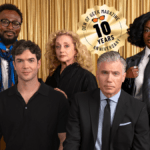
Every time a new season of a big tentpole science fiction rolls around, fans and critics tend to try to find the reason why this time things are different. New seasons often proclaim a new cast member or a shake-up behind the scenes in the creative team will change everything. But despite the two-year wait, […]
The post Star Trek: Strange New Worlds Really Is the Funnest Crew in the Fleet appeared first on Den of Geek.
Every time a new season of a big tentpole science fiction rolls around, fans and critics tend to try to find the reason why this time things are different. New seasons often proclaim a new cast member or a shake-up behind the scenes in the creative team will change everything. But despite the two-year wait, the refreshing thing about Star Trek: Strange New Worlds Season 3 is that it’s essentially the same show it’s been since 2022. For the cast and showrunners of the mega-popular Paramount+ series, the edict for season 3 is very clear: If ain’t broken, don’t bring in Scotty to fix it.
“I think it’s the consistency of keeping it a different story, a different genre. Every episode we’re keeping it classic,” star Celia Rose Gooding says. “It’s a strange new world every episode, and I think that’s what keeps fans coming back.”
cnx({
playerId: “106e33c0-3911-473c-b599-b1426db57530”,
}).render(“0270c398a82f44f49c23c16122516796”);
});
But what kinds of strange new worlds can fans expect in a third season? And is the secret to this show’s success only found in its throwback vibes or is there something deeper? In addition to Gooding, we also talked to cast members Anson Mount, Carol Kane, Ethan Peck, Babs Olusanmokun, and showrunners Akiva Goldsman and Henry Alonso Myers to look ahead at the future of the Final Frontier.
It’s Been a Long Road
Although Star Trek: Strange New Worlds seems, in some ways, to be a fairly new series (it launched in 2022), for Anson Mount and Ethan Peck, this mission has been going on for nearly a decade, beginning when they first took on the roles of Captain Pike and Mr. Spock in Star Trek: Discovery Season 2 seven years ago.
“There was a lot of discomfort that sort of turned into comfort over time,” Peck says of playing Spock since 2019. “And there are times when I’m on set and I’m not sure if I’m being Spock enough or if I’m being Ethan. And I’m like, ‘Where’s the line?’ We spend so many hours as these characters, and that line gets a little blurry.”
For Mount, the transformation of Pike—from TOS trivia question to beloved lead in Strange New Worlds—has also been a personal journey. And it’s fused him permanently to Pike.
“For whatever reason, this character is closer to me than a lot of other characters that I have played,” Mount admits. “But I think the whole tone of our show is a bit different [from Discovery]. We decided to bear down on the optimism of Trek and the planet-of-the-week, and in order to get there, Pike had to learn that the journey is the destination.”
A Strange, New Serialization
Despite its reputation for harkening back to the style and format of The Original Series, the success of Strange New Worlds isn’t really because it copies the self-contained nature of the classic Star Trek show. Instead like many other modern TV shows, Strange New Worlds does have a serialized style to it. But those arcs aren’t only connected to the science fiction stories. In Strange New Worlds, the serialization is the characters.
“There are certain kinds of relationship stories you can only tell over time,” co-showrunner Goldsman says. “So when we talk about this serialized character arc competent of the show, we’re doing something The Original Series couldn’t.”
Goldsman brings up the classic TOS episode “The City on the Edge of Forever” as the ultimate example of not only a great episode of Trek but also how it’s demonstrative of the limits of the classic series. We got to know the TOS cast fairly well from 1966 to 1969, but it’s not like the characters had complete arcs.
“Nothing frustrated me more than Kirk losing Edith Keeler one week and being fine the next week,” Goldsman considers. “But on our show, we actually can talk about relationships having beginnings, middles, and ends. They couldn’t. So they were sort of trapped in stasis in a strange way. But we’re not.”
One perfect example of how this kind of character evolution unfolds in season 3 is the transformation of Gooding’s take on Nyota Uhura. Thanks to Strange New Worlds’ character-driven episodic arcs, she’s had much more development with her younger Uhura than Nichelle Nichols ever had on The Original Series, to say nothing of Zoe Saldaña’s Uhura in the reboot movies. As iconic as the two previous Uhuras are, Gooding’s is the one we’ve gotten to know the best. In fact, the journey of her humble Uhura in seasons 1 and 2 will start to fully morph into the more ebullient Uhura of The Original Series during the forthcoming season 3.
“I think with season 3, we’re now getting an opportunity to show her more playful, flirtatious side,” Gooding says. “In the previous seasons, she was a character with so much depth and history and trauma. Now we get to see how she can still find lightness, joy, and playfulness. It’s very reminiscent of the Lieutenant Uhura we see in TOS. That’s a change from what we’ve seen of her in previous seasons.”
On the other side of the Starfleet biographical coin is Dr. M’Benga as played by Babs Olusanmokun. A minor character who appeared in just two TOS episodes (as played by Booker Bradshaw), Olusanmokun’s take on the man has been one of pure invention rather than reinvention. When it comes to M’Benga, canon hardly matters. The character was basically a blank slate. So while he started out as a sympathetic doctor with a mysterious past in Strange New Worlds’ first season, in season 2, we discovered a more physical, action-adventure version of M’Benga, a trend that Olusanmokun ensures will continue in season 3.
“’There are other pieces of him that we’re still unraveling,” Olusanmokun says. “But, yes, we leaned into that for season 2 and there’s more of that in season 3.”
For those who remember Olusanmokun in both Dune: Part One and Dune: Part Two, where he played the Fremen Jamis, the actor has the ability to bring equal parts warrior and monk to certain roles, something that is on full display for M’Benga in Strange New Worlds Season 3. But, is this character the most dangerous doctor in Star Trek history? Could this badass take Dr. Bashir or Bones in a fight? Olusanmokun hints at a connection between himself and the quiet strength of M’Benga, saying only, “Those that know what they do don’t talk about what they do, or glorify what they do. They just do it.”
Keeping Things Light
Despite the franchise’s reputation for self-seriousness and social commentary about the nature of humanity, the Star Trek phenomenon would be nothing without humor. And it’s here that Strange New Worlds Season 3 excels: it brings the fun to the Final Frontier without completely turning the show into a full-on sitcom (although one episode this season might qualify as a rom-com!). But this humorous element couldn’t work without certain characters. Hence in the second season, the producers enlisted the legendary Carol Kane to join the crew as the semi-immortal Pelia, a chief engineer with the irascibility of Bones and a sweetness that is all her own.
And no, we haven’t confused her with singer Carol King. “They thought I wrote the Tapestry album,” Kane jokes. “This is the first time I’m breaking it to them. Do you still love me?”
One thing that is new for Kane in season 3 is her pairing with Pelia’s old student, Montgomery Scott, better known to legions of fans as Scotty. Played by Martin Quinn in the season 2 finale, Scotty is back in season 3 as a full member of the cast.
“Oh, I love him. He is just adorable. He’s so fun,” Kane gushes. She also says that she feels that her character benefits from the company of the rest of the crew, something that comes across both in real life and on the screen.
“I was very moved by how I was accepted just right off the bat,” the performer explains. “My first scene was with Ethan who just accepted me. My instinct is to just try and dive into the writing and fulfill it as much with commitment and energy as I can, and that’s how she came out. I think they wrote a lovely character for me and I am very grateful.”
There’s also an episode this season directed by Jonathan Frakes, which Peck, Gooding, and Mount all say is “very funny.” Gooding also reveals that some bits in that forthcoming episode were teased out by Frakes. “Whenever Jonathan Frakes gets on set as a director, I feel so much more liberty to try new stuff and do fun things… it’s really, really fun.”
Mount agrees, saying with a sly smile: “Jonathan loves to be on set because he’s a fucking actor.” But relative to the process of comedy, Mount says the environment of the Strange New Worlds set often encourages humorous creativity. Sometimes on the fly. “Comedy happens when you find it,” he says. “And so you’re constantly kind of changing things just for the sake of seeing if you can find something new.”
Beyond the Five-Year Mission
Every episode of Strange New Worlds begins with Captain Pike echoing the familiar words of Captain Kirk, telling us that this is a “five-year mission” of the USS Enterprise. Just before we sat down with the cast and creative team of the show, it was revealed that this time limit is somewhat literal. Like two other contemporary Paramount+ Trek shows—Discovery and Lower Decks—Strange New Worlds will conclude after its fifth season, likely released sometime in 2027. And while this suggests a kind of endpoint for the series, there are still three whole seasons of the show that fans haven’t seen yet.
“I don’t feel like we’re doing the same thing each season,” co-showrunner Henry Alonso Myers says. “Without getting into specifics, there are some things in season 4 that people do that we have not seen those characters do. Every day is like that.”
Both Myers and Goldsman insist that the season 3—and season 4 and season 5—of Strange New Worlds will continue to deliver on what the promise of the series was originally; to make a version of The Original Series that could exist in today’s culture. But because Strange New Worlds uses classic characters who have been around for nearly 60 years, Goldsman agrees that on some level, the show is a bit like the various novels and comics based on the TOS cast, some of which satiated fans’ hunger when there was zero Star Trek on TV back in the 1970s and early 1980s. This isn’t fan fiction, exactly, but rather, a kind of expanded universe of The Original Series, previously only found in books and comics.
“It’s a good comparison, thinking about the books. I’ve never thought of it, but that’s very much what we are,” Goldsman says. “We’re behind the canon. We’re beyond what is apparent.”
So, outside of the next three years of Strange New Worlds adventures, what’s next? Could Strange New Worlds morph into a reboot of The Original Series, at least for a little while? Goldsman isn’t saying yes, but he’s not saying no either.
“Our plan, our aspiration has always been to get to TOS,” he says. “The plan was that we would have five years to move from the Strange New Worlds cast and crew to a TOS show. Whether we do or don’t, that’s the hope.”
Star Trek: Strange New Worlds Season 3 debuts with two episodes on Paramount+ on July 17.
The post Star Trek: Strange New Worlds Really Is the Funnest Crew in the Fleet appeared first on Den of Geek.
What Features to Check for the Best Air Operated Double Diaphragm Pump? Top 6 Important Qualities to Consider

Pumps are used in the cleantech industry to sustainably manage chemicals that may be dangerous to the environment
The post What Features to Check for the Best Air Operated Double Diaphragm Pump? Top 6 Important Qualities to Consider appeared first on Green Prophet.
If you are running an impact charity or a small impact solar energy business, you need to know all the ins and outs of government compliance when you get those grants
Charitable giving isn’t just about dropping extra change in a donation jar or saying “yes” to a prompt at the cash register to tag on a dollar for a good cause. These practices are often categorized as “checkbook” philanthropy because they concern individuals writing a check, so to speak, after they’re prompted with an appeal for donations. This is a noble way for individuals to decide if some of their disposable income might find better use addressing an urgent cause.
But there’s another kind of philanthropy that’s more organized, strategic, and impactful, one that involves choosing a vehicle through which charitable activity is conducted. In this guide, we’ll take a look at three common charitable vehicles, weighing the benefits and tradeoffs of each—private family foundations, donor-advised funds (DAF), and limited liability companies (LLCs) used for philanthropic purposes—so you can determine which vehicle is best suited to put your family’s values into action and build a legacy.
Private Family Foundations
Private foundations are nongovernmental, nonprofit organizations often funded by a single source—typically an individual, family, or corporation. They’re tax-exempt under Section 501(c)(3). The Council on Foundations (CoF) reports that around two-thirds of all private foundations are family-managed. This is what people mean when they say “private family foundation,” which isn’t a distinct legal entity from a private foundation, but rather a way a private foundation is managed.
For instance, a private family foundation would be funded by members of one family and remain under the management of at least one family member. According to the CoF, “in many cases, second- and third-generation descendants of the original donors manage the foundation.” This makes the private foundation an ideal charitable vehicle for families who want to make a long-term philanthropic commitment with a deep involvement in how their charitable dollars are spent.
What makes private foundations attractive is the high level of control they offer. Families can define the mission, decide where grants go, hire staff, and manage investments. As for responsibilities, private foundations must distribute at least 5% of their assets annually to charitable purposes. They also must fulfill their administrative requirements, like filing IRS Form 990-PF each year and paying an excise tax on investment income.
Pros:
- Control: Full authority over investments, grantmaking, staffing, and mission. Families can determine how assets are managed, what causes to support, and who is involved in the decision-making.
- Legacy: Designed for long-term, multi-generational involvement. Successors can be named and integrated into the foundation’s governance, creating continuity between your family’s values and future generations.
- Versatility: Foundations support a relatively wide range of charitable activities, including international giving. Private foundations can also run their own programs directly.
Cons:
- Cost and Complexity: High upfront costs and ongoing expenses must be expected in private foundations, as well as legal, accounting, and administrative requirements.
- Regulatory Burden: Annual filings, detailed reporting, and compliance with distribution rules may become burdensome.
- Excise Tax: A 1.39% tax on investment income reduces total funds available for grantmaking. It’s minor, but worth factoring in for long-term planning.
| Common Misconception: “Private foundations are a way to shield wealth from taxes indefinitely.” Not quite. Private foundations have to distribute at least 5% of their assets annually and pay an excise tax on investment income. They’re subject to strict IRS regulations, and they’re monitored for compliance. |
Donor-Advised Funds (DAFs)
A donor-advised fund (DAF) is a great choice for families who aren’t interested in the administrative and managerial responsibilities of a private foundation. A DAF is an account that allows donors to contribute assets and recommend grants, while the fund is ultimately managed by a sponsoring charity (often a financial institution). In other words, the donor retains advisory power, while the sponsor retains control of the fund.
DAFs are a good fit for families of donors that are looking for simplicity, streamlined recordkeeping (since you don’t need to keep track of every gift acknowledgement), and tax efficiency without losing say in how their contributions could be used. For instance, you could recommend that your donations be used as a source of long-term funding for any IRS-qualified public charity.
Some people enjoy the anonymity that DAFs make possible while donating to causes, but DAFs can also be established in your family’s name. To that end, you can recommend successors to build and maintain a legacy of giving while the sponsoring charity handles all compliance, investments, and distribution. Once a contribution is made to a DAF, you receive an immediate tax deduction.
Pros:
- Immediate Tax Deduction: Contributions are deductible in the year they’re made, even if grants are distributed later. That timing flexibility makes DAFs a useful year-end tax planning tool.
- Low Maintenance: The sponsoring organization manages compliance, accounting, and investments, which means families don’t have to. There’s also no need to form a separate legal entity or file annual tax returns. It’s as close to hassle-free philanthropy as you can get.
- Tax-Free Growth: Assets in a DAF can grow without being taxed, increasing the pool of funds available for future grants.
Cons:
- Limited Control: As a donor, you only have advisory power over a DAF. Final decision power rests with the sponsoring charity. Typically, donor recommendations are approved, but there’s no legal guarantee.
- No Mandatory Payout: Unlike private foundations, there’s no minimum annual distribution requirement. Funds can sit idle for years unless the donor takes initiative. This makes it easier to delay or avoid actual charitable activity.
| Common Misconception: “Aren’t donor-advised funds just tax shelters without any oversight?” DAFs are regulated by the IRS and managed by sponsoring organizations. While donors recommend grants, the charity holds ultimate control over funds, ensuring they’re directed to charitable causes. |
LLCs Used for Philanthropic Purposes
Unlike foundations and DAFs, LLCs that are used for philanthropic purposes are not tax-exempt entities. They’re for-profit limited liability structures that some families and high-net-worth individuals use to pursue their goals, like grantmaking, political advocacy, and impact investing, without the constraints of traditional nonprofits. While sometimes informally referred to as “charitable LLCs,” this is a bit misleading—these entities aren’t charities in a legal or tax-exempt sense. What distinguishes them is their ability to blend financial returns with social goals in one flexible platform.
The primary appeal is control and range. LLCs can make grants to nonprofits, fund political campaigns, lobby lawmakers, and make equity investments—all under the same structure. These activities are more constrained under a 501(c)(3) foundation. As such, LLCs are often used by high-net-worth individuals or families who want to engage in more nontraditional and flexible forms of philanthropy.
But this flexibility comes at a tax cost. LLCs are typically taxed as “pass-through” entities, meaning any income the LLC generates is passed directly to owners, shareholders, or investors and reported on the members’ personal tax returns, regardless of whether that income is actually distributed. Likewise, LLCs don’t offer the same upfront tax deductions as the other models. Deductions would only apply if the LLC itself donated to a qualifying charity, not if a contribution was made to the LLC.
Pros:
- Flexibility: LLCs aren’t bound by nonprofit restrictions and can engage in lobbying, for-profit investing, and political giving. That makes them a powerful tool for donors who want to influence systems to address philanthropic and business concerns.
- Control: Owners retain full operational control without oversight from a board or nonprofit regulator.
- Privacy: LLCs don’t have to file public disclosures like Form 990. Salaries, grants, and investments can be kept private, which may appeal to families who value privacy.
- Tax Strategy: While not tax-exempt, LLCs offer flexibility in how losses and gains are handled. Impact investment losses can be used to offset other income, while profits can be recycled into future projects.
Cons:
- No Upfront Tax Deduction: Donors only receive deductions when the LLC gives to a qualifying 501(c)(3), which adds a step and limits immediate tax benefits. This may be a concern for families with near-term planning needs.
- Tax Exposure: Income from the LLC flows through to members and is taxable, even if it isn’t distributed. That means donors could face tax bills on earnings they don’t actually receive.
| Common Misconception: “LLCs can’t serve charitable purposes.” They can, just not in the conventional, tax-exempt sense. For philanthropists seeking charitable and commercial impact, the LLC may be the only model that offers both. |
Choosing the Right Structure
There’s no “best” charitable vehicle—it depends on your family’s goals, tax situation, and appetite for control and complexity. Private foundations are ideal for families who want to be hands-on, create a lasting legacy, and directly shape how charitable funds are used, but they do require significant administrative work and costs. Donor-advised funds are streamlined, cost-effective, and tax-efficient, but they offer less control and may require donor initiative to maximize charitable outcomes. LLCs offer maximum flexibility and privacy, but they don’t provide the same tax benefits and require more coordination to be effective.
Families often combine structures to meet their needs. For instance, a DAF can support regular grantmaking with minimal effort, while an LLC can handle impact investing or other activities that a traditional nonprofit can’t. As your charitable vision grows or as your interests shift, the vehicles you use can shift too.
| Common Misconception: “Once you choose a charitable structure, you’re locked in.” You’re not. Structures can be reconfigured, expanded, or adapted over time to align with new goals or tax strategies. |
About the Author
Bo Parfet is Head of Growth at DLP Capital, a 5+ billion-dollar company, and a 3X author, speaker, and mountaineer. He received his MBA from the Kellogg School of Management at Northwestern and a Master’s Degree in Economics from the University of Michigan. Among his mountaineering adventures, he’s climbed the Seven Summits and K2, and is embarking on an endeavor to ski down Mount Everest to raise money to bring eyesight to 100,000 blind people. He lives with his wife and two sons in Boulder, CO. You can find him on other social media platforms @boparfet.
Disclaimer: Statements are those of Bo Parfet only and are not guaranteed, nor should such statements be relied upon. Forward-looking statements are expressions and beliefs of Bo Parfet and should not be relied upon.
Past performance is not a guarantee or indicator of future results. The information provided is for informational purposes only and does not constitute a recommendation, an offer to sell, or a solicitation to buy. Investment decisions should be made based on your individual financial situation and objectives. Please consult your attorney, tax advisor, or financial professional before making any investment.
The post Charitable Vehicles for Families: Foundations, Funds, and LLCs appeared first on Green Prophet.
Step Off the Path to a Plastic Planet: UN Treaty Talks Hit Final Stretch

Still, the science is no longer ambiguous. Plastic is no longer just littering beaches — it’s in the rain, the food, in our brains, and now, the very cells of the ocean’s smallest life forms. As the world prepares for the final treaty talks, the question is no longer whether action is needed, but whether global leaders will agree on what that action should be.
The post Step Off the Path to a Plastic Planet: UN Treaty Talks Hit Final Stretch appeared first on Green Prophet.
If you are running an impact charity or a small impact solar energy business, you need to know all the ins and outs of government compliance when you get those grants
Charitable giving isn’t just about dropping extra change in a donation jar or saying “yes” to a prompt at the cash register to tag on a dollar for a good cause. These practices are often categorized as “checkbook” philanthropy because they concern individuals writing a check, so to speak, after they’re prompted with an appeal for donations. This is a noble way for individuals to decide if some of their disposable income might find better use addressing an urgent cause.
But there’s another kind of philanthropy that’s more organized, strategic, and impactful, one that involves choosing a vehicle through which charitable activity is conducted. In this guide, we’ll take a look at three common charitable vehicles, weighing the benefits and tradeoffs of each—private family foundations, donor-advised funds (DAF), and limited liability companies (LLCs) used for philanthropic purposes—so you can determine which vehicle is best suited to put your family’s values into action and build a legacy.
Private Family Foundations
Private foundations are nongovernmental, nonprofit organizations often funded by a single source—typically an individual, family, or corporation. They’re tax-exempt under Section 501(c)(3). The Council on Foundations (CoF) reports that around two-thirds of all private foundations are family-managed. This is what people mean when they say “private family foundation,” which isn’t a distinct legal entity from a private foundation, but rather a way a private foundation is managed.
For instance, a private family foundation would be funded by members of one family and remain under the management of at least one family member. According to the CoF, “in many cases, second- and third-generation descendants of the original donors manage the foundation.” This makes the private foundation an ideal charitable vehicle for families who want to make a long-term philanthropic commitment with a deep involvement in how their charitable dollars are spent.
What makes private foundations attractive is the high level of control they offer. Families can define the mission, decide where grants go, hire staff, and manage investments. As for responsibilities, private foundations must distribute at least 5% of their assets annually to charitable purposes. They also must fulfill their administrative requirements, like filing IRS Form 990-PF each year and paying an excise tax on investment income.
Pros:
- Control: Full authority over investments, grantmaking, staffing, and mission. Families can determine how assets are managed, what causes to support, and who is involved in the decision-making.
- Legacy: Designed for long-term, multi-generational involvement. Successors can be named and integrated into the foundation’s governance, creating continuity between your family’s values and future generations.
- Versatility: Foundations support a relatively wide range of charitable activities, including international giving. Private foundations can also run their own programs directly.
Cons:
- Cost and Complexity: High upfront costs and ongoing expenses must be expected in private foundations, as well as legal, accounting, and administrative requirements.
- Regulatory Burden: Annual filings, detailed reporting, and compliance with distribution rules may become burdensome.
- Excise Tax: A 1.39% tax on investment income reduces total funds available for grantmaking. It’s minor, but worth factoring in for long-term planning.
| Common Misconception: “Private foundations are a way to shield wealth from taxes indefinitely.” Not quite. Private foundations have to distribute at least 5% of their assets annually and pay an excise tax on investment income. They’re subject to strict IRS regulations, and they’re monitored for compliance. |
Donor-Advised Funds (DAFs)
A donor-advised fund (DAF) is a great choice for families who aren’t interested in the administrative and managerial responsibilities of a private foundation. A DAF is an account that allows donors to contribute assets and recommend grants, while the fund is ultimately managed by a sponsoring charity (often a financial institution). In other words, the donor retains advisory power, while the sponsor retains control of the fund.
DAFs are a good fit for families of donors that are looking for simplicity, streamlined recordkeeping (since you don’t need to keep track of every gift acknowledgement), and tax efficiency without losing say in how their contributions could be used. For instance, you could recommend that your donations be used as a source of long-term funding for any IRS-qualified public charity.
Some people enjoy the anonymity that DAFs make possible while donating to causes, but DAFs can also be established in your family’s name. To that end, you can recommend successors to build and maintain a legacy of giving while the sponsoring charity handles all compliance, investments, and distribution. Once a contribution is made to a DAF, you receive an immediate tax deduction.
Pros:
- Immediate Tax Deduction: Contributions are deductible in the year they’re made, even if grants are distributed later. That timing flexibility makes DAFs a useful year-end tax planning tool.
- Low Maintenance: The sponsoring organization manages compliance, accounting, and investments, which means families don’t have to. There’s also no need to form a separate legal entity or file annual tax returns. It’s as close to hassle-free philanthropy as you can get.
- Tax-Free Growth: Assets in a DAF can grow without being taxed, increasing the pool of funds available for future grants.
Cons:
- Limited Control: As a donor, you only have advisory power over a DAF. Final decision power rests with the sponsoring charity. Typically, donor recommendations are approved, but there’s no legal guarantee.
- No Mandatory Payout: Unlike private foundations, there’s no minimum annual distribution requirement. Funds can sit idle for years unless the donor takes initiative. This makes it easier to delay or avoid actual charitable activity.
| Common Misconception: “Aren’t donor-advised funds just tax shelters without any oversight?” DAFs are regulated by the IRS and managed by sponsoring organizations. While donors recommend grants, the charity holds ultimate control over funds, ensuring they’re directed to charitable causes. |
LLCs Used for Philanthropic Purposes
Unlike foundations and DAFs, LLCs that are used for philanthropic purposes are not tax-exempt entities. They’re for-profit limited liability structures that some families and high-net-worth individuals use to pursue their goals, like grantmaking, political advocacy, and impact investing, without the constraints of traditional nonprofits. While sometimes informally referred to as “charitable LLCs,” this is a bit misleading—these entities aren’t charities in a legal or tax-exempt sense. What distinguishes them is their ability to blend financial returns with social goals in one flexible platform.
The primary appeal is control and range. LLCs can make grants to nonprofits, fund political campaigns, lobby lawmakers, and make equity investments—all under the same structure. These activities are more constrained under a 501(c)(3) foundation. As such, LLCs are often used by high-net-worth individuals or families who want to engage in more nontraditional and flexible forms of philanthropy.
But this flexibility comes at a tax cost. LLCs are typically taxed as “pass-through” entities, meaning any income the LLC generates is passed directly to owners, shareholders, or investors and reported on the members’ personal tax returns, regardless of whether that income is actually distributed. Likewise, LLCs don’t offer the same upfront tax deductions as the other models. Deductions would only apply if the LLC itself donated to a qualifying charity, not if a contribution was made to the LLC.
Pros:
- Flexibility: LLCs aren’t bound by nonprofit restrictions and can engage in lobbying, for-profit investing, and political giving. That makes them a powerful tool for donors who want to influence systems to address philanthropic and business concerns.
- Control: Owners retain full operational control without oversight from a board or nonprofit regulator.
- Privacy: LLCs don’t have to file public disclosures like Form 990. Salaries, grants, and investments can be kept private, which may appeal to families who value privacy.
- Tax Strategy: While not tax-exempt, LLCs offer flexibility in how losses and gains are handled. Impact investment losses can be used to offset other income, while profits can be recycled into future projects.
Cons:
- No Upfront Tax Deduction: Donors only receive deductions when the LLC gives to a qualifying 501(c)(3), which adds a step and limits immediate tax benefits. This may be a concern for families with near-term planning needs.
- Tax Exposure: Income from the LLC flows through to members and is taxable, even if it isn’t distributed. That means donors could face tax bills on earnings they don’t actually receive.
| Common Misconception: “LLCs can’t serve charitable purposes.” They can, just not in the conventional, tax-exempt sense. For philanthropists seeking charitable and commercial impact, the LLC may be the only model that offers both. |
Choosing the Right Structure
There’s no “best” charitable vehicle—it depends on your family’s goals, tax situation, and appetite for control and complexity. Private foundations are ideal for families who want to be hands-on, create a lasting legacy, and directly shape how charitable funds are used, but they do require significant administrative work and costs. Donor-advised funds are streamlined, cost-effective, and tax-efficient, but they offer less control and may require donor initiative to maximize charitable outcomes. LLCs offer maximum flexibility and privacy, but they don’t provide the same tax benefits and require more coordination to be effective.
Families often combine structures to meet their needs. For instance, a DAF can support regular grantmaking with minimal effort, while an LLC can handle impact investing or other activities that a traditional nonprofit can’t. As your charitable vision grows or as your interests shift, the vehicles you use can shift too.
| Common Misconception: “Once you choose a charitable structure, you’re locked in.” You’re not. Structures can be reconfigured, expanded, or adapted over time to align with new goals or tax strategies. |
About the Author
Bo Parfet is Head of Growth at DLP Capital, a 5+ billion-dollar company, and a 3X author, speaker, and mountaineer. He received his MBA from the Kellogg School of Management at Northwestern and a Master’s Degree in Economics from the University of Michigan. Among his mountaineering adventures, he’s climbed the Seven Summits and K2, and is embarking on an endeavor to ski down Mount Everest to raise money to bring eyesight to 100,000 blind people. He lives with his wife and two sons in Boulder, CO. You can find him on other social media platforms @boparfet.
Disclaimer: Statements are those of Bo Parfet only and are not guaranteed, nor should such statements be relied upon. Forward-looking statements are expressions and beliefs of Bo Parfet and should not be relied upon.
Past performance is not a guarantee or indicator of future results. The information provided is for informational purposes only and does not constitute a recommendation, an offer to sell, or a solicitation to buy. Investment decisions should be made based on your individual financial situation and objectives. Please consult your attorney, tax advisor, or financial professional before making any investment.
The post Charitable Vehicles for Families: Foundations, Funds, and LLCs appeared first on Green Prophet.
How processed food messes with your heart

Researchers found that those on the high phosphate diet showed increased levels of FGF23 protein in their serum, cerebrospinal fluid, and brain stem, and that FGF23 proteins were able to cross the blood-brain barrier, causing high blood pressure both at rest and during physical stress.
The post How processed food messes with your heart appeared first on Green Prophet.
If you are running an impact charity or a small impact solar energy business, you need to know all the ins and outs of government compliance when you get those grants
Charitable giving isn’t just about dropping extra change in a donation jar or saying “yes” to a prompt at the cash register to tag on a dollar for a good cause. These practices are often categorized as “checkbook” philanthropy because they concern individuals writing a check, so to speak, after they’re prompted with an appeal for donations. This is a noble way for individuals to decide if some of their disposable income might find better use addressing an urgent cause.
But there’s another kind of philanthropy that’s more organized, strategic, and impactful, one that involves choosing a vehicle through which charitable activity is conducted. In this guide, we’ll take a look at three common charitable vehicles, weighing the benefits and tradeoffs of each—private family foundations, donor-advised funds (DAF), and limited liability companies (LLCs) used for philanthropic purposes—so you can determine which vehicle is best suited to put your family’s values into action and build a legacy.
Private Family Foundations
Private foundations are nongovernmental, nonprofit organizations often funded by a single source—typically an individual, family, or corporation. They’re tax-exempt under Section 501(c)(3). The Council on Foundations (CoF) reports that around two-thirds of all private foundations are family-managed. This is what people mean when they say “private family foundation,” which isn’t a distinct legal entity from a private foundation, but rather a way a private foundation is managed.
For instance, a private family foundation would be funded by members of one family and remain under the management of at least one family member. According to the CoF, “in many cases, second- and third-generation descendants of the original donors manage the foundation.” This makes the private foundation an ideal charitable vehicle for families who want to make a long-term philanthropic commitment with a deep involvement in how their charitable dollars are spent.
What makes private foundations attractive is the high level of control they offer. Families can define the mission, decide where grants go, hire staff, and manage investments. As for responsibilities, private foundations must distribute at least 5% of their assets annually to charitable purposes. They also must fulfill their administrative requirements, like filing IRS Form 990-PF each year and paying an excise tax on investment income.
Pros:
- Control: Full authority over investments, grantmaking, staffing, and mission. Families can determine how assets are managed, what causes to support, and who is involved in the decision-making.
- Legacy: Designed for long-term, multi-generational involvement. Successors can be named and integrated into the foundation’s governance, creating continuity between your family’s values and future generations.
- Versatility: Foundations support a relatively wide range of charitable activities, including international giving. Private foundations can also run their own programs directly.
Cons:
- Cost and Complexity: High upfront costs and ongoing expenses must be expected in private foundations, as well as legal, accounting, and administrative requirements.
- Regulatory Burden: Annual filings, detailed reporting, and compliance with distribution rules may become burdensome.
- Excise Tax: A 1.39% tax on investment income reduces total funds available for grantmaking. It’s minor, but worth factoring in for long-term planning.
| Common Misconception: “Private foundations are a way to shield wealth from taxes indefinitely.” Not quite. Private foundations have to distribute at least 5% of their assets annually and pay an excise tax on investment income. They’re subject to strict IRS regulations, and they’re monitored for compliance. |
Donor-Advised Funds (DAFs)
A donor-advised fund (DAF) is a great choice for families who aren’t interested in the administrative and managerial responsibilities of a private foundation. A DAF is an account that allows donors to contribute assets and recommend grants, while the fund is ultimately managed by a sponsoring charity (often a financial institution). In other words, the donor retains advisory power, while the sponsor retains control of the fund.
DAFs are a good fit for families of donors that are looking for simplicity, streamlined recordkeeping (since you don’t need to keep track of every gift acknowledgement), and tax efficiency without losing say in how their contributions could be used. For instance, you could recommend that your donations be used as a source of long-term funding for any IRS-qualified public charity.
Some people enjoy the anonymity that DAFs make possible while donating to causes, but DAFs can also be established in your family’s name. To that end, you can recommend successors to build and maintain a legacy of giving while the sponsoring charity handles all compliance, investments, and distribution. Once a contribution is made to a DAF, you receive an immediate tax deduction.
Pros:
- Immediate Tax Deduction: Contributions are deductible in the year they’re made, even if grants are distributed later. That timing flexibility makes DAFs a useful year-end tax planning tool.
- Low Maintenance: The sponsoring organization manages compliance, accounting, and investments, which means families don’t have to. There’s also no need to form a separate legal entity or file annual tax returns. It’s as close to hassle-free philanthropy as you can get.
- Tax-Free Growth: Assets in a DAF can grow without being taxed, increasing the pool of funds available for future grants.
Cons:
- Limited Control: As a donor, you only have advisory power over a DAF. Final decision power rests with the sponsoring charity. Typically, donor recommendations are approved, but there’s no legal guarantee.
- No Mandatory Payout: Unlike private foundations, there’s no minimum annual distribution requirement. Funds can sit idle for years unless the donor takes initiative. This makes it easier to delay or avoid actual charitable activity.
| Common Misconception: “Aren’t donor-advised funds just tax shelters without any oversight?” DAFs are regulated by the IRS and managed by sponsoring organizations. While donors recommend grants, the charity holds ultimate control over funds, ensuring they’re directed to charitable causes. |
LLCs Used for Philanthropic Purposes
Unlike foundations and DAFs, LLCs that are used for philanthropic purposes are not tax-exempt entities. They’re for-profit limited liability structures that some families and high-net-worth individuals use to pursue their goals, like grantmaking, political advocacy, and impact investing, without the constraints of traditional nonprofits. While sometimes informally referred to as “charitable LLCs,” this is a bit misleading—these entities aren’t charities in a legal or tax-exempt sense. What distinguishes them is their ability to blend financial returns with social goals in one flexible platform.
The primary appeal is control and range. LLCs can make grants to nonprofits, fund political campaigns, lobby lawmakers, and make equity investments—all under the same structure. These activities are more constrained under a 501(c)(3) foundation. As such, LLCs are often used by high-net-worth individuals or families who want to engage in more nontraditional and flexible forms of philanthropy.
But this flexibility comes at a tax cost. LLCs are typically taxed as “pass-through” entities, meaning any income the LLC generates is passed directly to owners, shareholders, or investors and reported on the members’ personal tax returns, regardless of whether that income is actually distributed. Likewise, LLCs don’t offer the same upfront tax deductions as the other models. Deductions would only apply if the LLC itself donated to a qualifying charity, not if a contribution was made to the LLC.
Pros:
- Flexibility: LLCs aren’t bound by nonprofit restrictions and can engage in lobbying, for-profit investing, and political giving. That makes them a powerful tool for donors who want to influence systems to address philanthropic and business concerns.
- Control: Owners retain full operational control without oversight from a board or nonprofit regulator.
- Privacy: LLCs don’t have to file public disclosures like Form 990. Salaries, grants, and investments can be kept private, which may appeal to families who value privacy.
- Tax Strategy: While not tax-exempt, LLCs offer flexibility in how losses and gains are handled. Impact investment losses can be used to offset other income, while profits can be recycled into future projects.
Cons:
- No Upfront Tax Deduction: Donors only receive deductions when the LLC gives to a qualifying 501(c)(3), which adds a step and limits immediate tax benefits. This may be a concern for families with near-term planning needs.
- Tax Exposure: Income from the LLC flows through to members and is taxable, even if it isn’t distributed. That means donors could face tax bills on earnings they don’t actually receive.
| Common Misconception: “LLCs can’t serve charitable purposes.” They can, just not in the conventional, tax-exempt sense. For philanthropists seeking charitable and commercial impact, the LLC may be the only model that offers both. |
Choosing the Right Structure
There’s no “best” charitable vehicle—it depends on your family’s goals, tax situation, and appetite for control and complexity. Private foundations are ideal for families who want to be hands-on, create a lasting legacy, and directly shape how charitable funds are used, but they do require significant administrative work and costs. Donor-advised funds are streamlined, cost-effective, and tax-efficient, but they offer less control and may require donor initiative to maximize charitable outcomes. LLCs offer maximum flexibility and privacy, but they don’t provide the same tax benefits and require more coordination to be effective.
Families often combine structures to meet their needs. For instance, a DAF can support regular grantmaking with minimal effort, while an LLC can handle impact investing or other activities that a traditional nonprofit can’t. As your charitable vision grows or as your interests shift, the vehicles you use can shift too.
| Common Misconception: “Once you choose a charitable structure, you’re locked in.” You’re not. Structures can be reconfigured, expanded, or adapted over time to align with new goals or tax strategies. |
About the Author
Bo Parfet is Head of Growth at DLP Capital, a 5+ billion-dollar company, and a 3X author, speaker, and mountaineer. He received his MBA from the Kellogg School of Management at Northwestern and a Master’s Degree in Economics from the University of Michigan. Among his mountaineering adventures, he’s climbed the Seven Summits and K2, and is embarking on an endeavor to ski down Mount Everest to raise money to bring eyesight to 100,000 blind people. He lives with his wife and two sons in Boulder, CO. You can find him on other social media platforms @boparfet.
Disclaimer: Statements are those of Bo Parfet only and are not guaranteed, nor should such statements be relied upon. Forward-looking statements are expressions and beliefs of Bo Parfet and should not be relied upon.
Past performance is not a guarantee or indicator of future results. The information provided is for informational purposes only and does not constitute a recommendation, an offer to sell, or a solicitation to buy. Investment decisions should be made based on your individual financial situation and objectives. Please consult your attorney, tax advisor, or financial professional before making any investment.
The post Charitable Vehicles for Families: Foundations, Funds, and LLCs appeared first on Green Prophet.
Exploring Portugal’s Algarve coast sustainably on a walking holiday

A huge part of sustainable holidays is where you choose to spend your money. The local communities benefit from tourism, as long as it helps to grow their economy. On a walking holiday, you will typically be staying in small, independent hotels or B&Bs along your route, rather than those owned by global chains.
The post Exploring Portugal’s Algarve coast sustainably on a walking holiday appeared first on Green Prophet.
If you are running an impact charity or a small impact solar energy business, you need to know all the ins and outs of government compliance when you get those grants
Charitable giving isn’t just about dropping extra change in a donation jar or saying “yes” to a prompt at the cash register to tag on a dollar for a good cause. These practices are often categorized as “checkbook” philanthropy because they concern individuals writing a check, so to speak, after they’re prompted with an appeal for donations. This is a noble way for individuals to decide if some of their disposable income might find better use addressing an urgent cause.
But there’s another kind of philanthropy that’s more organized, strategic, and impactful, one that involves choosing a vehicle through which charitable activity is conducted. In this guide, we’ll take a look at three common charitable vehicles, weighing the benefits and tradeoffs of each—private family foundations, donor-advised funds (DAF), and limited liability companies (LLCs) used for philanthropic purposes—so you can determine which vehicle is best suited to put your family’s values into action and build a legacy.
Private Family Foundations
Private foundations are nongovernmental, nonprofit organizations often funded by a single source—typically an individual, family, or corporation. They’re tax-exempt under Section 501(c)(3). The Council on Foundations (CoF) reports that around two-thirds of all private foundations are family-managed. This is what people mean when they say “private family foundation,” which isn’t a distinct legal entity from a private foundation, but rather a way a private foundation is managed.
For instance, a private family foundation would be funded by members of one family and remain under the management of at least one family member. According to the CoF, “in many cases, second- and third-generation descendants of the original donors manage the foundation.” This makes the private foundation an ideal charitable vehicle for families who want to make a long-term philanthropic commitment with a deep involvement in how their charitable dollars are spent.
What makes private foundations attractive is the high level of control they offer. Families can define the mission, decide where grants go, hire staff, and manage investments. As for responsibilities, private foundations must distribute at least 5% of their assets annually to charitable purposes. They also must fulfill their administrative requirements, like filing IRS Form 990-PF each year and paying an excise tax on investment income.
Pros:
- Control: Full authority over investments, grantmaking, staffing, and mission. Families can determine how assets are managed, what causes to support, and who is involved in the decision-making.
- Legacy: Designed for long-term, multi-generational involvement. Successors can be named and integrated into the foundation’s governance, creating continuity between your family’s values and future generations.
- Versatility: Foundations support a relatively wide range of charitable activities, including international giving. Private foundations can also run their own programs directly.
Cons:
- Cost and Complexity: High upfront costs and ongoing expenses must be expected in private foundations, as well as legal, accounting, and administrative requirements.
- Regulatory Burden: Annual filings, detailed reporting, and compliance with distribution rules may become burdensome.
- Excise Tax: A 1.39% tax on investment income reduces total funds available for grantmaking. It’s minor, but worth factoring in for long-term planning.
| Common Misconception: “Private foundations are a way to shield wealth from taxes indefinitely.” Not quite. Private foundations have to distribute at least 5% of their assets annually and pay an excise tax on investment income. They’re subject to strict IRS regulations, and they’re monitored for compliance. |
Donor-Advised Funds (DAFs)
A donor-advised fund (DAF) is a great choice for families who aren’t interested in the administrative and managerial responsibilities of a private foundation. A DAF is an account that allows donors to contribute assets and recommend grants, while the fund is ultimately managed by a sponsoring charity (often a financial institution). In other words, the donor retains advisory power, while the sponsor retains control of the fund.
DAFs are a good fit for families of donors that are looking for simplicity, streamlined recordkeeping (since you don’t need to keep track of every gift acknowledgement), and tax efficiency without losing say in how their contributions could be used. For instance, you could recommend that your donations be used as a source of long-term funding for any IRS-qualified public charity.
Some people enjoy the anonymity that DAFs make possible while donating to causes, but DAFs can also be established in your family’s name. To that end, you can recommend successors to build and maintain a legacy of giving while the sponsoring charity handles all compliance, investments, and distribution. Once a contribution is made to a DAF, you receive an immediate tax deduction.
Pros:
- Immediate Tax Deduction: Contributions are deductible in the year they’re made, even if grants are distributed later. That timing flexibility makes DAFs a useful year-end tax planning tool.
- Low Maintenance: The sponsoring organization manages compliance, accounting, and investments, which means families don’t have to. There’s also no need to form a separate legal entity or file annual tax returns. It’s as close to hassle-free philanthropy as you can get.
- Tax-Free Growth: Assets in a DAF can grow without being taxed, increasing the pool of funds available for future grants.
Cons:
- Limited Control: As a donor, you only have advisory power over a DAF. Final decision power rests with the sponsoring charity. Typically, donor recommendations are approved, but there’s no legal guarantee.
- No Mandatory Payout: Unlike private foundations, there’s no minimum annual distribution requirement. Funds can sit idle for years unless the donor takes initiative. This makes it easier to delay or avoid actual charitable activity.
| Common Misconception: “Aren’t donor-advised funds just tax shelters without any oversight?” DAFs are regulated by the IRS and managed by sponsoring organizations. While donors recommend grants, the charity holds ultimate control over funds, ensuring they’re directed to charitable causes. |
LLCs Used for Philanthropic Purposes
Unlike foundations and DAFs, LLCs that are used for philanthropic purposes are not tax-exempt entities. They’re for-profit limited liability structures that some families and high-net-worth individuals use to pursue their goals, like grantmaking, political advocacy, and impact investing, without the constraints of traditional nonprofits. While sometimes informally referred to as “charitable LLCs,” this is a bit misleading—these entities aren’t charities in a legal or tax-exempt sense. What distinguishes them is their ability to blend financial returns with social goals in one flexible platform.
The primary appeal is control and range. LLCs can make grants to nonprofits, fund political campaigns, lobby lawmakers, and make equity investments—all under the same structure. These activities are more constrained under a 501(c)(3) foundation. As such, LLCs are often used by high-net-worth individuals or families who want to engage in more nontraditional and flexible forms of philanthropy.
But this flexibility comes at a tax cost. LLCs are typically taxed as “pass-through” entities, meaning any income the LLC generates is passed directly to owners, shareholders, or investors and reported on the members’ personal tax returns, regardless of whether that income is actually distributed. Likewise, LLCs don’t offer the same upfront tax deductions as the other models. Deductions would only apply if the LLC itself donated to a qualifying charity, not if a contribution was made to the LLC.
Pros:
- Flexibility: LLCs aren’t bound by nonprofit restrictions and can engage in lobbying, for-profit investing, and political giving. That makes them a powerful tool for donors who want to influence systems to address philanthropic and business concerns.
- Control: Owners retain full operational control without oversight from a board or nonprofit regulator.
- Privacy: LLCs don’t have to file public disclosures like Form 990. Salaries, grants, and investments can be kept private, which may appeal to families who value privacy.
- Tax Strategy: While not tax-exempt, LLCs offer flexibility in how losses and gains are handled. Impact investment losses can be used to offset other income, while profits can be recycled into future projects.
Cons:
- No Upfront Tax Deduction: Donors only receive deductions when the LLC gives to a qualifying 501(c)(3), which adds a step and limits immediate tax benefits. This may be a concern for families with near-term planning needs.
- Tax Exposure: Income from the LLC flows through to members and is taxable, even if it isn’t distributed. That means donors could face tax bills on earnings they don’t actually receive.
| Common Misconception: “LLCs can’t serve charitable purposes.” They can, just not in the conventional, tax-exempt sense. For philanthropists seeking charitable and commercial impact, the LLC may be the only model that offers both. |
Choosing the Right Structure
There’s no “best” charitable vehicle—it depends on your family’s goals, tax situation, and appetite for control and complexity. Private foundations are ideal for families who want to be hands-on, create a lasting legacy, and directly shape how charitable funds are used, but they do require significant administrative work and costs. Donor-advised funds are streamlined, cost-effective, and tax-efficient, but they offer less control and may require donor initiative to maximize charitable outcomes. LLCs offer maximum flexibility and privacy, but they don’t provide the same tax benefits and require more coordination to be effective.
Families often combine structures to meet their needs. For instance, a DAF can support regular grantmaking with minimal effort, while an LLC can handle impact investing or other activities that a traditional nonprofit can’t. As your charitable vision grows or as your interests shift, the vehicles you use can shift too.
| Common Misconception: “Once you choose a charitable structure, you’re locked in.” You’re not. Structures can be reconfigured, expanded, or adapted over time to align with new goals or tax strategies. |
About the Author
Bo Parfet is Head of Growth at DLP Capital, a 5+ billion-dollar company, and a 3X author, speaker, and mountaineer. He received his MBA from the Kellogg School of Management at Northwestern and a Master’s Degree in Economics from the University of Michigan. Among his mountaineering adventures, he’s climbed the Seven Summits and K2, and is embarking on an endeavor to ski down Mount Everest to raise money to bring eyesight to 100,000 blind people. He lives with his wife and two sons in Boulder, CO. You can find him on other social media platforms @boparfet.
Disclaimer: Statements are those of Bo Parfet only and are not guaranteed, nor should such statements be relied upon. Forward-looking statements are expressions and beliefs of Bo Parfet and should not be relied upon.
Past performance is not a guarantee or indicator of future results. The information provided is for informational purposes only and does not constitute a recommendation, an offer to sell, or a solicitation to buy. Investment decisions should be made based on your individual financial situation and objectives. Please consult your attorney, tax advisor, or financial professional before making any investment.
The post Charitable Vehicles for Families: Foundations, Funds, and LLCs appeared first on Green Prophet.
Charitable Vehicles for Families: Foundations, Funds, and LLCs

If you are running an impact charity or a small impact solar energy business, you need to know all the ins and outs of government compliance when you get those grants Charitable giving isn’t just about dropping extra change in a donation jar or saying “yes” to a prompt at the cash register to tag […]
The post Charitable Vehicles for Families: Foundations, Funds, and LLCs appeared first on Green Prophet.
If you are running an impact charity or a small impact solar energy business, you need to know all the ins and outs of government compliance when you get those grants
Charitable giving isn’t just about dropping extra change in a donation jar or saying “yes” to a prompt at the cash register to tag on a dollar for a good cause. These practices are often categorized as “checkbook” philanthropy because they concern individuals writing a check, so to speak, after they’re prompted with an appeal for donations. This is a noble way for individuals to decide if some of their disposable income might find better use addressing an urgent cause.
But there’s another kind of philanthropy that’s more organized, strategic, and impactful, one that involves choosing a vehicle through which charitable activity is conducted. In this guide, we’ll take a look at three common charitable vehicles, weighing the benefits and tradeoffs of each—private family foundations, donor-advised funds (DAF), and limited liability companies (LLCs) used for philanthropic purposes—so you can determine which vehicle is best suited to put your family’s values into action and build a legacy.
Private Family Foundations
Private foundations are nongovernmental, nonprofit organizations often funded by a single source—typically an individual, family, or corporation. They’re tax-exempt under Section 501(c)(3). The Council on Foundations (CoF) reports that around two-thirds of all private foundations are family-managed. This is what people mean when they say “private family foundation,” which isn’t a distinct legal entity from a private foundation, but rather a way a private foundation is managed.
For instance, a private family foundation would be funded by members of one family and remain under the management of at least one family member. According to the CoF, “in many cases, second- and third-generation descendants of the original donors manage the foundation.” This makes the private foundation an ideal charitable vehicle for families who want to make a long-term philanthropic commitment with a deep involvement in how their charitable dollars are spent.
What makes private foundations attractive is the high level of control they offer. Families can define the mission, decide where grants go, hire staff, and manage investments. As for responsibilities, private foundations must distribute at least 5% of their assets annually to charitable purposes. They also must fulfill their administrative requirements, like filing IRS Form 990-PF each year and paying an excise tax on investment income.
Pros:
- Control: Full authority over investments, grantmaking, staffing, and mission. Families can determine how assets are managed, what causes to support, and who is involved in the decision-making.
- Legacy: Designed for long-term, multi-generational involvement. Successors can be named and integrated into the foundation’s governance, creating continuity between your family’s values and future generations.
- Versatility: Foundations support a relatively wide range of charitable activities, including international giving. Private foundations can also run their own programs directly.
Cons:
- Cost and Complexity: High upfront costs and ongoing expenses must be expected in private foundations, as well as legal, accounting, and administrative requirements.
- Regulatory Burden: Annual filings, detailed reporting, and compliance with distribution rules may become burdensome.
- Excise Tax: A 1.39% tax on investment income reduces total funds available for grantmaking. It’s minor, but worth factoring in for long-term planning.
| Common Misconception: “Private foundations are a way to shield wealth from taxes indefinitely.” Not quite. Private foundations have to distribute at least 5% of their assets annually and pay an excise tax on investment income. They’re subject to strict IRS regulations, and they’re monitored for compliance. |
Donor-Advised Funds (DAFs)
A donor-advised fund (DAF) is a great choice for families who aren’t interested in the administrative and managerial responsibilities of a private foundation. A DAF is an account that allows donors to contribute assets and recommend grants, while the fund is ultimately managed by a sponsoring charity (often a financial institution). In other words, the donor retains advisory power, while the sponsor retains control of the fund.
DAFs are a good fit for families of donors that are looking for simplicity, streamlined recordkeeping (since you don’t need to keep track of every gift acknowledgement), and tax efficiency without losing say in how their contributions could be used. For instance, you could recommend that your donations be used as a source of long-term funding for any IRS-qualified public charity.
Some people enjoy the anonymity that DAFs make possible while donating to causes, but DAFs can also be established in your family’s name. To that end, you can recommend successors to build and maintain a legacy of giving while the sponsoring charity handles all compliance, investments, and distribution. Once a contribution is made to a DAF, you receive an immediate tax deduction.
Pros:
- Immediate Tax Deduction: Contributions are deductible in the year they’re made, even if grants are distributed later. That timing flexibility makes DAFs a useful year-end tax planning tool.
- Low Maintenance: The sponsoring organization manages compliance, accounting, and investments, which means families don’t have to. There’s also no need to form a separate legal entity or file annual tax returns. It’s as close to hassle-free philanthropy as you can get.
- Tax-Free Growth: Assets in a DAF can grow without being taxed, increasing the pool of funds available for future grants.
Cons:
- Limited Control: As a donor, you only have advisory power over a DAF. Final decision power rests with the sponsoring charity. Typically, donor recommendations are approved, but there’s no legal guarantee.
- No Mandatory Payout: Unlike private foundations, there’s no minimum annual distribution requirement. Funds can sit idle for years unless the donor takes initiative. This makes it easier to delay or avoid actual charitable activity.
| Common Misconception: “Aren’t donor-advised funds just tax shelters without any oversight?” DAFs are regulated by the IRS and managed by sponsoring organizations. While donors recommend grants, the charity holds ultimate control over funds, ensuring they’re directed to charitable causes. |
LLCs Used for Philanthropic Purposes
Unlike foundations and DAFs, LLCs that are used for philanthropic purposes are not tax-exempt entities. They’re for-profit limited liability structures that some families and high-net-worth individuals use to pursue their goals, like grantmaking, political advocacy, and impact investing, without the constraints of traditional nonprofits. While sometimes informally referred to as “charitable LLCs,” this is a bit misleading—these entities aren’t charities in a legal or tax-exempt sense. What distinguishes them is their ability to blend financial returns with social goals in one flexible platform.
The primary appeal is control and range. LLCs can make grants to nonprofits, fund political campaigns, lobby lawmakers, and make equity investments—all under the same structure. These activities are more constrained under a 501(c)(3) foundation. As such, LLCs are often used by high-net-worth individuals or families who want to engage in more nontraditional and flexible forms of philanthropy.
But this flexibility comes at a tax cost. LLCs are typically taxed as “pass-through” entities, meaning any income the LLC generates is passed directly to owners, shareholders, or investors and reported on the members’ personal tax returns, regardless of whether that income is actually distributed. Likewise, LLCs don’t offer the same upfront tax deductions as the other models. Deductions would only apply if the LLC itself donated to a qualifying charity, not if a contribution was made to the LLC.
Pros:
- Flexibility: LLCs aren’t bound by nonprofit restrictions and can engage in lobbying, for-profit investing, and political giving. That makes them a powerful tool for donors who want to influence systems to address philanthropic and business concerns.
- Control: Owners retain full operational control without oversight from a board or nonprofit regulator.
- Privacy: LLCs don’t have to file public disclosures like Form 990. Salaries, grants, and investments can be kept private, which may appeal to families who value privacy.
- Tax Strategy: While not tax-exempt, LLCs offer flexibility in how losses and gains are handled. Impact investment losses can be used to offset other income, while profits can be recycled into future projects.
Cons:
- No Upfront Tax Deduction: Donors only receive deductions when the LLC gives to a qualifying 501(c)(3), which adds a step and limits immediate tax benefits. This may be a concern for families with near-term planning needs.
- Tax Exposure: Income from the LLC flows through to members and is taxable, even if it isn’t distributed. That means donors could face tax bills on earnings they don’t actually receive.
| Common Misconception: “LLCs can’t serve charitable purposes.” They can, just not in the conventional, tax-exempt sense. For philanthropists seeking charitable and commercial impact, the LLC may be the only model that offers both. |
Choosing the Right Structure
There’s no “best” charitable vehicle—it depends on your family’s goals, tax situation, and appetite for control and complexity. Private foundations are ideal for families who want to be hands-on, create a lasting legacy, and directly shape how charitable funds are used, but they do require significant administrative work and costs. Donor-advised funds are streamlined, cost-effective, and tax-efficient, but they offer less control and may require donor initiative to maximize charitable outcomes. LLCs offer maximum flexibility and privacy, but they don’t provide the same tax benefits and require more coordination to be effective.
Families often combine structures to meet their needs. For instance, a DAF can support regular grantmaking with minimal effort, while an LLC can handle impact investing or other activities that a traditional nonprofit can’t. As your charitable vision grows or as your interests shift, the vehicles you use can shift too.
| Common Misconception: “Once you choose a charitable structure, you’re locked in.” You’re not. Structures can be reconfigured, expanded, or adapted over time to align with new goals or tax strategies. |
About the Author
Bo Parfet is Head of Growth at DLP Capital, a 5+ billion-dollar company, and a 3X author, speaker, and mountaineer. He received his MBA from the Kellogg School of Management at Northwestern and a Master’s Degree in Economics from the University of Michigan. Among his mountaineering adventures, he’s climbed the Seven Summits and K2, and is embarking on an endeavor to ski down Mount Everest to raise money to bring eyesight to 100,000 blind people. He lives with his wife and two sons in Boulder, CO. You can find him on other social media platforms @boparfet.
Disclaimer: Statements are those of Bo Parfet only and are not guaranteed, nor should such statements be relied upon. Forward-looking statements are expressions and beliefs of Bo Parfet and should not be relied upon.
Past performance is not a guarantee or indicator of future results. The information provided is for informational purposes only and does not constitute a recommendation, an offer to sell, or a solicitation to buy. Investment decisions should be made based on your individual financial situation and objectives. Please consult your attorney, tax advisor, or financial professional before making any investment.
The post Charitable Vehicles for Families: Foundations, Funds, and LLCs appeared first on Green Prophet.
That’s Not My Burnout

Are you like me, reading about people fading away as they burn out, and feeling unable to relate? Do you feel like your feelings are invisible to the world because you’re experiencing burnout differently? When burnout starts to push down on us, our core comes through more. Beautiful, peaceful souls get quieter and fade into that distant and distracted burnout we’ve all read about. But some of us, those with fires always burning on the edges of our core, get hotter. In my heart I am fire. When I face burnout I double down, triple down, burning hotter and hotter to try to best the challenge. I don’t fade—I am engulfed in a zealous burnout.
So what on earth is a zealous burnout?
Imagine a woman determined to do it all. She has two amazing children whom she, along with her husband who is also working remotely, is homeschooling during a pandemic. She has a demanding client load at work—all of whom she loves. She gets up early to get some movement in (or often catch up on work), does dinner prep as the kids are eating breakfast, and gets to work while positioning herself near “fourth grade” to listen in as she juggles clients, tasks, and budgets. Sound like a lot? Even with a supportive team both at home and at work, it is.
Sounds like this woman has too much on her plate and needs self-care. But no, she doesn’t have time for that. In fact, she starts to feel like she’s dropping balls. Not accomplishing enough. There’s not enough of her to be here and there; she is trying to divide her mind in two all the time, all day, every day. She starts to doubt herself. And as those feelings creep in more and more, her internal narrative becomes more and more critical.
Suddenly she KNOWS what she needs to do! She should DO MORE.
This is a hard and dangerous cycle. Know why? Because once she doesn’t finish that new goal, that narrative will get worse. Suddenly she’s failing. She isn’t doing enough. SHE is not enough. She might fail, she might fail her family…so she’ll find more she should do. She doesn’t sleep as much, move as much, all in the efforts to do more. Caught in this cycle of trying to prove herself to herself, never reaching any goal. Never feeling “enough.”
So, yeah, that’s what zealous burnout looks like for me. It doesn’t happen overnight in some grand gesture but instead slowly builds over weeks and months. My burning out process looks like speeding up, not a person losing focus. I speed up and up and up…and then I just stop.
I am the one who could
It’s funny the things that shape us. Through the lens of childhood, I viewed the fears, struggles, and sacrifices of someone who had to make it all work without having enough. I was lucky that my mother was so resourceful and my father supportive; I never went without and even got an extra here or there.
Growing up, I did not feel shame when my mother paid with food stamps; in fact, I’d have likely taken on any debate on the topic, verbally eviscerating anyone who dared to criticize the disabled woman trying to make sure all our needs were met with so little. As a child, I watched the way the fear of not making those ends meet impacted people I love. As the non-disabled person in my home, I would take on many of the physical tasks because I was “the one who could” make our lives a little easier. I learned early to associate fears or uncertainty with putting more of myself into it—I am the one who can. I learned early that when something frightens me, I can double down and work harder to make it better. I can own the challenge. When people have seen this in me as an adult, I’ve been told I seem fearless, but make no mistake, I’m not. If I seem fearless, it’s because this behavior was forged from other people’s fears.
And here I am, more than 30 years later still feeling the urge to mindlessly push myself forward when faced with overwhelming tasks ahead of me, assuming that I am the one who can and therefore should. I find myself driven to prove that I can make things happen if I work longer hours, take on more responsibility, and do more.
I do not see people who struggle financially as failures, because I have seen how strong that tide can be—it pulls you along the way. I truly get that I have been privileged to be able to avoid many of the challenges that were present in my youth. That said, I am still “the one who can” who feels she should, so if I were faced with not having enough to make ends meet for my own family, I would see myself as having failed. Though I am supported and educated, most of this is due to good fortune. I will, however, allow myself the arrogance of saying I have been careful with my choices to have encouraged that luck. My identity stems from the idea that I am “the one who can” so therefore feel obligated to do the most. I can choose to stop, and with some quite literal cold water splashed in my face, I’ve made the choice to before. But that choosing to stop is not my go-to; I move forward, driven by a fear that is so a part of me that I barely notice it’s there until I’m feeling utterly worn away.
So why all the history? You see, burnout is a fickle thing. I have heard and read a lot about burnout over the years. Burnout is real. Especially now, with COVID, many of us are balancing more than we ever have before—all at once! It’s hard, and the procrastinating, the avoidance, the shutting down impacts so many amazing professionals. There are important articles that relate to what I imagine must be the majority of people out there, but not me. That’s not what my burnout looks like.
The dangerous invisibility of zealous burnout
A lot of work environments see the extra hours, extra effort, and overall focused commitment as an asset (and sometimes that’s all it is). They see someone trying to rise to challenges, not someone stuck in their fear. Many well-meaning organizations have safeguards in place to protect their teams from burnout. But in cases like this, those alarms are not always tripped, and then when the inevitable stop comes, some members of the organization feel surprised and disappointed. And sometimes maybe even betrayed.
Parents—more so mothers, statistically speaking—are praised as being so on top of it all when they can work, be involved in the after-school activities, practice self-care in the form of diet and exercise, and still meet friends for coffee or wine. During COVID many of us have binged countless streaming episodes showing how it’s so hard for the female protagonist, but she is strong and funny and can do it. It’s a “very special episode” when she breaks down, cries in the bathroom, woefully admits she needs help, and just stops for a bit. Truth is, countless people are hiding their tears or are doom-scrolling to escape. We know that the media is a lie to amuse us, but often the perception that it’s what we should strive for has penetrated much of society.
Women and burnout
I love men. And though I don’t love every man (heads up, I don’t love every woman or nonbinary person either), I think there is a beautiful spectrum of individuals who represent that particular binary gender.
That said, women are still more often at risk of burnout than their male counterparts, especially in these COVID stressed times. Mothers in the workplace feel the pressure to do all the “mom” things while giving 110%. Mothers not in the workplace feel they need to do more to “justify” their lack of traditional employment. Women who are not mothers often feel the need to do even more because they don’t have that extra pressure at home. It’s vicious and systemic and so a part of our culture that we’re often not even aware of the enormity of the pressures we put on ourselves and each other.
And there are prices beyond happiness too. Harvard Health Publishing released a study a decade ago that “uncovered strong links between women’s job stress and cardiovascular disease.” The CDC noted, “Heart disease is the leading cause of death for women in the United States, killing 299,578 women in 2017—or about 1 in every 5 female deaths.”
This relationship between work stress and health, from what I have read, is more dangerous for women than it is for their non-female counterparts.
But what if your burnout isn’t like that either?
That might not be you either. After all, each of us is so different and how we respond to stressors is too. It’s part of what makes us human. Don’t stress what burnout looks like, just learn to recognize it in yourself. Here are a few questions I sometimes ask friends if I am concerned about them.
Are you happy? This simple question should be the first thing you ask yourself. Chances are, even if you’re burning out doing all the things you love, as you approach burnout you’ll just stop taking as much joy from it all.
Do you feel empowered to say no? I have observed in myself and others that when someone is burning out, they no longer feel they can say no to things. Even those who don’t “speed up” feel pressure to say yes to not disappoint the people around them.
What are three things you’ve done for yourself? Another observance is that we all tend to stop doing things for ourselves. Anything from skipping showers and eating poorly to avoiding talking to friends. These can be red flags.
Are you making excuses? Many of us try to disregard feelings of burnout. Over and over I have heard, “It’s just crunch time,” “As soon as I do this one thing, it will all be better,” and “Well I should be able to handle this, so I’ll figure it out.” And it might really be crunch time, a single goal, and/or a skill set you need to learn. That happens—life happens. BUT if this doesn’t stop, be honest with yourself. If you’ve worked more 50-hour weeks since January than not, maybe it’s not crunch time—maybe it’s a bad situation that you’re burning out from.
Do you have a plan to stop feeling this way? If something is truly temporary and you do need to just push through, then it has an exit route with a
defined end.
Take the time to listen to yourself as you would a friend. Be honest, allow yourself to be uncomfortable, and break the thought cycles that prevent you from healing.
So now what?
What I just described is a different path to burnout, but it’s still burnout. There are well-established approaches to working through burnout:
- Get enough sleep.
- Eat healthy.
- Work out.
- Get outside.
- Take a break.
- Overall, practice self-care.
Those are hard for me because they feel like more tasks. If I’m in the burnout cycle, doing any of the above for me feels like a waste. The narrative is that if I’m already failing, why would I take care of myself when I’m dropping all those other balls? People need me, right?
If you’re deep in the cycle, your inner voice might be pretty awful by now. If you need to, tell yourself you need to take care of the person your people depend on. If your roles are pushing you toward burnout, use them to help make healing easier by justifying the time spent working on you.
To help remind myself of the airline attendant message about putting the mask on yourself first, I have come up with a few things that I do when I start feeling myself going into a zealous burnout.
Cook an elaborate meal for someone!
OK, I am a “food-focused” individual so cooking for someone is always my go-to. There are countless tales in my home of someone walking into the kitchen and turning right around and walking out when they noticed I was “chopping angrily.” But it’s more than that, and you should give it a try. Seriously. It’s the perfect go-to if you don’t feel worthy of taking time for yourself—do it for someone else. Most of us work in a digital world, so cooking can fill all of your senses and force you to be in the moment with all the ways you perceive the world. It can break you out of your head and help you gain a better perspective. In my house, I’ve been known to pick a place on the map and cook food that comes from wherever that is (thank you, Pinterest). I love cooking Indian food, as the smells are warm, the bread needs just enough kneading to keep my hands busy, and the process takes real attention for me because it’s not what I was brought up making. And in the end, we all win!
Vent like a foul-mouthed fool
Be careful with this one!
I have been making an effort to practice more gratitude over the past few years, and I recognize the true benefits of that. That said, sometimes you just gotta let it all out—even the ugly. Hell, I’m a big fan of not sugarcoating our lives, and that sometimes means that to get past the big pile of poop, you’re gonna wanna complain about it a bit.
When that is what’s needed, turn to a trusted friend and allow yourself some pure verbal diarrhea, saying all the things that are bothering you. You need to trust this friend not to judge, to see your pain, and, most importantly, to tell you to remove your cranium from your own rectal cavity. Seriously, it’s about getting a reality check here! One of the things I admire the most about my husband (though often after the fact) is his ability to break things down to their simplest. “We’re spending our lives together, of course you’re going to disappoint me from time to time, so get over it” has been his way of speaking his dedication, love, and acceptance of me—and I could not be more grateful. It also, of course, has meant that I needed to remove my head from that rectal cavity. So, again, usually those moments are appreciated in hindsight.
Pick up a book!
There are many books out there that aren’t so much self-help as they are people just like you sharing their stories and how they’ve come to find greater balance. Maybe you’ll find something that speaks to you. Titles that have stood out to me include:
- Thrive by Arianna Huffington
- Tools of Titans by Tim Ferriss
- Girl, Stop Apologizing by Rachel Hollis
- Dare to Lead by Brené Brown
Or, another tactic I love to employ is to read or listen to a book that has NOTHING to do with my work-life balance. I’ve read the following books and found they helped balance me out because my mind was pondering their interesting topics instead of running in circles:
- The Drunken Botanist by Amy Stewart
- Superlife by Darin Olien
- A Brief History of Everyone Who Ever Lived by Adam Rutherford
- Gaia’s Garden by Toby Hemenway
If you’re not into reading, pick up a topic on YouTube or choose a podcast to subscribe to. I’ve watched countless permaculture and gardening topics in addition to how to raise chickens and ducks. For the record, I do not have a particularly large food garden, nor do I own livestock of any kind…yet. I just find the topic interesting, and it has nothing to do with any aspect of my life that needs anything from me.
Forgive yourself
You are never going to be perfect—hell, it would be boring if you were. It’s OK to be broken and flawed. It’s human to be tired and sad and worried. It’s OK to not do it all. It’s scary to be imperfect, but you cannot be brave if nothing were scary.
This last one is the most important: allow yourself permission to NOT do it all. You never promised to be everything to everyone at all times. We are more powerful than the fears that drive us.
This is hard. It is hard for me. It’s what’s driven me to write this—that it’s OK to stop. It’s OK that your unhealthy habit that might even benefit those around you needs to end. You can still be successful in life.
I recently read that we are all writing our eulogy in how we live. Knowing that your professional accomplishments won’t be mentioned in that speech, what will yours say? What do you want it to say?
Look, I get that none of these ideas will “fix it,” and that’s not their purpose. None of us are in control of our surroundings, only how we respond to them. These suggestions are to help stop the spiral effect so that you are empowered to address the underlying issues and choose your response. They are things that work for me most of the time. Maybe they’ll work for you.
Does this sound familiar?
If this sounds familiar, it’s not just you. Don’t let your negative self-talk tell you that you “even burn out wrong.” It’s not wrong. Even if rooted in fear like my own drivers, I believe that this need to do more comes from a place of love, determination, motivation, and other wonderful attributes that make you the amazing person you are. We’re going to be OK, ya know. The lives that unfold before us might never look like that story in our head—that idea of “perfect” or “done” we’re looking for, but that’s OK. Really, when we stop and look around, usually the only eyes that judge us are in the mirror.
Do you remember that Winnie the Pooh sketch that had Pooh eat so much at Rabbit’s house that his buttocks couldn’t fit through the door? Well, I already associate a lot with Rabbit, so it came as no surprise when he abruptly declared that this was unacceptable. But do you recall what happened next? He put a shelf across poor Pooh’s ankles and decorations on his back, and made the best of the big butt in his kitchen.
At the end of the day we are resourceful and know that we are able to push ourselves if we need to—even when we are tired to our core or have a big butt of fluff ‘n’ stuff in our room. None of us has to be afraid, as we can manage any obstacle put in front of us. And maybe that means we will need to redefine success to allow space for being uncomfortably human, but that doesn’t really sound so bad either.
So, wherever you are right now, please breathe. Do what you need to do to get out of your head. Forgive and take care.