To Ignite a Personalization Practice, Run this Prepersonalization Workshop

Picture this. You’ve joined a squad at your company that’s designing new product features with an emphasis on automation or AI. Or your company has just implemented a personalization engine. Either way, you’re designing with data. Now what? When it comes to designing for personalization, there are many cautionary tales, no overnight successes, and few guides for the perplexed.
Between the fantasy of getting it right and the fear of it going wrong—like when we encounter “persofails” in the vein of a company repeatedly imploring everyday consumers to buy additional toilet seats—the personalization gap is real. It’s an especially confounding place to be a digital professional without a map, a compass, or a plan.
For those of you venturing into personalization, there’s no Lonely Planet and few tour guides because effective personalization is so specific to each organization’s talent, technology, and market position.
But you can ensure that your team has packed its bags sensibly.
There’s a DIY formula to increase your chances for success. At minimum, you’ll defuse your boss’s irrational exuberance. Before the party you’ll need to effectively prepare.
We call it prepersonalization.
Behind the music
Consider Spotify’s DJ feature, which debuted this past year.
We’re used to seeing the polished final result of a personalization feature. Before the year-end award, the making-of backstory, or the behind-the-scenes victory lap, a personalized feature had to be conceived, budgeted, and prioritized. Before any personalization feature goes live in your product or service, it lives amid a backlog of worthy ideas for expressing customer experiences more dynamically.
So how do you know where to place your personalization bets? How do you design consistent interactions that won’t trip up users or—worse—breed mistrust? We’ve found that for many budgeted programs to justify their ongoing investments, they first needed one or more workshops to convene key stakeholders and internal customers of the technology. Make yours count.
From Big Tech to fledgling startups, we’ve seen the same evolution up close with our clients. In our experiences with working on small and large personalization efforts, a program’s ultimate track record—and its ability to weather tough questions, work steadily toward shared answers, and organize its design and technology efforts—turns on how effectively these prepersonalization activities play out.
Time and again, we’ve seen effective workshops separate future success stories from unsuccessful efforts, saving countless time, resources, and collective well-being in the process.
A personalization practice involves a multiyear effort of testing and feature development. It’s not a switch-flip moment in your tech stack. It’s best managed as a backlog that often evolves through three steps:
- customer experience optimization (CXO, also known as A/B testing or experimentation)
- always-on automations (whether rules-based or machine-generated)
- mature features or standalone product development (such as Spotify’s DJ experience)
This is why we created our progressive personalization framework and why we’re field-testing an accompanying deck of cards: we believe that there’s a base grammar, a set of “nouns and verbs” that your organization can use to design experiences that are customized, personalized, or automated. You won’t need these cards. But we strongly recommend that you create something similar, whether that might be digital or physical.
Set your kitchen timer
How long does it take to cook up a prepersonalization workshop? The surrounding assessment activities that we recommend including can (and often do) span weeks. For the core workshop, we recommend aiming for two to three days. Here’s a summary of our broader approach along with details on the essential first-day activities.
The full arc of the wider workshop is threefold:
- Kickstart: This sets the terms of engagement as you focus on the opportunity as well as the readiness and drive of your team and your leadership. .
- Plan your work: This is the heart of the card-based workshop activities where you specify a plan of attack and the scope of work.
- Work your plan: This phase is all about creating a competitive environment for team participants to individually pitch their own pilots that each contain a proof-of-concept project, its business case, and its operating model.
Give yourself at least a day, split into two large time blocks, to power through a concentrated version of those first two phases.
Kickstart: Whet your appetite
We call the first lesson the “landscape of connected experience.” It explores the personalization possibilities in your organization. A connected experience, in our parlance, is any UX requiring the orchestration of multiple systems of record on the backend. This could be a content-management system combined with a marketing-automation platform. It could be a digital-asset manager combined with a customer-data platform.
Spark conversation by naming consumer examples and business-to-business examples of connected experience interactions that you admire, find familiar, or even dislike. This should cover a representative range of personalization patterns, including automated app-based interactions (such as onboarding sequences or wizards), notifications, and recommenders. We have a catalog of these in the cards. Here’s a list of 142 different interactions to jog your thinking.
This is all about setting the table. What are the possible paths for the practice in your organization? If you want a broader view, here’s a long-form primer and a strategic framework.
Assess each example that you discuss for its complexity and the level of effort that you estimate that it would take for your team to deliver that feature (or something similar). In our cards, we divide connected experiences into five levels: functions, features, experiences, complete products, and portfolios. Size your own build here. This will help to focus the conversation on the merits of ongoing investment as well as the gap between what you deliver today and what you want to deliver in the future.
Next, have your team plot each idea on the following 2×2 grid, which lays out the four enduring arguments for a personalized experience. This is critical because it emphasizes how personalization can not only help your external customers but also affect your own ways of working. It’s also a reminder (which is why we used the word argument earlier) of the broader effort beyond these tactical interventions.
Each team member should vote on where they see your product or service putting its emphasis. Naturally, you can’t prioritize all of them. The intention here is to flesh out how different departments may view their own upsides to the effort, which can vary from one to the next. Documenting your desired outcomes lets you know how the team internally aligns across representatives from different departments or functional areas.
The third and final kickstart activity is about naming your personalization gap. Is your customer journey well documented? Will data and privacy compliance be too big of a challenge? Do you have content metadata needs that you have to address? (We’re pretty sure that you do: it’s just a matter of recognizing the relative size of that need and its remedy.) In our cards, we’ve noted a number of program risks, including common team dispositions. Our Detractor card, for example, lists six stakeholder behaviors that hinder progress.
Effectively collaborating and managing expectations is critical to your success. Consider the potential barriers to your future progress. Press the participants to name specific steps to overcome or mitigate those barriers in your organization. As studies have shown, personalization efforts face many common barriers.
At this point, you’ve hopefully discussed sample interactions, emphasized a key area of benefit, and flagged key gaps? Good—you’re ready to continue.
Hit that test kitchen
Next, let’s look at what you’ll need to bring your personalization recipes to life. Personalization engines, which are robust software suites for automating and expressing dynamic content, can intimidate new customers. Their capabilities are sweeping and powerful, and they present broad options for how your organization can conduct its activities. This presents the question: Where do you begin when you’re configuring a connected experience?
What’s important here is to avoid treating the installed software like it were a dream kitchen from some fantasy remodeling project (as one of our client executives memorably put it). These software engines are more like test kitchens where your team can begin devising, tasting, and refining the snacks and meals that will become a part of your personalization program’s regularly evolving menu.
The ultimate menu of the prioritized backlog will come together over the course of the workshop. And creating “dishes” is the way that you’ll have individual team stakeholders construct personalized interactions that serve their needs or the needs of others.
The dishes will come from recipes, and those recipes have set ingredients.
Verify your ingredients
Like a good product manager, you’ll make sure—andyou’ll validate with the right stakeholders present—that you have all the ingredients on hand to cook up your desired interaction (or that you can work out what needs to be added to your pantry). These ingredients include the audience that you’re targeting, content and design elements, the context for the interaction, and your measure for how it’ll come together.
This isn’t just about discovering requirements. Documenting your personalizations as a series of if-then statements lets the team:
- compare findings toward a unified approach for developing features, not unlike when artists paint with the same palette;
- specify a consistent set of interactions that users find uniform or familiar;
- and develop parity across performance measurements and key performance indicators too.
This helps you streamline your designs and your technical efforts while you deliver a shared palette of core motifs of your personalized or automated experience.
Compose your recipe
What ingredients are important to you? Think of a who-what-when-why construct:
- Who are your key audience segments or groups?
- What kind of content will you give them, in what design elements, and under what circumstances?
- And for which business and user benefits?
We first developed these cards and card categories five years ago. We regularly play-test their fit with conference audiences and clients. And we still encounter new possibilities. But they all follow an underlying who-what-when-why logic.
Here are three examples for a subscription-based reading app, which you can generally follow along with right to left in the cards in the accompanying photo below.
- Nurture personalization: When a guest or an unknown visitor interacts with a product title, a banner or alert bar appears that makes it easier for them to encounter a related title they may want to read, saving them time.
- Welcome automation: When there’s a newly registered user, an email is generated to call out the breadth of the content catalog and to make them a happier subscriber.
- Winback automation: Before their subscription lapses or after a recent failed renewal, a user is sent an email that gives them a promotional offer to suggest that they reconsider renewing or to remind them to renew.
A useful preworkshop activity may be to think through a first draft of what these cards might be for your organization, although we’ve also found that this process sometimes flows best through cocreating the recipes themselves. Start with a set of blank cards, and begin labeling and grouping them through the design process, eventually distilling them to a refined subset of highly useful candidate cards.
You can think of the later stages of the workshop as moving from recipes toward a cookbook in focus—like a more nuanced customer-journey mapping. Individual “cooks” will pitch their recipes to the team, using a common jobs-to-be-done format so that measurability and results are baked in, and from there, the resulting collection will be prioritized for finished design and delivery to production.
Better kitchens require better architecture
Simplifying a customer experience is a complicated effort for those who are inside delivering it. Beware anyone who says otherwise. With that being said, “Complicated problems can be hard to solve, but they are addressable with rules and recipes.”
When personalization becomes a laugh line, it’s because a team is overfitting: they aren’t designing with their best data. Like a sparse pantry, every organization has metadata debt to go along with its technical debt, and this creates a drag on personalization effectiveness. Your AI’s output quality, for example, is indeed limited by your IA. Spotify’s poster-child prowess today was unfathomable before they acquired a seemingly modest metadata startup that now powers its underlying information architecture.
You can definitely stand the heat…
Personalization technology opens a doorway into a confounding ocean of possible designs. Only a disciplined and highly collaborative approach will bring about the necessary focus and intention to succeed. So banish the dream kitchen. Instead, hit the test kitchen to save time, preserve job satisfaction and security, and safely dispense with the fanciful ideas that originate upstairs of the doers in your organization. There are meals to serve and mouths to feed.
This workshop framework gives you a fighting shot at lasting success as well as sound beginnings. Wiring up your information layer isn’t an overnight affair. But if you use the same cookbook and shared recipes, you’ll have solid footing for success. We designed these activities to make your organization’s needs concrete and clear, long before the hazards pile up.
While there are associated costs toward investing in this kind of technology and product design, your ability to size up and confront your unique situation and your digital capabilities is time well spent. Don’t squander it. The proof, as they say, is in the pudding.
User Research Is Storytelling
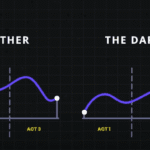
Ever since I was a boy, I’ve been fascinated with movies. I loved the characters and the excitement—but most of all the stories. I wanted to be an actor. And I believed that I’d get to do the things that Indiana Jones did and go on exciting adventures. I even dreamed up ideas for movies that my friends and I could make and star in. But they never went any further. I did, however, end up working in user experience (UX). Now, I realize that there’s an element of theater to UX—I hadn’t really considered it before, but user research is storytelling. And to get the most out of user research, you need to tell a good story where you bring stakeholders—the product team and decision makers—along and get them interested in learning more.
Think of your favorite movie. More than likely it follows a three-act structure that’s commonly seen in storytelling: the setup, the conflict, and the resolution. The first act shows what exists today, and it helps you get to know the characters and the challenges and problems that they face. Act two introduces the conflict, where the action is. Here, problems grow or get worse. And the third and final act is the resolution. This is where the issues are resolved and the characters learn and change. I believe that this structure is also a great way to think about user research, and I think that it can be especially helpful in explaining user research to others.
Use storytelling as a structure to do research
It’s sad to say, but many have come to see research as being expendable. If budgets or timelines are tight, research tends to be one of the first things to go. Instead of investing in research, some product managers rely on designers or—worse—their own opinion to make the “right” choices for users based on their experience or accepted best practices. That may get teams some of the way, but that approach can so easily miss out on solving users’ real problems. To remain user-centered, this is something we should avoid. User research elevates design. It keeps it on track, pointing to problems and opportunities. Being aware of the issues with your product and reacting to them can help you stay ahead of your competitors.
In the three-act structure, each act corresponds to a part of the process, and each part is critical to telling the whole story. Let’s look at the different acts and how they align with user research.
Act one: setup
The setup is all about understanding the background, and that’s where foundational research comes in. Foundational research (also called generative, discovery, or initial research) helps you understand users and identify their problems. You’re learning about what exists today, the challenges users have, and how the challenges affect them—just like in the movies. To do foundational research, you can conduct contextual inquiries or diary studies (or both!), which can help you start to identify problems as well as opportunities. It doesn’t need to be a huge investment in time or money.
Erika Hall writes about minimum viable ethnography, which can be as simple as spending 15 minutes with a user and asking them one thing: “‘Walk me through your day yesterday.’ That’s it. Present that one request. Shut up and listen to them for 15 minutes. Do your damndest to keep yourself and your interests out of it. Bam, you’re doing ethnography.” According to Hall, “[This] will probably prove quite illuminating. In the highly unlikely case that you didn’t learn anything new or useful, carry on with enhanced confidence in your direction.”
This makes total sense to me. And I love that this makes user research so accessible. You don’t need to prepare a lot of documentation; you can just recruit participants and do it! This can yield a wealth of information about your users, and it’ll help you better understand them and what’s going on in their lives. That’s really what act one is all about: understanding where users are coming from.
Jared Spool talks about the importance of foundational research and how it should form the bulk of your research. If you can draw from any additional user data that you can get your hands on, such as surveys or analytics, that can supplement what you’ve heard in the foundational studies or even point to areas that need further investigation. Together, all this data paints a clearer picture of the state of things and all its shortcomings. And that’s the beginning of a compelling story. It’s the point in the plot where you realize that the main characters—or the users in this case—are facing challenges that they need to overcome. Like in the movies, this is where you start to build empathy for the characters and root for them to succeed. And hopefully stakeholders are now doing the same. Their sympathy may be with their business, which could be losing money because users can’t complete certain tasks. Or maybe they do empathize with users’ struggles. Either way, act one is your initial hook to get the stakeholders interested and invested.
Once stakeholders begin to understand the value of foundational research, that can open doors to more opportunities that involve users in the decision-making process. And that can guide product teams toward being more user-centered. This benefits everyone—users, the product, and stakeholders. It’s like winning an Oscar in movie terms—it often leads to your product being well received and successful. And this can be an incentive for stakeholders to repeat this process with other products. Storytelling is the key to this process, and knowing how to tell a good story is the only way to get stakeholders to really care about doing more research.
This brings us to act two, where you iteratively evaluate a design or concept to see whether it addresses the issues.
Act two: conflict
Act two is all about digging deeper into the problems that you identified in act one. This usually involves directional research, such as usability tests, where you assess a potential solution (such as a design) to see whether it addresses the issues that you found. The issues could include unmet needs or problems with a flow or process that’s tripping users up. Like act two in a movie, more issues will crop up along the way. It’s here that you learn more about the characters as they grow and develop through this act.
Usability tests should typically include around five participants according to Jakob Nielsen, who found that that number of users can usually identify most of the problems: “As you add more and more users, you learn less and less because you will keep seeing the same things again and again… After the fifth user, you are wasting your time by observing the same findings repeatedly but not learning much new.”
There are parallels with storytelling here too; if you try to tell a story with too many characters, the plot may get lost. Having fewer participants means that each user’s struggles will be more memorable and easier to relay to other stakeholders when talking about the research. This can help convey the issues that need to be addressed while also highlighting the value of doing the research in the first place.
Researchers have run usability tests in person for decades, but you can also conduct usability tests remotely using tools like Microsoft Teams, Zoom, or other teleconferencing software. This approach has become increasingly popular since the beginning of the pandemic, and it works well. You can think of in-person usability tests like going to a play and remote sessions as more like watching a movie. There are advantages and disadvantages to each. In-person usability research is a much richer experience. Stakeholders can experience the sessions with other stakeholders. You also get real-time reactions—including surprise, agreement, disagreement, and discussions about what they’re seeing. Much like going to a play, where audiences get to take in the stage, the costumes, the lighting, and the actors’ interactions, in-person research lets you see users up close, including their body language, how they interact with the moderator, and how the scene is set up.
If in-person usability testing is like watching a play—staged and controlled—then conducting usability testing in the field is like immersive theater where any two sessions might be very different from one another. You can take usability testing into the field by creating a replica of the space where users interact with the product and then conduct your research there. Or you can go out to meet users at their location to do your research. With either option, you get to see how things work in context, things come up that wouldn’t have in a lab environment—and conversion can shift in entirely different directions. As researchers, you have less control over how these sessions go, but this can sometimes help you understand users even better. Meeting users where they are can provide clues to the external forces that could be affecting how they use your product. In-person usability tests provide another level of detail that’s often missing from remote usability tests.
That’s not to say that the “movies”—remote sessions—aren’t a good option. Remote sessions can reach a wider audience. They allow a lot more stakeholders to be involved in the research and to see what’s going on. And they open the doors to a much wider geographical pool of users. But with any remote session there is the potential of time wasted if participants can’t log in or get their microphone working.
The benefit of usability testing, whether remote or in person, is that you get to see real users interact with the designs in real time, and you can ask them questions to understand their thought processes and grasp of the solution. This can help you not only identify problems but also glean why they’re problems in the first place. Furthermore, you can test hypotheses and gauge whether your thinking is correct. By the end of the sessions, you’ll have a much clearer picture of how usable the designs are and whether they work for their intended purposes. Act two is the heart of the story—where the excitement is—but there can be surprises too. This is equally true of usability tests. Often, participants will say unexpected things, which change the way that you look at things—and these twists in the story can move things in new directions.
Unfortunately, user research is sometimes seen as expendable. And too often usability testing is the only research process that some stakeholders think that they ever need. In fact, if the designs that you’re evaluating in the usability test aren’t grounded in a solid understanding of your users (foundational research), there’s not much to be gained by doing usability testing in the first place. That’s because you’re narrowing the focus of what you’re getting feedback on, without understanding the users’ needs. As a result, there’s no way of knowing whether the designs might solve a problem that users have. It’s only feedback on a particular design in the context of a usability test.
On the other hand, if you only do foundational research, while you might have set out to solve the right problem, you won’t know whether the thing that you’re building will actually solve that. This illustrates the importance of doing both foundational and directional research.
In act two, stakeholders will—hopefully—get to watch the story unfold in the user sessions, which creates the conflict and tension in the current design by surfacing their highs and lows. And in turn, this can help motivate stakeholders to address the issues that come up.
Act three: resolution
While the first two acts are about understanding the background and the tensions that can propel stakeholders into action, the third part is about resolving the problems from the first two acts. While it’s important to have an audience for the first two acts, it’s crucial that they stick around for the final act. That means the whole product team, including developers, UX practitioners, business analysts, delivery managers, product managers, and any other stakeholders that have a say in the next steps. It allows the whole team to hear users’ feedback together, ask questions, and discuss what’s possible within the project’s constraints. And it lets the UX research and design teams clarify, suggest alternatives, or give more context behind their decisions. So you can get everyone on the same page and get agreement on the way forward.
This act is mostly told in voiceover with some audience participation. The researcher is the narrator, who paints a picture of the issues and what the future of the product could look like given the things that the team has learned. They give the stakeholders their recommendations and their guidance on creating this vision.
Nancy Duarte in the Harvard Business Review offers an approach to structuring presentations that follow a persuasive story. “The most effective presenters use the same techniques as great storytellers: By reminding people of the status quo and then revealing the path to a better way, they set up a conflict that needs to be resolved,” writes Duarte. “That tension helps them persuade the audience to adopt a new mindset or behave differently.”
This type of structure aligns well with research results, and particularly results from usability tests. It provides evidence for “what is”—the problems that you’ve identified. And “what could be”—your recommendations on how to address them. And so on and so forth.
You can reinforce your recommendations with examples of things that competitors are doing that could address these issues or with examples where competitors are gaining an edge. Or they can be visual, like quick mockups of how a new design could look that solves a problem. These can help generate conversation and momentum. And this continues until the end of the session when you’ve wrapped everything up in the conclusion by summarizing the main issues and suggesting a way forward. This is the part where you reiterate the main themes or problems and what they mean for the product—the denouement of the story. This stage gives stakeholders the next steps and hopefully the momentum to take those steps!
While we are nearly at the end of this story, let’s reflect on the idea that user research is storytelling. All the elements of a good story are there in the three-act structure of user research:
- Act one: You meet the protagonists (the users) and the antagonists (the problems affecting users). This is the beginning of the plot. In act one, researchers might use methods including contextual inquiry, ethnography, diary studies, surveys, and analytics. The output of these methods can include personas, empathy maps, user journeys, and analytics dashboards.
- Act two: Next, there’s character development. There’s conflict and tension as the protagonists encounter problems and challenges, which they must overcome. In act two, researchers might use methods including usability testing, competitive benchmarking, and heuristics evaluation. The output of these can include usability findings reports, UX strategy documents, usability guidelines, and best practices.
- Act three: The protagonists triumph and you see what a better future looks like. In act three, researchers may use methods including presentation decks, storytelling, and digital media. The output of these can be: presentation decks, video clips, audio clips, and pictures.
The researcher has multiple roles: they’re the storyteller, the director, and the producer. The participants have a small role, but they are significant characters (in the research). And the stakeholders are the audience. But the most important thing is to get the story right and to use storytelling to tell users’ stories through research. By the end, the stakeholders should walk away with a purpose and an eagerness to resolve the product’s ills.
So the next time that you’re planning research with clients or you’re speaking to stakeholders about research that you’ve done, think about how you can weave in some storytelling. Ultimately, user research is a win-win for everyone, and you just need to get stakeholders interested in how the story ends.
From Beta to Bedrock: Build Products that Stick.
As a product builder over too many years to mention, I’ve lost count of the number of times I’ve seen promising ideas go from zero to hero in a few weeks, only to fizzle out within months.
Financial products, which is the field I work in, are no exception. With people’s real hard-earned money on the line, user expectations running high, and a crowded market, it’s tempting to throw as many features at the wall as possible and hope something sticks. But this approach is a recipe for disaster. Here’s why:
The pitfalls of feature-first development
When you start building a financial product from the ground up, or are migrating existing customer journeys from paper or telephony channels onto online banking or mobile apps, it’s easy to get caught up in the excitement of creating new features. You might think, “If I can just add one more thing that solves this particular user problem, they’ll love me!” But what happens when you inevitably hit a roadblock because the narcs (your security team!) don’t like it? When a hard-fought feature isn’t as popular as you thought, or it breaks due to unforeseen complexity?
This is where the concept of Minimum Viable Product (MVP) comes in. Jason Fried’s book Getting Real and his podcast Rework often touch on this idea, even if he doesn’t always call it that. An MVP is a product that provides just enough value to your users to keep them engaged, but not so much that it becomes overwhelming or difficult to maintain. It sounds like an easy concept but it requires a razor sharp eye, a ruthless edge and having the courage to stick by your opinion because it is easy to be seduced by “the Columbo Effect”… when there’s always “just one more thing…” that someone wants to add.
The problem with most finance apps, however, is that they often become a reflection of the internal politics of the business rather than an experience solely designed around the customer. This means that the focus is on delivering as many features and functionalities as possible to satisfy the needs and desires of competing internal departments, rather than providing a clear value proposition that is focused on what the people out there in the real world want. As a result, these products can very easily bloat to become a mixed bag of confusing, unrelated and ultimately unlovable customer experiences—a feature salad, you might say.
The importance of bedrock
So what’s a better approach? How can we build products that are stable, user-friendly, and—most importantly—stick?
That’s where the concept of “bedrock” comes in. Bedrock is the core element of your product that truly matters to users. It’s the fundamental building block that provides value and stays relevant over time.
In the world of retail banking, which is where I work, the bedrock has got to be in and around the regular servicing journeys. People open their current account once in a blue moon but they look at it every day. They sign up for a credit card every year or two, but they check their balance and pay their bill at least once a month.
Identifying the core tasks that people want to do and then relentlessly striving to make them easy to do, dependable, and trustworthy is where the gravy’s at.
But how do you get to bedrock? By focusing on the “MVP” approach, prioritizing simplicity, and iterating towards a clear value proposition. This means cutting out unnecessary features and focusing on delivering real value to your users.
It also means having some guts, because your colleagues might not always instantly share your vision to start with. And controversially, sometimes it can even mean making it clear to customers that you’re not going to come to their house and make their dinner. The occasional “opinionated user interface design” (i.e. clunky workaround for edge cases) might sometimes be what you need to use to test a concept or buy you space to work on something more important.
Practical strategies for building financial products that stick
So what are the key strategies I’ve learned from my own experience and research?
- Start with a clear “why”: What problem are you trying to solve? For whom? Make sure your mission is crystal clear before building anything. Make sure it aligns with your company’s objectives, too.
- Focus on a single, core feature and obsess on getting that right before moving on to something else: Resist the temptation to add too many features at once. Instead, choose one that delivers real value and iterate from there.
- Prioritize simplicity over complexity: Less is often more when it comes to financial products. Cut out unnecessary bells and whistles and keep the focus on what matters most.
- Embrace continuous iteration: Bedrock isn’t a fixed destination—it’s a dynamic process. Continuously gather user feedback, refine your product, and iterate towards that bedrock state.
- Stop, look and listen: Don’t just test your product as part of your delivery process—test it repeatedly in the field. Use it yourself. Run A/B tests. Gather user feedback. Talk to people who use it, and refine accordingly.
The bedrock paradox
There’s an interesting paradox at play here: building towards bedrock means sacrificing some short-term growth potential in favour of long-term stability. But the payoff is worth it—products built with a focus on bedrock will outlast and outperform their competitors, and deliver sustained value to users over time.
So, how do you start your journey towards bedrock? Take it one step at a time. Start by identifying those core elements that truly matter to your users. Focus on building and refining a single, powerful feature that delivers real value. And above all, test obsessively—for, in the words of Abraham Lincoln, Alan Kay, or Peter Drucker (whomever you believe!!), “The best way to predict the future is to create it.”
Yellowstone Spinoffs and More – Every Upcoming Taylor Sheridan Show

Relatively speaking, the here and now is the quietest that prolific writer/director Taylor Sheridan has been in quite some time. The drama of Yellowstone (both behind the scenes and onscreen) is long over. The Yellowstone prequel chapters 1883 and 1923 are closed, as is Lawmen: Bass Reeves. Lioness calmly awaits a likely season 3 renewal. […]
The post Yellowstone Spinoffs and More – Every Upcoming Taylor Sheridan Show appeared first on Den of Geek.
The Man of Steel isn’t the only DC hero who is getting a new look in James Gunn‘s universe. As part of his press tour for Superman, Gunn has let drop that a new Wonder Woman movie is in the works. This isn’t a huge surprise. After all, Wonder Woman’s arch-enemy Circe and the hero’s home island Themyscira were a big part of Creature Commandos, the first official part of Gunn and DC Studios co-head Peter Safran’s new DC Universe. Gunn has also previously mentioned a Game of Thrones-style television series among the first batch of DC Universe projects.
cnx({
playerId: “106e33c0-3911-473c-b599-b1426db57530”,
}).render(“0270c398a82f44f49c23c16122516796”);
});
Still, this is the first time Gunn’s confirmed that Diana will be back on the big screen. Now Gunn hasn’t provided any details, and he’s always been clear that movies only start shooting after they have a script in place, so we’ll likely have to wait a while for specifics. But we do know that Gunn likes to draw inspiration from the comics. That can be a good thing and a bad thing.
For such a foundational character to the DC Universe, a lot of boring to downright bad comics have been made about Diana. Even the Golden Age stories, which best embody creator William Moulton Marston’s belief that Wonder Woman comics could teach the world about the joys of loving submission to a powerful woman, have all the racism one would expect from the period, as well as too many jokes made about sidekick Etta Candy’s weight. Even worse are the stories that came after Marston, which could treat Diana as either a mindless innocent (see ignominious run by famed author Jodi Picoult) or as a cruel violent warrior (see… too many to count).
However, the best stories about Wonder Woman are among the best comics ever made. These comics understand that Wonder Woman is completely unique character among superheroes, an ambassador of peace and love who teaches compassion first, violence last. If Gunn follows these stories, five of which are listed here, then we’ll have a great Wonder Woman movie to enjoy.
The Twelve Labors, Wonder Woman #212-222 (1974–1976)
The Silver Age wasn’t the best time for Wonder Woman, perhaps best demonstrated by the infamous story when she loses her powers and becomes a martial arts expert/secret agent. But The Twelve Labors by Len Wein, Cary Bates, Elliot S. Maggin, Curt Swan, and others stands out as a bright spot in a dull time.
The premise is… not great. The Justice League of America needs to reevaluate Wonder Woman’s status and eligibility, so they put her through a series of tests. Yes, that’s a pretty ugly story, given that Wonder Woman (in this continuity) has been around since World War II and given that the League largely consists of men. But a surprisingly high amount of Silver Age DC stories are about superheroes pulling pranks on one another, so it’s not entirely as nefarious a concept as it might seem.
Despite whatever ickiness the premise evokes, The Twelve Labors mostly consists of various members of the League challenging Diana and losing. More than a mere power fantasy, the story serves to distinguish Wonder Woman from her fellow superheroes, showing how she can use her might, her wits, and her accessories to get the job done—not just relying on, say, super-speed or a power ring.
The Princess and the Power, Wonder Woman #1–14 (1987–1988)
Much has been written about Crisis on Infinite Earths and the comics that redefined major characters around that time, particularly Batman: Year One and Man of Steel. Too often people forget about the amazing reboot that writer and artist George Pérez did with Wonder Woman. So important is Pérez and co-writer Greg Potter’s reinvention that all of the other reboots that followed largely stuck with Pérez’s interpretation, save for the disastrous New 52 reimagining by Brian Azzarello and Cliff Chiang.
It’s easy to see why Pérez’s run endures. Pérez keyed in on the central hook that made Wonder Woman such a sensation in the Golden Age. She’s an outsider from a mythical paradise come to show the rest of the world a better way. Pérez’s Wonder Woman comes from the worlds of Greek gods far more than she does superheroes, which raises the stakes of her stories while also separating her power set from that of others. Moreover she’s an ambassador, one who doesn’t fully belong in “Man’s World.”
Under Pérez, Wonder Woman felt truly exceptional, even when she entered a world populated with people in capes flying around. She didn’t understand the rest of the world but she wasn’t naive either. The best parts of the Patty Jenkins movies understood this balance. Even though Gunn will be going his own direction from Jenkins’ films, he would do well to follow her lead and consult the Pérez books.
Down to Earth, Wonder Woman #195–200, 2003–2004)
Writer Greg Rucka’s Wonder Woman run rivals that of Pérez, not because he rebooted or reimagined the character, but because he took Pérez’s stories to their logical end. In Rucka’s first arc, “Down to Earth,” penciled by Drew Johnson, Wonder Woman is still an ambassador to the rest of the world, which means that she must serve a political purpose by representing Themyscira in the United Nations.
Instead of being embarrassed by the inherent goofiness of an Amazonian princess hanging out with diplomats in suits and ties, Rucka leans into the absurdity. A minotaur shows up in the office. Diana misses meetings to fight Doctor Psycho. Rucka also gives Diana her own Lex Luthor in Veronica Cale, a PR whiz who uses Wonder Woman’s own words against her.
Rucka likewise finds conflict in the way Diana’s idealism clashes with the rest of the world. The scenes in the new Superman trailer, in which Clark gets mad about being called out for stopping a war, feel like they come from Rucka’s Wonder Woman more than they do any Superman comic. But Rucka’s comics have one big difference: Diana knows that she represents her island and thus invokes the same rights and respect as any dignitary, even if that means fighting hostile nations.
Wonder Woman: Earth One, 2016–2021
This is a debatable pick, and some Wonder Woman fans will likely head straight to the comments. For as much as Grant Morrison completely understands Superman and Batman, they tend to stumble when writing Wonder Woman. By their own admission, Morrison moved Wonder Woman off the board early in 2005’s Final Crisis simply so they wouldn’t have to deal with her.
The three Earth One graphic novels do not prove that Morrison, working here with artist Yanick Paquette, has finally cracked Diana. There are A LOT of off-beat moments in the story, including an oft-shared panel in which she asks Steve Trevor, a Black man in this universe, to allow her to chain him up. However, even in that weird bit of dissonance—which, it should be pointed out, isn’t ignored, as Trevor explains to Diana why her request is so offensive and she listens—Morrison tries to get at the function of Wonder Woman.
William Moulton Marston created Wonder Woman in 1941 to spread his worldview, one built on the belief that society functions best if men enter into “loving submission” to powerful women. As a result, there’s a lot of bondage in early Wonder Woman comics, which serves a philosophical function more than it does a sexual function. That aspect has been forgotten by most modern Wonder Woman stories, but Morrison was right to bring it back, even if they did so imperfectly.
Wonder Woman: Outlaw, Wonder Woman #1-26, 2023–present
Yes, another controversial pick. Tom King‘s mix of philosophical inquiry, in which superheroes are just as likely to talk about their trauma via a quote from Kant as they are to punch a bad guy, and shocking shifts in status quo (looking at you, Ric Grayson) makes his miniseries fantastic and his in-universe ongoings a head scratcher. Yet King and artist Daniel Sampere’s work on Wonder Woman is the best continuation of Rucka’s approach that we’ve yet seen.
In the first few issues, Wonder Woman becomes an enemy of the U.S.; she has crossed paths with the Sovereign, the true King of America, who uses the nation as his plaything; and when she refuses to give up to American authorities an Amazonian sister who has apparently slaughtered citizens, she must stand against the country with whom she once allied.
King’s take on Wonder Woman is probably close to Gunn’s mind, as he has King in his writing room and because the upcoming Supergirl movie is based on King and Bilquis Evely’s miniseries Supergirl: The Woman of Tomorrow. In fact, the Sons of Themyscira, the men’s rights dorks who show up in Creature Commandos, feel like something out of King’s run. As is often the case, King’s story doesn’t work for everyone. Wonder Woman makes some decisions that feel out of character, and the story focuses more on the Sovereign than it does her. But it’s a stark reminder that Wonder Woman is not an American and that she’s willing to cross the USA when her moral code demands it.
Special Mention: Absolute Wonder Woman
For my money, Absolute Wonder Woman is the best of DC’s reimagined Absolute line. Writer Kelly Thompson somehow makes Wonder Woman sweeter and more noble within this darker reality and Hayden Sherman’s art is nothing short of stunning. However, it is a hard turn from the standard Wonder Woman tale and really takes place in its own reality, very different from the one Gunn is building on screen. Absolute Wonder Woman is certainly a better comic book and Wonder Woman story than some of the others on this list, but it isn’t necessarily a good guide for a new movie.
The post Wonder Woman: 5 Comic Book Stories James Gunn’s Reboot Could Adapt appeared first on Den of Geek.
Our Favorite Things from Summer Game Fest 2025

One of the biggest gaming events of the year is Summer Game Fest, which showcases upcoming games through announcements, premieres, and updates. This event partners with numerous studios, publishers, and other corporate partners in the industry, taking place in June in Los Angeles, and Den of Geek returned to join in on the fun firsthand […]
The post Our Favorite Things from Summer Game Fest 2025 appeared first on Den of Geek.
The Man of Steel isn’t the only DC hero who is getting a new look in James Gunn‘s universe. As part of his press tour for Superman, Gunn has let drop that a new Wonder Woman movie is in the works. This isn’t a huge surprise. After all, Wonder Woman’s arch-enemy Circe and the hero’s home island Themyscira were a big part of Creature Commandos, the first official part of Gunn and DC Studios co-head Peter Safran’s new DC Universe. Gunn has also previously mentioned a Game of Thrones-style television series among the first batch of DC Universe projects.
cnx({
playerId: “106e33c0-3911-473c-b599-b1426db57530”,
}).render(“0270c398a82f44f49c23c16122516796”);
});
Still, this is the first time Gunn’s confirmed that Diana will be back on the big screen. Now Gunn hasn’t provided any details, and he’s always been clear that movies only start shooting after they have a script in place, so we’ll likely have to wait a while for specifics. But we do know that Gunn likes to draw inspiration from the comics. That can be a good thing and a bad thing.
For such a foundational character to the DC Universe, a lot of boring to downright bad comics have been made about Diana. Even the Golden Age stories, which best embody creator William Moulton Marston’s belief that Wonder Woman comics could teach the world about the joys of loving submission to a powerful woman, have all the racism one would expect from the period, as well as too many jokes made about sidekick Etta Candy’s weight. Even worse are the stories that came after Marston, which could treat Diana as either a mindless innocent (see ignominious run by famed author Jodi Picoult) or as a cruel violent warrior (see… too many to count).
However, the best stories about Wonder Woman are among the best comics ever made. These comics understand that Wonder Woman is completely unique character among superheroes, an ambassador of peace and love who teaches compassion first, violence last. If Gunn follows these stories, five of which are listed here, then we’ll have a great Wonder Woman movie to enjoy.
The Twelve Labors, Wonder Woman #212-222 (1974–1976)
The Silver Age wasn’t the best time for Wonder Woman, perhaps best demonstrated by the infamous story when she loses her powers and becomes a martial arts expert/secret agent. But The Twelve Labors by Len Wein, Cary Bates, Elliot S. Maggin, Curt Swan, and others stands out as a bright spot in a dull time.
The premise is… not great. The Justice League of America needs to reevaluate Wonder Woman’s status and eligibility, so they put her through a series of tests. Yes, that’s a pretty ugly story, given that Wonder Woman (in this continuity) has been around since World War II and given that the League largely consists of men. But a surprisingly high amount of Silver Age DC stories are about superheroes pulling pranks on one another, so it’s not entirely as nefarious a concept as it might seem.
Despite whatever ickiness the premise evokes, The Twelve Labors mostly consists of various members of the League challenging Diana and losing. More than a mere power fantasy, the story serves to distinguish Wonder Woman from her fellow superheroes, showing how she can use her might, her wits, and her accessories to get the job done—not just relying on, say, super-speed or a power ring.
The Princess and the Power, Wonder Woman #1–14 (1987–1988)
Much has been written about Crisis on Infinite Earths and the comics that redefined major characters around that time, particularly Batman: Year One and Man of Steel. Too often people forget about the amazing reboot that writer and artist George Pérez did with Wonder Woman. So important is Pérez and co-writer Greg Potter’s reinvention that all of the other reboots that followed largely stuck with Pérez’s interpretation, save for the disastrous New 52 reimagining by Brian Azzarello and Cliff Chiang.
It’s easy to see why Pérez’s run endures. Pérez keyed in on the central hook that made Wonder Woman such a sensation in the Golden Age. She’s an outsider from a mythical paradise come to show the rest of the world a better way. Pérez’s Wonder Woman comes from the worlds of Greek gods far more than she does superheroes, which raises the stakes of her stories while also separating her power set from that of others. Moreover she’s an ambassador, one who doesn’t fully belong in “Man’s World.”
Under Pérez, Wonder Woman felt truly exceptional, even when she entered a world populated with people in capes flying around. She didn’t understand the rest of the world but she wasn’t naive either. The best parts of the Patty Jenkins movies understood this balance. Even though Gunn will be going his own direction from Jenkins’ films, he would do well to follow her lead and consult the Pérez books.
Down to Earth, Wonder Woman #195–200, 2003–2004)
Writer Greg Rucka’s Wonder Woman run rivals that of Pérez, not because he rebooted or reimagined the character, but because he took Pérez’s stories to their logical end. In Rucka’s first arc, “Down to Earth,” penciled by Drew Johnson, Wonder Woman is still an ambassador to the rest of the world, which means that she must serve a political purpose by representing Themyscira in the United Nations.
Instead of being embarrassed by the inherent goofiness of an Amazonian princess hanging out with diplomats in suits and ties, Rucka leans into the absurdity. A minotaur shows up in the office. Diana misses meetings to fight Doctor Psycho. Rucka also gives Diana her own Lex Luthor in Veronica Cale, a PR whiz who uses Wonder Woman’s own words against her.
Rucka likewise finds conflict in the way Diana’s idealism clashes with the rest of the world. The scenes in the new Superman trailer, in which Clark gets mad about being called out for stopping a war, feel like they come from Rucka’s Wonder Woman more than they do any Superman comic. But Rucka’s comics have one big difference: Diana knows that she represents her island and thus invokes the same rights and respect as any dignitary, even if that means fighting hostile nations.
Wonder Woman: Earth One, 2016–2021
This is a debatable pick, and some Wonder Woman fans will likely head straight to the comments. For as much as Grant Morrison completely understands Superman and Batman, they tend to stumble when writing Wonder Woman. By their own admission, Morrison moved Wonder Woman off the board early in 2005’s Final Crisis simply so they wouldn’t have to deal with her.
The three Earth One graphic novels do not prove that Morrison, working here with artist Yanick Paquette, has finally cracked Diana. There are A LOT of off-beat moments in the story, including an oft-shared panel in which she asks Steve Trevor, a Black man in this universe, to allow her to chain him up. However, even in that weird bit of dissonance—which, it should be pointed out, isn’t ignored, as Trevor explains to Diana why her request is so offensive and she listens—Morrison tries to get at the function of Wonder Woman.
William Moulton Marston created Wonder Woman in 1941 to spread his worldview, one built on the belief that society functions best if men enter into “loving submission” to powerful women. As a result, there’s a lot of bondage in early Wonder Woman comics, which serves a philosophical function more than it does a sexual function. That aspect has been forgotten by most modern Wonder Woman stories, but Morrison was right to bring it back, even if they did so imperfectly.
Wonder Woman: Outlaw, Wonder Woman #1-26, 2023–present
Yes, another controversial pick. Tom King‘s mix of philosophical inquiry, in which superheroes are just as likely to talk about their trauma via a quote from Kant as they are to punch a bad guy, and shocking shifts in status quo (looking at you, Ric Grayson) makes his miniseries fantastic and his in-universe ongoings a head scratcher. Yet King and artist Daniel Sampere’s work on Wonder Woman is the best continuation of Rucka’s approach that we’ve yet seen.
In the first few issues, Wonder Woman becomes an enemy of the U.S.; she has crossed paths with the Sovereign, the true King of America, who uses the nation as his plaything; and when she refuses to give up to American authorities an Amazonian sister who has apparently slaughtered citizens, she must stand against the country with whom she once allied.
King’s take on Wonder Woman is probably close to Gunn’s mind, as he has King in his writing room and because the upcoming Supergirl movie is based on King and Bilquis Evely’s miniseries Supergirl: The Woman of Tomorrow. In fact, the Sons of Themyscira, the men’s rights dorks who show up in Creature Commandos, feel like something out of King’s run. As is often the case, King’s story doesn’t work for everyone. Wonder Woman makes some decisions that feel out of character, and the story focuses more on the Sovereign than it does her. But it’s a stark reminder that Wonder Woman is not an American and that she’s willing to cross the USA when her moral code demands it.
Special Mention: Absolute Wonder Woman
For my money, Absolute Wonder Woman is the best of DC’s reimagined Absolute line. Writer Kelly Thompson somehow makes Wonder Woman sweeter and more noble within this darker reality and Hayden Sherman’s art is nothing short of stunning. However, it is a hard turn from the standard Wonder Woman tale and really takes place in its own reality, very different from the one Gunn is building on screen. Absolute Wonder Woman is certainly a better comic book and Wonder Woman story than some of the others on this list, but it isn’t necessarily a good guide for a new movie.
The post Wonder Woman: 5 Comic Book Stories James Gunn’s Reboot Could Adapt appeared first on Den of Geek.
Stephen King Novella Adaptations Ranked

The novella is a strange beast in writing and publishing. Not quite a novel but lengthier than a short story (and also longer than the craft’s red-headed stepchild, the novelette). It’s a form that allows fiction writers to explore a story and characters in greater depth than a short story but doesn’t require the structural […]
The post Stephen King Novella Adaptations Ranked appeared first on Den of Geek.
The Man of Steel isn’t the only DC hero who is getting a new look in James Gunn‘s universe. As part of his press tour for Superman, Gunn has let drop that a new Wonder Woman movie is in the works. This isn’t a huge surprise. After all, Wonder Woman’s arch-enemy Circe and the hero’s home island Themyscira were a big part of Creature Commandos, the first official part of Gunn and DC Studios co-head Peter Safran’s new DC Universe. Gunn has also previously mentioned a Game of Thrones-style television series among the first batch of DC Universe projects.
cnx({
playerId: “106e33c0-3911-473c-b599-b1426db57530”,
}).render(“0270c398a82f44f49c23c16122516796”);
});
Still, this is the first time Gunn’s confirmed that Diana will be back on the big screen. Now Gunn hasn’t provided any details, and he’s always been clear that movies only start shooting after they have a script in place, so we’ll likely have to wait a while for specifics. But we do know that Gunn likes to draw inspiration from the comics. That can be a good thing and a bad thing.
For such a foundational character to the DC Universe, a lot of boring to downright bad comics have been made about Diana. Even the Golden Age stories, which best embody creator William Moulton Marston’s belief that Wonder Woman comics could teach the world about the joys of loving submission to a powerful woman, have all the racism one would expect from the period, as well as too many jokes made about sidekick Etta Candy’s weight. Even worse are the stories that came after Marston, which could treat Diana as either a mindless innocent (see ignominious run by famed author Jodi Picoult) or as a cruel violent warrior (see… too many to count).
However, the best stories about Wonder Woman are among the best comics ever made. These comics understand that Wonder Woman is completely unique character among superheroes, an ambassador of peace and love who teaches compassion first, violence last. If Gunn follows these stories, five of which are listed here, then we’ll have a great Wonder Woman movie to enjoy.
The Twelve Labors, Wonder Woman #212-222 (1974–1976)
The Silver Age wasn’t the best time for Wonder Woman, perhaps best demonstrated by the infamous story when she loses her powers and becomes a martial arts expert/secret agent. But The Twelve Labors by Len Wein, Cary Bates, Elliot S. Maggin, Curt Swan, and others stands out as a bright spot in a dull time.
The premise is… not great. The Justice League of America needs to reevaluate Wonder Woman’s status and eligibility, so they put her through a series of tests. Yes, that’s a pretty ugly story, given that Wonder Woman (in this continuity) has been around since World War II and given that the League largely consists of men. But a surprisingly high amount of Silver Age DC stories are about superheroes pulling pranks on one another, so it’s not entirely as nefarious a concept as it might seem.
Despite whatever ickiness the premise evokes, The Twelve Labors mostly consists of various members of the League challenging Diana and losing. More than a mere power fantasy, the story serves to distinguish Wonder Woman from her fellow superheroes, showing how she can use her might, her wits, and her accessories to get the job done—not just relying on, say, super-speed or a power ring.
The Princess and the Power, Wonder Woman #1–14 (1987–1988)
Much has been written about Crisis on Infinite Earths and the comics that redefined major characters around that time, particularly Batman: Year One and Man of Steel. Too often people forget about the amazing reboot that writer and artist George Pérez did with Wonder Woman. So important is Pérez and co-writer Greg Potter’s reinvention that all of the other reboots that followed largely stuck with Pérez’s interpretation, save for the disastrous New 52 reimagining by Brian Azzarello and Cliff Chiang.
It’s easy to see why Pérez’s run endures. Pérez keyed in on the central hook that made Wonder Woman such a sensation in the Golden Age. She’s an outsider from a mythical paradise come to show the rest of the world a better way. Pérez’s Wonder Woman comes from the worlds of Greek gods far more than she does superheroes, which raises the stakes of her stories while also separating her power set from that of others. Moreover she’s an ambassador, one who doesn’t fully belong in “Man’s World.”
Under Pérez, Wonder Woman felt truly exceptional, even when she entered a world populated with people in capes flying around. She didn’t understand the rest of the world but she wasn’t naive either. The best parts of the Patty Jenkins movies understood this balance. Even though Gunn will be going his own direction from Jenkins’ films, he would do well to follow her lead and consult the Pérez books.
Down to Earth, Wonder Woman #195–200, 2003–2004)
Writer Greg Rucka’s Wonder Woman run rivals that of Pérez, not because he rebooted or reimagined the character, but because he took Pérez’s stories to their logical end. In Rucka’s first arc, “Down to Earth,” penciled by Drew Johnson, Wonder Woman is still an ambassador to the rest of the world, which means that she must serve a political purpose by representing Themyscira in the United Nations.
Instead of being embarrassed by the inherent goofiness of an Amazonian princess hanging out with diplomats in suits and ties, Rucka leans into the absurdity. A minotaur shows up in the office. Diana misses meetings to fight Doctor Psycho. Rucka also gives Diana her own Lex Luthor in Veronica Cale, a PR whiz who uses Wonder Woman’s own words against her.
Rucka likewise finds conflict in the way Diana’s idealism clashes with the rest of the world. The scenes in the new Superman trailer, in which Clark gets mad about being called out for stopping a war, feel like they come from Rucka’s Wonder Woman more than they do any Superman comic. But Rucka’s comics have one big difference: Diana knows that she represents her island and thus invokes the same rights and respect as any dignitary, even if that means fighting hostile nations.
Wonder Woman: Earth One, 2016–2021
This is a debatable pick, and some Wonder Woman fans will likely head straight to the comments. For as much as Grant Morrison completely understands Superman and Batman, they tend to stumble when writing Wonder Woman. By their own admission, Morrison moved Wonder Woman off the board early in 2005’s Final Crisis simply so they wouldn’t have to deal with her.
The three Earth One graphic novels do not prove that Morrison, working here with artist Yanick Paquette, has finally cracked Diana. There are A LOT of off-beat moments in the story, including an oft-shared panel in which she asks Steve Trevor, a Black man in this universe, to allow her to chain him up. However, even in that weird bit of dissonance—which, it should be pointed out, isn’t ignored, as Trevor explains to Diana why her request is so offensive and she listens—Morrison tries to get at the function of Wonder Woman.
William Moulton Marston created Wonder Woman in 1941 to spread his worldview, one built on the belief that society functions best if men enter into “loving submission” to powerful women. As a result, there’s a lot of bondage in early Wonder Woman comics, which serves a philosophical function more than it does a sexual function. That aspect has been forgotten by most modern Wonder Woman stories, but Morrison was right to bring it back, even if they did so imperfectly.
Wonder Woman: Outlaw, Wonder Woman #1-26, 2023–present
Yes, another controversial pick. Tom King‘s mix of philosophical inquiry, in which superheroes are just as likely to talk about their trauma via a quote from Kant as they are to punch a bad guy, and shocking shifts in status quo (looking at you, Ric Grayson) makes his miniseries fantastic and his in-universe ongoings a head scratcher. Yet King and artist Daniel Sampere’s work on Wonder Woman is the best continuation of Rucka’s approach that we’ve yet seen.
In the first few issues, Wonder Woman becomes an enemy of the U.S.; she has crossed paths with the Sovereign, the true King of America, who uses the nation as his plaything; and when she refuses to give up to American authorities an Amazonian sister who has apparently slaughtered citizens, she must stand against the country with whom she once allied.
King’s take on Wonder Woman is probably close to Gunn’s mind, as he has King in his writing room and because the upcoming Supergirl movie is based on King and Bilquis Evely’s miniseries Supergirl: The Woman of Tomorrow. In fact, the Sons of Themyscira, the men’s rights dorks who show up in Creature Commandos, feel like something out of King’s run. As is often the case, King’s story doesn’t work for everyone. Wonder Woman makes some decisions that feel out of character, and the story focuses more on the Sovereign than it does her. But it’s a stark reminder that Wonder Woman is not an American and that she’s willing to cross the USA when her moral code demands it.
Special Mention: Absolute Wonder Woman
For my money, Absolute Wonder Woman is the best of DC’s reimagined Absolute line. Writer Kelly Thompson somehow makes Wonder Woman sweeter and more noble within this darker reality and Hayden Sherman’s art is nothing short of stunning. However, it is a hard turn from the standard Wonder Woman tale and really takes place in its own reality, very different from the one Gunn is building on screen. Absolute Wonder Woman is certainly a better comic book and Wonder Woman story than some of the others on this list, but it isn’t necessarily a good guide for a new movie.
The post Wonder Woman: 5 Comic Book Stories James Gunn’s Reboot Could Adapt appeared first on Den of Geek.
The Newest BookTok Darling Silver Elite Proves Dire for Dystopian Literature
Nothing says romantic and steamy quite like an oppressive society run by a military dictatorship. Or rather, that’s what author Dani Francis’ debut novel, Silver Elite, posits. Released in May 2025, the book has been the most recent ammunition in the ongoing civil war raging within online literature communities. Marketed as the first entry in […]
The post The Newest BookTok Darling Silver Elite Proves Dire for Dystopian Literature appeared first on Den of Geek.
The Man of Steel isn’t the only DC hero who is getting a new look in James Gunn‘s universe. As part of his press tour for Superman, Gunn has let drop that a new Wonder Woman movie is in the works. This isn’t a huge surprise. After all, Wonder Woman’s arch-enemy Circe and the hero’s home island Themyscira were a big part of Creature Commandos, the first official part of Gunn and DC Studios co-head Peter Safran’s new DC Universe. Gunn has also previously mentioned a Game of Thrones-style television series among the first batch of DC Universe projects.
cnx({
playerId: “106e33c0-3911-473c-b599-b1426db57530”,
}).render(“0270c398a82f44f49c23c16122516796”);
});
Still, this is the first time Gunn’s confirmed that Diana will be back on the big screen. Now Gunn hasn’t provided any details, and he’s always been clear that movies only start shooting after they have a script in place, so we’ll likely have to wait a while for specifics. But we do know that Gunn likes to draw inspiration from the comics. That can be a good thing and a bad thing.
For such a foundational character to the DC Universe, a lot of boring to downright bad comics have been made about Diana. Even the Golden Age stories, which best embody creator William Moulton Marston’s belief that Wonder Woman comics could teach the world about the joys of loving submission to a powerful woman, have all the racism one would expect from the period, as well as too many jokes made about sidekick Etta Candy’s weight. Even worse are the stories that came after Marston, which could treat Diana as either a mindless innocent (see ignominious run by famed author Jodi Picoult) or as a cruel violent warrior (see… too many to count).
However, the best stories about Wonder Woman are among the best comics ever made. These comics understand that Wonder Woman is completely unique character among superheroes, an ambassador of peace and love who teaches compassion first, violence last. If Gunn follows these stories, five of which are listed here, then we’ll have a great Wonder Woman movie to enjoy.
The Twelve Labors, Wonder Woman #212-222 (1974–1976)
The Silver Age wasn’t the best time for Wonder Woman, perhaps best demonstrated by the infamous story when she loses her powers and becomes a martial arts expert/secret agent. But The Twelve Labors by Len Wein, Cary Bates, Elliot S. Maggin, Curt Swan, and others stands out as a bright spot in a dull time.
The premise is… not great. The Justice League of America needs to reevaluate Wonder Woman’s status and eligibility, so they put her through a series of tests. Yes, that’s a pretty ugly story, given that Wonder Woman (in this continuity) has been around since World War II and given that the League largely consists of men. But a surprisingly high amount of Silver Age DC stories are about superheroes pulling pranks on one another, so it’s not entirely as nefarious a concept as it might seem.
Despite whatever ickiness the premise evokes, The Twelve Labors mostly consists of various members of the League challenging Diana and losing. More than a mere power fantasy, the story serves to distinguish Wonder Woman from her fellow superheroes, showing how she can use her might, her wits, and her accessories to get the job done—not just relying on, say, super-speed or a power ring.
The Princess and the Power, Wonder Woman #1–14 (1987–1988)
Much has been written about Crisis on Infinite Earths and the comics that redefined major characters around that time, particularly Batman: Year One and Man of Steel. Too often people forget about the amazing reboot that writer and artist George Pérez did with Wonder Woman. So important is Pérez and co-writer Greg Potter’s reinvention that all of the other reboots that followed largely stuck with Pérez’s interpretation, save for the disastrous New 52 reimagining by Brian Azzarello and Cliff Chiang.
It’s easy to see why Pérez’s run endures. Pérez keyed in on the central hook that made Wonder Woman such a sensation in the Golden Age. She’s an outsider from a mythical paradise come to show the rest of the world a better way. Pérez’s Wonder Woman comes from the worlds of Greek gods far more than she does superheroes, which raises the stakes of her stories while also separating her power set from that of others. Moreover she’s an ambassador, one who doesn’t fully belong in “Man’s World.”
Under Pérez, Wonder Woman felt truly exceptional, even when she entered a world populated with people in capes flying around. She didn’t understand the rest of the world but she wasn’t naive either. The best parts of the Patty Jenkins movies understood this balance. Even though Gunn will be going his own direction from Jenkins’ films, he would do well to follow her lead and consult the Pérez books.
Down to Earth, Wonder Woman #195–200, 2003–2004)
Writer Greg Rucka’s Wonder Woman run rivals that of Pérez, not because he rebooted or reimagined the character, but because he took Pérez’s stories to their logical end. In Rucka’s first arc, “Down to Earth,” penciled by Drew Johnson, Wonder Woman is still an ambassador to the rest of the world, which means that she must serve a political purpose by representing Themyscira in the United Nations.
Instead of being embarrassed by the inherent goofiness of an Amazonian princess hanging out with diplomats in suits and ties, Rucka leans into the absurdity. A minotaur shows up in the office. Diana misses meetings to fight Doctor Psycho. Rucka also gives Diana her own Lex Luthor in Veronica Cale, a PR whiz who uses Wonder Woman’s own words against her.
Rucka likewise finds conflict in the way Diana’s idealism clashes with the rest of the world. The scenes in the new Superman trailer, in which Clark gets mad about being called out for stopping a war, feel like they come from Rucka’s Wonder Woman more than they do any Superman comic. But Rucka’s comics have one big difference: Diana knows that she represents her island and thus invokes the same rights and respect as any dignitary, even if that means fighting hostile nations.
Wonder Woman: Earth One, 2016–2021
This is a debatable pick, and some Wonder Woman fans will likely head straight to the comments. For as much as Grant Morrison completely understands Superman and Batman, they tend to stumble when writing Wonder Woman. By their own admission, Morrison moved Wonder Woman off the board early in 2005’s Final Crisis simply so they wouldn’t have to deal with her.
The three Earth One graphic novels do not prove that Morrison, working here with artist Yanick Paquette, has finally cracked Diana. There are A LOT of off-beat moments in the story, including an oft-shared panel in which she asks Steve Trevor, a Black man in this universe, to allow her to chain him up. However, even in that weird bit of dissonance—which, it should be pointed out, isn’t ignored, as Trevor explains to Diana why her request is so offensive and she listens—Morrison tries to get at the function of Wonder Woman.
William Moulton Marston created Wonder Woman in 1941 to spread his worldview, one built on the belief that society functions best if men enter into “loving submission” to powerful women. As a result, there’s a lot of bondage in early Wonder Woman comics, which serves a philosophical function more than it does a sexual function. That aspect has been forgotten by most modern Wonder Woman stories, but Morrison was right to bring it back, even if they did so imperfectly.
Wonder Woman: Outlaw, Wonder Woman #1-26, 2023–present
Yes, another controversial pick. Tom King‘s mix of philosophical inquiry, in which superheroes are just as likely to talk about their trauma via a quote from Kant as they are to punch a bad guy, and shocking shifts in status quo (looking at you, Ric Grayson) makes his miniseries fantastic and his in-universe ongoings a head scratcher. Yet King and artist Daniel Sampere’s work on Wonder Woman is the best continuation of Rucka’s approach that we’ve yet seen.
In the first few issues, Wonder Woman becomes an enemy of the U.S.; she has crossed paths with the Sovereign, the true King of America, who uses the nation as his plaything; and when she refuses to give up to American authorities an Amazonian sister who has apparently slaughtered citizens, she must stand against the country with whom she once allied.
King’s take on Wonder Woman is probably close to Gunn’s mind, as he has King in his writing room and because the upcoming Supergirl movie is based on King and Bilquis Evely’s miniseries Supergirl: The Woman of Tomorrow. In fact, the Sons of Themyscira, the men’s rights dorks who show up in Creature Commandos, feel like something out of King’s run. As is often the case, King’s story doesn’t work for everyone. Wonder Woman makes some decisions that feel out of character, and the story focuses more on the Sovereign than it does her. But it’s a stark reminder that Wonder Woman is not an American and that she’s willing to cross the USA when her moral code demands it.
Special Mention: Absolute Wonder Woman
For my money, Absolute Wonder Woman is the best of DC’s reimagined Absolute line. Writer Kelly Thompson somehow makes Wonder Woman sweeter and more noble within this darker reality and Hayden Sherman’s art is nothing short of stunning. However, it is a hard turn from the standard Wonder Woman tale and really takes place in its own reality, very different from the one Gunn is building on screen. Absolute Wonder Woman is certainly a better comic book and Wonder Woman story than some of the others on this list, but it isn’t necessarily a good guide for a new movie.
The post Wonder Woman: 5 Comic Book Stories James Gunn’s Reboot Could Adapt appeared first on Den of Geek.
Superman: James Gunn’s Large Cast Defense Points to New Type of Shared Universe

To be sure, Superman has an exciting cast. Not only do we get David Corenswet, Rachel Brosnahan, and Nicholas Hoult as Clark Kent, Lois Lane, and Lex Luthor, respectively, but we also get inspired choices such as Nathan Fillion as Guy Gardner and Skyler Gisondo as Jimmy Olsen. But with such a crowded group, one […]
The post Superman: James Gunn’s Large Cast Defense Points to New Type of Shared Universe appeared first on Den of Geek.
The Man of Steel isn’t the only DC hero who is getting a new look in James Gunn‘s universe. As part of his press tour for Superman, Gunn has let drop that a new Wonder Woman movie is in the works. This isn’t a huge surprise. After all, Wonder Woman’s arch-enemy Circe and the hero’s home island Themyscira were a big part of Creature Commandos, the first official part of Gunn and DC Studios co-head Peter Safran’s new DC Universe. Gunn has also previously mentioned a Game of Thrones-style television series among the first batch of DC Universe projects.
cnx({
playerId: “106e33c0-3911-473c-b599-b1426db57530”,
}).render(“0270c398a82f44f49c23c16122516796”);
});
Still, this is the first time Gunn’s confirmed that Diana will be back on the big screen. Now Gunn hasn’t provided any details, and he’s always been clear that movies only start shooting after they have a script in place, so we’ll likely have to wait a while for specifics. But we do know that Gunn likes to draw inspiration from the comics. That can be a good thing and a bad thing.
For such a foundational character to the DC Universe, a lot of boring to downright bad comics have been made about Diana. Even the Golden Age stories, which best embody creator William Moulton Marston’s belief that Wonder Woman comics could teach the world about the joys of loving submission to a powerful woman, have all the racism one would expect from the period, as well as too many jokes made about sidekick Etta Candy’s weight. Even worse are the stories that came after Marston, which could treat Diana as either a mindless innocent (see ignominious run by famed author Jodi Picoult) or as a cruel violent warrior (see… too many to count).
However, the best stories about Wonder Woman are among the best comics ever made. These comics understand that Wonder Woman is completely unique character among superheroes, an ambassador of peace and love who teaches compassion first, violence last. If Gunn follows these stories, five of which are listed here, then we’ll have a great Wonder Woman movie to enjoy.
The Twelve Labors, Wonder Woman #212-222 (1974–1976)
The Silver Age wasn’t the best time for Wonder Woman, perhaps best demonstrated by the infamous story when she loses her powers and becomes a martial arts expert/secret agent. But The Twelve Labors by Len Wein, Cary Bates, Elliot S. Maggin, Curt Swan, and others stands out as a bright spot in a dull time.
The premise is… not great. The Justice League of America needs to reevaluate Wonder Woman’s status and eligibility, so they put her through a series of tests. Yes, that’s a pretty ugly story, given that Wonder Woman (in this continuity) has been around since World War II and given that the League largely consists of men. But a surprisingly high amount of Silver Age DC stories are about superheroes pulling pranks on one another, so it’s not entirely as nefarious a concept as it might seem.
Despite whatever ickiness the premise evokes, The Twelve Labors mostly consists of various members of the League challenging Diana and losing. More than a mere power fantasy, the story serves to distinguish Wonder Woman from her fellow superheroes, showing how she can use her might, her wits, and her accessories to get the job done—not just relying on, say, super-speed or a power ring.
The Princess and the Power, Wonder Woman #1–14 (1987–1988)
Much has been written about Crisis on Infinite Earths and the comics that redefined major characters around that time, particularly Batman: Year One and Man of Steel. Too often people forget about the amazing reboot that writer and artist George Pérez did with Wonder Woman. So important is Pérez and co-writer Greg Potter’s reinvention that all of the other reboots that followed largely stuck with Pérez’s interpretation, save for the disastrous New 52 reimagining by Brian Azzarello and Cliff Chiang.
It’s easy to see why Pérez’s run endures. Pérez keyed in on the central hook that made Wonder Woman such a sensation in the Golden Age. She’s an outsider from a mythical paradise come to show the rest of the world a better way. Pérez’s Wonder Woman comes from the worlds of Greek gods far more than she does superheroes, which raises the stakes of her stories while also separating her power set from that of others. Moreover she’s an ambassador, one who doesn’t fully belong in “Man’s World.”
Under Pérez, Wonder Woman felt truly exceptional, even when she entered a world populated with people in capes flying around. She didn’t understand the rest of the world but she wasn’t naive either. The best parts of the Patty Jenkins movies understood this balance. Even though Gunn will be going his own direction from Jenkins’ films, he would do well to follow her lead and consult the Pérez books.
Down to Earth, Wonder Woman #195–200, 2003–2004)
Writer Greg Rucka’s Wonder Woman run rivals that of Pérez, not because he rebooted or reimagined the character, but because he took Pérez’s stories to their logical end. In Rucka’s first arc, “Down to Earth,” penciled by Drew Johnson, Wonder Woman is still an ambassador to the rest of the world, which means that she must serve a political purpose by representing Themyscira in the United Nations.
Instead of being embarrassed by the inherent goofiness of an Amazonian princess hanging out with diplomats in suits and ties, Rucka leans into the absurdity. A minotaur shows up in the office. Diana misses meetings to fight Doctor Psycho. Rucka also gives Diana her own Lex Luthor in Veronica Cale, a PR whiz who uses Wonder Woman’s own words against her.
Rucka likewise finds conflict in the way Diana’s idealism clashes with the rest of the world. The scenes in the new Superman trailer, in which Clark gets mad about being called out for stopping a war, feel like they come from Rucka’s Wonder Woman more than they do any Superman comic. But Rucka’s comics have one big difference: Diana knows that she represents her island and thus invokes the same rights and respect as any dignitary, even if that means fighting hostile nations.
Wonder Woman: Earth One, 2016–2021
This is a debatable pick, and some Wonder Woman fans will likely head straight to the comments. For as much as Grant Morrison completely understands Superman and Batman, they tend to stumble when writing Wonder Woman. By their own admission, Morrison moved Wonder Woman off the board early in 2005’s Final Crisis simply so they wouldn’t have to deal with her.
The three Earth One graphic novels do not prove that Morrison, working here with artist Yanick Paquette, has finally cracked Diana. There are A LOT of off-beat moments in the story, including an oft-shared panel in which she asks Steve Trevor, a Black man in this universe, to allow her to chain him up. However, even in that weird bit of dissonance—which, it should be pointed out, isn’t ignored, as Trevor explains to Diana why her request is so offensive and she listens—Morrison tries to get at the function of Wonder Woman.
William Moulton Marston created Wonder Woman in 1941 to spread his worldview, one built on the belief that society functions best if men enter into “loving submission” to powerful women. As a result, there’s a lot of bondage in early Wonder Woman comics, which serves a philosophical function more than it does a sexual function. That aspect has been forgotten by most modern Wonder Woman stories, but Morrison was right to bring it back, even if they did so imperfectly.
Wonder Woman: Outlaw, Wonder Woman #1-26, 2023–present
Yes, another controversial pick. Tom King‘s mix of philosophical inquiry, in which superheroes are just as likely to talk about their trauma via a quote from Kant as they are to punch a bad guy, and shocking shifts in status quo (looking at you, Ric Grayson) makes his miniseries fantastic and his in-universe ongoings a head scratcher. Yet King and artist Daniel Sampere’s work on Wonder Woman is the best continuation of Rucka’s approach that we’ve yet seen.
In the first few issues, Wonder Woman becomes an enemy of the U.S.; she has crossed paths with the Sovereign, the true King of America, who uses the nation as his plaything; and when she refuses to give up to American authorities an Amazonian sister who has apparently slaughtered citizens, she must stand against the country with whom she once allied.
King’s take on Wonder Woman is probably close to Gunn’s mind, as he has King in his writing room and because the upcoming Supergirl movie is based on King and Bilquis Evely’s miniseries Supergirl: The Woman of Tomorrow. In fact, the Sons of Themyscira, the men’s rights dorks who show up in Creature Commandos, feel like something out of King’s run. As is often the case, King’s story doesn’t work for everyone. Wonder Woman makes some decisions that feel out of character, and the story focuses more on the Sovereign than it does her. But it’s a stark reminder that Wonder Woman is not an American and that she’s willing to cross the USA when her moral code demands it.
Special Mention: Absolute Wonder Woman
For my money, Absolute Wonder Woman is the best of DC’s reimagined Absolute line. Writer Kelly Thompson somehow makes Wonder Woman sweeter and more noble within this darker reality and Hayden Sherman’s art is nothing short of stunning. However, it is a hard turn from the standard Wonder Woman tale and really takes place in its own reality, very different from the one Gunn is building on screen. Absolute Wonder Woman is certainly a better comic book and Wonder Woman story than some of the others on this list, but it isn’t necessarily a good guide for a new movie.
The post Wonder Woman: 5 Comic Book Stories James Gunn’s Reboot Could Adapt appeared first on Den of Geek.
Dogma: Kevin Smith Confesses Secrets of Infamous Boardroom Scene and Mooby the Golden Calf
On the top floor of the tallest building in the biggest media conglomerate in the world, there is a boardroom. And in that boardroom sits an idol, aureate in appearance and austere in effect, despite the comically large buttons on its shorts. This is Mooby, the golden calf, and it is a figure of veneration […]
The post Dogma: Kevin Smith Confesses Secrets of Infamous Boardroom Scene and Mooby the Golden Calf appeared first on Den of Geek.
The Man of Steel isn’t the only DC hero who is getting a new look in James Gunn‘s universe. As part of his press tour for Superman, Gunn has let drop that a new Wonder Woman movie is in the works. This isn’t a huge surprise. After all, Wonder Woman’s arch-enemy Circe and the hero’s home island Themyscira were a big part of Creature Commandos, the first official part of Gunn and DC Studios co-head Peter Safran’s new DC Universe. Gunn has also previously mentioned a Game of Thrones-style television series among the first batch of DC Universe projects.
cnx({
playerId: “106e33c0-3911-473c-b599-b1426db57530”,
}).render(“0270c398a82f44f49c23c16122516796”);
});
Still, this is the first time Gunn’s confirmed that Diana will be back on the big screen. Now Gunn hasn’t provided any details, and he’s always been clear that movies only start shooting after they have a script in place, so we’ll likely have to wait a while for specifics. But we do know that Gunn likes to draw inspiration from the comics. That can be a good thing and a bad thing.
For such a foundational character to the DC Universe, a lot of boring to downright bad comics have been made about Diana. Even the Golden Age stories, which best embody creator William Moulton Marston’s belief that Wonder Woman comics could teach the world about the joys of loving submission to a powerful woman, have all the racism one would expect from the period, as well as too many jokes made about sidekick Etta Candy’s weight. Even worse are the stories that came after Marston, which could treat Diana as either a mindless innocent (see ignominious run by famed author Jodi Picoult) or as a cruel violent warrior (see… too many to count).
However, the best stories about Wonder Woman are among the best comics ever made. These comics understand that Wonder Woman is completely unique character among superheroes, an ambassador of peace and love who teaches compassion first, violence last. If Gunn follows these stories, five of which are listed here, then we’ll have a great Wonder Woman movie to enjoy.
The Twelve Labors, Wonder Woman #212-222 (1974–1976)
The Silver Age wasn’t the best time for Wonder Woman, perhaps best demonstrated by the infamous story when she loses her powers and becomes a martial arts expert/secret agent. But The Twelve Labors by Len Wein, Cary Bates, Elliot S. Maggin, Curt Swan, and others stands out as a bright spot in a dull time.
The premise is… not great. The Justice League of America needs to reevaluate Wonder Woman’s status and eligibility, so they put her through a series of tests. Yes, that’s a pretty ugly story, given that Wonder Woman (in this continuity) has been around since World War II and given that the League largely consists of men. But a surprisingly high amount of Silver Age DC stories are about superheroes pulling pranks on one another, so it’s not entirely as nefarious a concept as it might seem.
Despite whatever ickiness the premise evokes, The Twelve Labors mostly consists of various members of the League challenging Diana and losing. More than a mere power fantasy, the story serves to distinguish Wonder Woman from her fellow superheroes, showing how she can use her might, her wits, and her accessories to get the job done—not just relying on, say, super-speed or a power ring.
The Princess and the Power, Wonder Woman #1–14 (1987–1988)
Much has been written about Crisis on Infinite Earths and the comics that redefined major characters around that time, particularly Batman: Year One and Man of Steel. Too often people forget about the amazing reboot that writer and artist George Pérez did with Wonder Woman. So important is Pérez and co-writer Greg Potter’s reinvention that all of the other reboots that followed largely stuck with Pérez’s interpretation, save for the disastrous New 52 reimagining by Brian Azzarello and Cliff Chiang.
It’s easy to see why Pérez’s run endures. Pérez keyed in on the central hook that made Wonder Woman such a sensation in the Golden Age. She’s an outsider from a mythical paradise come to show the rest of the world a better way. Pérez’s Wonder Woman comes from the worlds of Greek gods far more than she does superheroes, which raises the stakes of her stories while also separating her power set from that of others. Moreover she’s an ambassador, one who doesn’t fully belong in “Man’s World.”
Under Pérez, Wonder Woman felt truly exceptional, even when she entered a world populated with people in capes flying around. She didn’t understand the rest of the world but she wasn’t naive either. The best parts of the Patty Jenkins movies understood this balance. Even though Gunn will be going his own direction from Jenkins’ films, he would do well to follow her lead and consult the Pérez books.
Down to Earth, Wonder Woman #195–200, 2003–2004)
Writer Greg Rucka’s Wonder Woman run rivals that of Pérez, not because he rebooted or reimagined the character, but because he took Pérez’s stories to their logical end. In Rucka’s first arc, “Down to Earth,” penciled by Drew Johnson, Wonder Woman is still an ambassador to the rest of the world, which means that she must serve a political purpose by representing Themyscira in the United Nations.
Instead of being embarrassed by the inherent goofiness of an Amazonian princess hanging out with diplomats in suits and ties, Rucka leans into the absurdity. A minotaur shows up in the office. Diana misses meetings to fight Doctor Psycho. Rucka also gives Diana her own Lex Luthor in Veronica Cale, a PR whiz who uses Wonder Woman’s own words against her.
Rucka likewise finds conflict in the way Diana’s idealism clashes with the rest of the world. The scenes in the new Superman trailer, in which Clark gets mad about being called out for stopping a war, feel like they come from Rucka’s Wonder Woman more than they do any Superman comic. But Rucka’s comics have one big difference: Diana knows that she represents her island and thus invokes the same rights and respect as any dignitary, even if that means fighting hostile nations.
Wonder Woman: Earth One, 2016–2021
This is a debatable pick, and some Wonder Woman fans will likely head straight to the comments. For as much as Grant Morrison completely understands Superman and Batman, they tend to stumble when writing Wonder Woman. By their own admission, Morrison moved Wonder Woman off the board early in 2005’s Final Crisis simply so they wouldn’t have to deal with her.
The three Earth One graphic novels do not prove that Morrison, working here with artist Yanick Paquette, has finally cracked Diana. There are A LOT of off-beat moments in the story, including an oft-shared panel in which she asks Steve Trevor, a Black man in this universe, to allow her to chain him up. However, even in that weird bit of dissonance—which, it should be pointed out, isn’t ignored, as Trevor explains to Diana why her request is so offensive and she listens—Morrison tries to get at the function of Wonder Woman.
William Moulton Marston created Wonder Woman in 1941 to spread his worldview, one built on the belief that society functions best if men enter into “loving submission” to powerful women. As a result, there’s a lot of bondage in early Wonder Woman comics, which serves a philosophical function more than it does a sexual function. That aspect has been forgotten by most modern Wonder Woman stories, but Morrison was right to bring it back, even if they did so imperfectly.
Wonder Woman: Outlaw, Wonder Woman #1-26, 2023–present
Yes, another controversial pick. Tom King‘s mix of philosophical inquiry, in which superheroes are just as likely to talk about their trauma via a quote from Kant as they are to punch a bad guy, and shocking shifts in status quo (looking at you, Ric Grayson) makes his miniseries fantastic and his in-universe ongoings a head scratcher. Yet King and artist Daniel Sampere’s work on Wonder Woman is the best continuation of Rucka’s approach that we’ve yet seen.
In the first few issues, Wonder Woman becomes an enemy of the U.S.; she has crossed paths with the Sovereign, the true King of America, who uses the nation as his plaything; and when she refuses to give up to American authorities an Amazonian sister who has apparently slaughtered citizens, she must stand against the country with whom she once allied.
King’s take on Wonder Woman is probably close to Gunn’s mind, as he has King in his writing room and because the upcoming Supergirl movie is based on King and Bilquis Evely’s miniseries Supergirl: The Woman of Tomorrow. In fact, the Sons of Themyscira, the men’s rights dorks who show up in Creature Commandos, feel like something out of King’s run. As is often the case, King’s story doesn’t work for everyone. Wonder Woman makes some decisions that feel out of character, and the story focuses more on the Sovereign than it does her. But it’s a stark reminder that Wonder Woman is not an American and that she’s willing to cross the USA when her moral code demands it.
Special Mention: Absolute Wonder Woman
For my money, Absolute Wonder Woman is the best of DC’s reimagined Absolute line. Writer Kelly Thompson somehow makes Wonder Woman sweeter and more noble within this darker reality and Hayden Sherman’s art is nothing short of stunning. However, it is a hard turn from the standard Wonder Woman tale and really takes place in its own reality, very different from the one Gunn is building on screen. Absolute Wonder Woman is certainly a better comic book and Wonder Woman story than some of the others on this list, but it isn’t necessarily a good guide for a new movie.
The post Wonder Woman: 5 Comic Book Stories James Gunn’s Reboot Could Adapt appeared first on Den of Geek.
Resident Evil Requiem: Our Hands-On Impressions After Playing Both First and Third-Person

Not counting remakes and ports, it’s been over four years since Resident Evil Village, the eighth mainline installment in Capcom’s iconic survival horror game series. So after years of rumors and speculation, Capcom formally announced the franchise’s ninth main installment, Resident Evil Requiem with a cinematic trailer that debuted at Summer Game Fest 2025. After […]
The post Resident Evil Requiem: Our Hands-On Impressions After Playing Both First and Third-Person appeared first on Den of Geek.
The Man of Steel isn’t the only DC hero who is getting a new look in James Gunn‘s universe. As part of his press tour for Superman, Gunn has let drop that a new Wonder Woman movie is in the works. This isn’t a huge surprise. After all, Wonder Woman’s arch-enemy Circe and the hero’s home island Themyscira were a big part of Creature Commandos, the first official part of Gunn and DC Studios co-head Peter Safran’s new DC Universe. Gunn has also previously mentioned a Game of Thrones-style television series among the first batch of DC Universe projects.
cnx({
playerId: “106e33c0-3911-473c-b599-b1426db57530”,
}).render(“0270c398a82f44f49c23c16122516796”);
});
Still, this is the first time Gunn’s confirmed that Diana will be back on the big screen. Now Gunn hasn’t provided any details, and he’s always been clear that movies only start shooting after they have a script in place, so we’ll likely have to wait a while for specifics. But we do know that Gunn likes to draw inspiration from the comics. That can be a good thing and a bad thing.
For such a foundational character to the DC Universe, a lot of boring to downright bad comics have been made about Diana. Even the Golden Age stories, which best embody creator William Moulton Marston’s belief that Wonder Woman comics could teach the world about the joys of loving submission to a powerful woman, have all the racism one would expect from the period, as well as too many jokes made about sidekick Etta Candy’s weight. Even worse are the stories that came after Marston, which could treat Diana as either a mindless innocent (see ignominious run by famed author Jodi Picoult) or as a cruel violent warrior (see… too many to count).
However, the best stories about Wonder Woman are among the best comics ever made. These comics understand that Wonder Woman is completely unique character among superheroes, an ambassador of peace and love who teaches compassion first, violence last. If Gunn follows these stories, five of which are listed here, then we’ll have a great Wonder Woman movie to enjoy.
The Twelve Labors, Wonder Woman #212-222 (1974–1976)
The Silver Age wasn’t the best time for Wonder Woman, perhaps best demonstrated by the infamous story when she loses her powers and becomes a martial arts expert/secret agent. But The Twelve Labors by Len Wein, Cary Bates, Elliot S. Maggin, Curt Swan, and others stands out as a bright spot in a dull time.
The premise is… not great. The Justice League of America needs to reevaluate Wonder Woman’s status and eligibility, so they put her through a series of tests. Yes, that’s a pretty ugly story, given that Wonder Woman (in this continuity) has been around since World War II and given that the League largely consists of men. But a surprisingly high amount of Silver Age DC stories are about superheroes pulling pranks on one another, so it’s not entirely as nefarious a concept as it might seem.
Despite whatever ickiness the premise evokes, The Twelve Labors mostly consists of various members of the League challenging Diana and losing. More than a mere power fantasy, the story serves to distinguish Wonder Woman from her fellow superheroes, showing how she can use her might, her wits, and her accessories to get the job done—not just relying on, say, super-speed or a power ring.
The Princess and the Power, Wonder Woman #1–14 (1987–1988)
Much has been written about Crisis on Infinite Earths and the comics that redefined major characters around that time, particularly Batman: Year One and Man of Steel. Too often people forget about the amazing reboot that writer and artist George Pérez did with Wonder Woman. So important is Pérez and co-writer Greg Potter’s reinvention that all of the other reboots that followed largely stuck with Pérez’s interpretation, save for the disastrous New 52 reimagining by Brian Azzarello and Cliff Chiang.
It’s easy to see why Pérez’s run endures. Pérez keyed in on the central hook that made Wonder Woman such a sensation in the Golden Age. She’s an outsider from a mythical paradise come to show the rest of the world a better way. Pérez’s Wonder Woman comes from the worlds of Greek gods far more than she does superheroes, which raises the stakes of her stories while also separating her power set from that of others. Moreover she’s an ambassador, one who doesn’t fully belong in “Man’s World.”
Under Pérez, Wonder Woman felt truly exceptional, even when she entered a world populated with people in capes flying around. She didn’t understand the rest of the world but she wasn’t naive either. The best parts of the Patty Jenkins movies understood this balance. Even though Gunn will be going his own direction from Jenkins’ films, he would do well to follow her lead and consult the Pérez books.
Down to Earth, Wonder Woman #195–200, 2003–2004)
Writer Greg Rucka’s Wonder Woman run rivals that of Pérez, not because he rebooted or reimagined the character, but because he took Pérez’s stories to their logical end. In Rucka’s first arc, “Down to Earth,” penciled by Drew Johnson, Wonder Woman is still an ambassador to the rest of the world, which means that she must serve a political purpose by representing Themyscira in the United Nations.
Instead of being embarrassed by the inherent goofiness of an Amazonian princess hanging out with diplomats in suits and ties, Rucka leans into the absurdity. A minotaur shows up in the office. Diana misses meetings to fight Doctor Psycho. Rucka also gives Diana her own Lex Luthor in Veronica Cale, a PR whiz who uses Wonder Woman’s own words against her.
Rucka likewise finds conflict in the way Diana’s idealism clashes with the rest of the world. The scenes in the new Superman trailer, in which Clark gets mad about being called out for stopping a war, feel like they come from Rucka’s Wonder Woman more than they do any Superman comic. But Rucka’s comics have one big difference: Diana knows that she represents her island and thus invokes the same rights and respect as any dignitary, even if that means fighting hostile nations.
Wonder Woman: Earth One, 2016–2021
This is a debatable pick, and some Wonder Woman fans will likely head straight to the comments. For as much as Grant Morrison completely understands Superman and Batman, they tend to stumble when writing Wonder Woman. By their own admission, Morrison moved Wonder Woman off the board early in 2005’s Final Crisis simply so they wouldn’t have to deal with her.
The three Earth One graphic novels do not prove that Morrison, working here with artist Yanick Paquette, has finally cracked Diana. There are A LOT of off-beat moments in the story, including an oft-shared panel in which she asks Steve Trevor, a Black man in this universe, to allow her to chain him up. However, even in that weird bit of dissonance—which, it should be pointed out, isn’t ignored, as Trevor explains to Diana why her request is so offensive and she listens—Morrison tries to get at the function of Wonder Woman.
William Moulton Marston created Wonder Woman in 1941 to spread his worldview, one built on the belief that society functions best if men enter into “loving submission” to powerful women. As a result, there’s a lot of bondage in early Wonder Woman comics, which serves a philosophical function more than it does a sexual function. That aspect has been forgotten by most modern Wonder Woman stories, but Morrison was right to bring it back, even if they did so imperfectly.
Wonder Woman: Outlaw, Wonder Woman #1-26, 2023–present
Yes, another controversial pick. Tom King‘s mix of philosophical inquiry, in which superheroes are just as likely to talk about their trauma via a quote from Kant as they are to punch a bad guy, and shocking shifts in status quo (looking at you, Ric Grayson) makes his miniseries fantastic and his in-universe ongoings a head scratcher. Yet King and artist Daniel Sampere’s work on Wonder Woman is the best continuation of Rucka’s approach that we’ve yet seen.
In the first few issues, Wonder Woman becomes an enemy of the U.S.; she has crossed paths with the Sovereign, the true King of America, who uses the nation as his plaything; and when she refuses to give up to American authorities an Amazonian sister who has apparently slaughtered citizens, she must stand against the country with whom she once allied.
King’s take on Wonder Woman is probably close to Gunn’s mind, as he has King in his writing room and because the upcoming Supergirl movie is based on King and Bilquis Evely’s miniseries Supergirl: The Woman of Tomorrow. In fact, the Sons of Themyscira, the men’s rights dorks who show up in Creature Commandos, feel like something out of King’s run. As is often the case, King’s story doesn’t work for everyone. Wonder Woman makes some decisions that feel out of character, and the story focuses more on the Sovereign than it does her. But it’s a stark reminder that Wonder Woman is not an American and that she’s willing to cross the USA when her moral code demands it.
Special Mention: Absolute Wonder Woman
For my money, Absolute Wonder Woman is the best of DC’s reimagined Absolute line. Writer Kelly Thompson somehow makes Wonder Woman sweeter and more noble within this darker reality and Hayden Sherman’s art is nothing short of stunning. However, it is a hard turn from the standard Wonder Woman tale and really takes place in its own reality, very different from the one Gunn is building on screen. Absolute Wonder Woman is certainly a better comic book and Wonder Woman story than some of the others on this list, but it isn’t necessarily a good guide for a new movie.
The post Wonder Woman: 5 Comic Book Stories James Gunn’s Reboot Could Adapt appeared first on Den of Geek.