An Holistic Framework for Shared Design Leadership
Picture this: You’re in a meeting room at your tech company, and two people are having what looks like the same conversation about the same design problem. One is talking about whether the team has the right skills to tackle it. The other is diving deep into whether the solution actually solves the user’s problem. Same room, same problem, completely different lenses.
This is the beautiful, sometimes messy reality of having both a Design Manager and a Lead Designer on the same team. And if you’re wondering how to make this work without creating confusion, overlap, or the dreaded “too many cooks” scenario, you’re asking the right question.
The traditional answer has been to draw clean lines on an org chart. The Design Manager handles people, the Lead Designer handles craft. Problem solved, right? Except clean org charts are fantasy. In reality, both roles care deeply about team health, design quality, and shipping great work.
The magic happens when you embrace the overlap instead of fighting it—when you start thinking of your design org as a design organism.
The Anatomy of a Healthy Design Team
Here’s what I’ve learned from years of being on both sides of this equation: think of your design team as a living organism. The Design Manager tends to the mind (the psychological safety, the career growth, the team dynamics). The Lead Designer tends to the body (the craft skills, the design standards, the hands-on work that ships to users).
But just like mind and body aren’t completely separate systems, so, too, do these roles overlap in important ways. You can’t have a healthy person without both working in harmony. The trick is knowing where those overlaps are and how to navigate them gracefully.
When we look at how healthy teams actually function, three critical systems emerge. Each requires both roles to work together, but with one taking primary responsibility for keeping that system strong.
The Nervous System: People & Psychology
Primary caretaker: Design Manager
Supporting role: Lead Designer
The nervous system is all about signals, feedback, and psychological safety. When this system is healthy, information flows freely, people feel safe to take risks, and the team can adapt quickly to new challenges.
The Design Manager is the primary caretaker here. They’re monitoring the team’s psychological pulse, ensuring feedback loops are healthy, and creating the conditions for people to grow. They’re hosting career conversations, managing workload, and making sure no one burns out.
But the Lead Designer plays a crucial supporting role. They’re providing sensory input about craft development needs, spotting when someone’s design skills are stagnating, and helping identify growth opportunities that the Design Manager might miss.
Design Manager tends to:
- Career conversations and growth planning
- Team psychological safety and dynamics
- Workload management and resource allocation
- Performance reviews and feedback systems
- Creating learning opportunities
Lead Designer supports by:
- Providing craft-specific feedback on team member development
- Identifying design skill gaps and growth opportunities
- Offering design mentorship and guidance
- Signaling when team members are ready for more complex challenges
The Muscular System: Craft & Execution
Primary caretaker: Lead Designer
Supporting role: Design Manager
The muscular system is about strength, coordination, and skill development. When this system is healthy, the team can execute complex design work with precision, maintain consistent quality, and adapt their craft to new challenges.
The Lead Designer is the primary caretaker here. They’re setting design standards, providing craft coaching, and ensuring that shipping work meets the quality bar. They’re the ones who can tell you if a design decision is sound or if we’re solving the right problem.
But the Design Manager plays a crucial supporting role. They’re ensuring the team has the resources and support to do their best craft work, like proper nutrition and recovery time for an athlete.
Lead Designer tends to:
- Definition of design standards and system usage
- Feedback on what design work meets the standard
- Experience direction for the product
- Design decisions and product-wide alignment
- Innovation and craft advancement
Design Manager supports by:
- Ensuring design standards are understood and adopted across the team
- Confirming experience direction is being followed
- Supporting practices and systems that scale without bottlenecking
- Facilitating design alignment across teams
- Providing resources and removing obstacles to great craft work
The Circulatory System: Strategy & Flow
Shared caretakers: Both Design Manager and Lead Designer
The circulatory system is about how information, decisions, and energy flow through the team. When this system is healthy, strategic direction is clear, priorities are aligned, and the team can respond quickly to new opportunities or challenges.
This is where true partnership happens. Both roles are responsible for keeping the circulation strong, but they’re bringing different perspectives to the table.
Lead Designer contributes:
- User needs are met by the product
- Overall product quality and experience
- Strategic design initiatives
- Research-based user needs for each initiative
Design Manager contributes:
- Communication to team and stakeholders
- Stakeholder management and alignment
- Cross-functional team accountability
- Strategic business initiatives
Both collaborate on:
- Co-creation of strategy with leadership
- Team goals and prioritization approach
- Organizational structure decisions
- Success measures and frameworks
Keeping the Organism Healthy
The key to making this partnership sing is understanding that all three systems need to work together. A team with great craft skills but poor psychological safety will burn out. A team with great culture but weak craft execution will ship mediocre work. A team with both but poor strategic circulation will work hard on the wrong things.
Be Explicit About Which System You’re Tending
When you’re in a meeting about a design problem, it helps to acknowledge which system you’re primarily focused on. “I’m thinking about this from a team capacity perspective” (nervous system) or “I’m looking at this through the lens of user needs” (muscular system) gives everyone context for your input.
This isn’t about staying in your lane. It’s about being transparent as to which lens you’re using, so the other person knows how to best add their perspective.
Create Healthy Feedback Loops
The most successful partnerships I’ve seen establish clear feedback loops between the systems:
Nervous system signals to muscular system: “The team is struggling with confidence in their design skills” → Lead Designer provides more craft coaching and clearer standards.
Muscular system signals to nervous system: “The team’s craft skills are advancing faster than their project complexity” → Design Manager finds more challenging growth opportunities.
Both systems signal to circulatory system: “We’re seeing patterns in team health and craft development that suggest we need to adjust our strategic priorities.”
Handle Handoffs Gracefully
The most critical moments in this partnership are when something moves from one system to another. This might be when a design standard (muscular system) needs to be rolled out across the team (nervous system), or when a strategic initiative (circulatory system) needs specific craft execution (muscular system).
Make these transitions explicit. “I’ve defined the new component standards. Can you help me think through how to get the team up to speed?” or “We’ve agreed on this strategic direction. I’m going to focus on the specific user experience approach from here.”
Stay Curious, Not Territorial
The Design Manager who never thinks about craft, or the Lead Designer who never considers team dynamics, is like a doctor who only looks at one body system. Great design leadership requires both people to care about the whole organism, even when they’re not the primary caretaker.
This means asking questions rather than making assumptions. “What do you think about the team’s craft development in this area?” or “How do you see this impacting team morale and workload?” keeps both perspectives active in every decision.
When the Organism Gets Sick
Even with clear roles, this partnership can go sideways. Here are the most common failure modes I’ve seen:
System Isolation
The Design Manager focuses only on the nervous system and ignores craft development. The Lead Designer focuses only on the muscular system and ignores team dynamics. Both people retreat to their comfort zones and stop collaborating.
The symptoms: Team members get mixed messages, work quality suffers, morale drops.
The treatment: Reconnect around shared outcomes. What are you both trying to achieve? Usually it’s great design work that ships on time from a healthy team. Figure out how both systems serve that goal.
Poor Circulation
Strategic direction is unclear, priorities keep shifting, and neither role is taking responsibility for keeping information flowing.
The symptoms: Team members are confused about priorities, work gets duplicated or dropped, deadlines are missed.
The treatment: Explicitly assign responsibility for circulation. Who’s communicating what to whom? How often? What’s the feedback loop?
Autoimmune Response
One person feels threatened by the other’s expertise. The Design Manager thinks the Lead Designer is undermining their authority. The Lead Designer thinks the Design Manager doesn’t understand craft.
The symptoms: Defensive behavior, territorial disputes, team members caught in the middle.
The treatment: Remember that you’re both caretakers of the same organism. When one system fails, the whole team suffers. When both systems are healthy, the team thrives.
The Payoff
Yes, this model requires more communication. Yes, it requires both people to be secure enough to share responsibility for team health. But the payoff is worth it: better decisions, stronger teams, and design work that’s both excellent and sustainable.
When both roles are healthy and working well together, you get the best of both worlds: deep craft expertise and strong people leadership. When one person is out sick, on vacation, or overwhelmed, the other can help maintain the team’s health. When a decision requires both the people perspective and the craft perspective, you’ve got both right there in the room.
Most importantly, the framework scales. As your team grows, you can apply the same system thinking to new challenges. Need to launch a design system? Lead Designer tends to the muscular system (standards and implementation), Design Manager tends to the nervous system (team adoption and change management), and both tend to circulation (communication and stakeholder alignment).
The Bottom Line
The relationship between a Design Manager and Lead Designer isn’t about dividing territories. It’s about multiplying impact. When both roles understand they’re tending to different aspects of the same healthy organism, magic happens.
The mind and body work together. The team gets both the strategic thinking and the craft excellence they need. And most importantly, the work that ships to users benefits from both perspectives.
So the next time you’re in that meeting room, wondering why two people are talking about the same problem from different angles, remember: you’re watching shared leadership in action. And if it’s working well, both the mind and body of your design team are getting stronger.
Colossal Biosciences Is Changing Definition of Conservation and Red Wolves Forever
There are sights and wonders to behold throughout the new offices and laboratories of Colossal Biosciences. As the Texas-based biotech firm that broke the internet twice this spring, first with the revelation that they created “woolly mice” and then a resurrected version of the dire wolf, Colossal proudly displays the footprints of both creatures in […]
The post Colossal Biosciences Is Changing Definition of Conservation and Red Wolves Forever appeared first on Den of Geek.
Superman has a fairly robust rogue’s gallery under his belt. You might not know this if you only watch comic book movies, where the Man of Steel faces alternating rounds betwen Lex Luthor and General Zod, but outside of Batman, Spider-Man, and maybe the X-Men, Kal-El has one of comicdom’s top shelf villain rosters.
So it’s interesting that in his surprise Wednesday announcement about Superman 2, writer-director James Gunn not only revealed that the movie is now titled Man of Tomorrow and headed on the fast track for a July 9, 2027 release date, but that it seems likely to again star Nicholas Hoult’s Lex Luthor opposite David Corenswet’s Clark Kent—albeit not as you might have expected to see the bald evil genius.
cnx({
playerId: “106e33c0-3911-473c-b599-b1426db57530”,
}).render(“0270c398a82f44f49c23c16122516796”);
});
In the below social post with the title and date, we see a Jim Lee penciled drawing of Superman and Lex side by side, with the evil LuthorCorp CEO in some kind of mecha super-suit, and Superman holding a screwdriver and leaning on his nemesis’ shoulder. If we read the implications correctly… it looks like they’re teaming up?!
For the record, the image is dated 2025 and seems to be one Lee drew specifically for Gunn’s announcement. If so, however, it’s heavily influenced by the suit Luthor wore in the 2019 six-issue DC Comics event, DCeased, where an alternate reality DC Universe is infected by a zombie-like virus created by the inhabitants of Apokolips (remember them, Snyder fans?). Consequently Metropolis is wiped out in the virus, which saddens Luthor enough to lead to him teaming up with Superman to save what’s left of the rest of the world.
… For the record, we do NOT think that James Gunn is going to destroy Metropolis and go straight to some cataclysmic doom and gloom story in only his second Superman movie. Ahem, this is no longer the DCEU, right?
But it does seem like he is taking a page from that tale and others where in spite of their general animosity, a love of Metropolis and the like will bring Superman and Luthor into a state of detente and partnership. It certainly is ironic given how much virulent xenophobia and bigotry Hoult’s Luthor expressed toward immigrant Superman in this past summer’s film. If one wants to be completely guileless and “punk rock” in a Clark Kent sense, one might even assume the Man of Tomorrow’s big speech about being a good person got through to the narcissistic billionaire at the end of Superman.
… More likely though is that like Charles Xavier in a 20th Century Fox X-Men movie, Clark shouldn’t get too close to trusting his, um, old friend.
The announcement also raises the question of what threat could be bad enough to cause them to join forces? Perhaps a brainiac even more vain and egotistical than the LuthorCorp CEO?
The news of Man of Tomorrow getting fast tracked just two years after Superman, and one year after next summer’s anticipated Supergirl movie starring Milly Alcock, also suggests plans for Gunn’s DCU are changing fast after the fairly warm reception Superman received. The DC Universe’s cinematic kickoff indeed crossed $600 million worldwide, a first for a DC movie in some years. That’s a far cry from the heights of some of DC’s 2010s movies, but the bad taste those films left in audiences’ mouths seemed to presage steep drop-offs in their sequels and follow-ups.
In two years, then, we might be able to test whether like Batman Begins to The Dark Knight, if Superman and perhaps the greater DC Universe is on a different trajectory. Now if you’ll excuse us, it’s time to blast some Mighty Crabjoys.
The post Superman 2: James Gunn Hints at Lex Luthor Rematch and Release Date in Retitled Sequel appeared first on Den of Geek.
Halloween Horror Nights: What to Expect at Universal After Epic Universe

Although the temperatures were hovering around 90 degrees Fahrenheit, the season of scares has kicked off in Central Florida with last week’s grand opening of Halloween Horror Nights at Universal Studios Florida. I joined the media night event and experienced all 10 haunted houses—half of which are based on popular franchises such as Terrifier, Fallout, […]
The post Halloween Horror Nights: What to Expect at Universal After Epic Universe appeared first on Den of Geek.
Superman has a fairly robust rogue’s gallery under his belt. You might not know this if you only watch comic book movies, where the Man of Steel faces alternating rounds betwen Lex Luthor and General Zod, but outside of Batman, Spider-Man, and maybe the X-Men, Kal-El has one of comicdom’s top shelf villain rosters.
So it’s interesting that in his surprise Wednesday announcement about Superman 2, writer-director James Gunn not only revealed that the movie is now titled Man of Tomorrow and headed on the fast track for a July 9, 2027 release date, but that it seems likely to again star Nicholas Hoult’s Lex Luthor opposite David Corenswet’s Clark Kent—albeit not as you might have expected to see the bald evil genius.
cnx({
playerId: “106e33c0-3911-473c-b599-b1426db57530”,
}).render(“0270c398a82f44f49c23c16122516796”);
});
In the below social post with the title and date, we see a Jim Lee penciled drawing of Superman and Lex side by side, with the evil LuthorCorp CEO in some kind of mecha super-suit, and Superman holding a screwdriver and leaning on his nemesis’ shoulder. If we read the implications correctly… it looks like they’re teaming up?!
For the record, the image is dated 2025 and seems to be one Lee drew specifically for Gunn’s announcement. If so, however, it’s heavily influenced by the suit Luthor wore in the 2019 six-issue DC Comics event, DCeased, where an alternate reality DC Universe is infected by a zombie-like virus created by the inhabitants of Apokolips (remember them, Snyder fans?). Consequently Metropolis is wiped out in the virus, which saddens Luthor enough to lead to him teaming up with Superman to save what’s left of the rest of the world.
… For the record, we do NOT think that James Gunn is going to destroy Metropolis and go straight to some cataclysmic doom and gloom story in only his second Superman movie. Ahem, this is no longer the DCEU, right?
But it does seem like he is taking a page from that tale and others where in spite of their general animosity, a love of Metropolis and the like will bring Superman and Luthor into a state of detente and partnership. It certainly is ironic given how much virulent xenophobia and bigotry Hoult’s Luthor expressed toward immigrant Superman in this past summer’s film. If one wants to be completely guileless and “punk rock” in a Clark Kent sense, one might even assume the Man of Tomorrow’s big speech about being a good person got through to the narcissistic billionaire at the end of Superman.
… More likely though is that like Charles Xavier in a 20th Century Fox X-Men movie, Clark shouldn’t get too close to trusting his, um, old friend.
The announcement also raises the question of what threat could be bad enough to cause them to join forces? Perhaps a brainiac even more vain and egotistical than the LuthorCorp CEO?
The news of Man of Tomorrow getting fast tracked just two years after Superman, and one year after next summer’s anticipated Supergirl movie starring Milly Alcock, also suggests plans for Gunn’s DCU are changing fast after the fairly warm reception Superman received. The DC Universe’s cinematic kickoff indeed crossed $600 million worldwide, a first for a DC movie in some years. That’s a far cry from the heights of some of DC’s 2010s movies, but the bad taste those films left in audiences’ mouths seemed to presage steep drop-offs in their sequels and follow-ups.
In two years, then, we might be able to test whether like Batman Begins to The Dark Knight, if Superman and perhaps the greater DC Universe is on a different trajectory. Now if you’ll excuse us, it’s time to blast some Mighty Crabjoys.
The post Superman 2: James Gunn Hints at Lex Luthor Rematch and Release Date in Retitled Sequel appeared first on Den of Geek.
Inside Wednesday Season 2 Going K-Pop with New Dances

This article contains Wednesday Season 2 spoilers. There is something incredibly sneaky about that first dance sequence in Wednesday’s second season. After showrunners Alfred Gough and Miles Millar swore for months that they would not try to replicate the viral sensation from the show’s freshman year—back when Jenna Ortega’s titular character vamped across a ballroom […]
The post Inside Wednesday Season 2 Going K-Pop with New Dances appeared first on Den of Geek.
Superman has a fairly robust rogue’s gallery under his belt. You might not know this if you only watch comic book movies, where the Man of Steel faces alternating rounds betwen Lex Luthor and General Zod, but outside of Batman, Spider-Man, and maybe the X-Men, Kal-El has one of comicdom’s top shelf villain rosters.
So it’s interesting that in his surprise Wednesday announcement about Superman 2, writer-director James Gunn not only revealed that the movie is now titled Man of Tomorrow and headed on the fast track for a July 9, 2027 release date, but that it seems likely to again star Nicholas Hoult’s Lex Luthor opposite David Corenswet’s Clark Kent—albeit not as you might have expected to see the bald evil genius.
cnx({
playerId: “106e33c0-3911-473c-b599-b1426db57530”,
}).render(“0270c398a82f44f49c23c16122516796”);
});
In the below social post with the title and date, we see a Jim Lee penciled drawing of Superman and Lex side by side, with the evil LuthorCorp CEO in some kind of mecha super-suit, and Superman holding a screwdriver and leaning on his nemesis’ shoulder. If we read the implications correctly… it looks like they’re teaming up?!
For the record, the image is dated 2025 and seems to be one Lee drew specifically for Gunn’s announcement. If so, however, it’s heavily influenced by the suit Luthor wore in the 2019 six-issue DC Comics event, DCeased, where an alternate reality DC Universe is infected by a zombie-like virus created by the inhabitants of Apokolips (remember them, Snyder fans?). Consequently Metropolis is wiped out in the virus, which saddens Luthor enough to lead to him teaming up with Superman to save what’s left of the rest of the world.
… For the record, we do NOT think that James Gunn is going to destroy Metropolis and go straight to some cataclysmic doom and gloom story in only his second Superman movie. Ahem, this is no longer the DCEU, right?
But it does seem like he is taking a page from that tale and others where in spite of their general animosity, a love of Metropolis and the like will bring Superman and Luthor into a state of detente and partnership. It certainly is ironic given how much virulent xenophobia and bigotry Hoult’s Luthor expressed toward immigrant Superman in this past summer’s film. If one wants to be completely guileless and “punk rock” in a Clark Kent sense, one might even assume the Man of Tomorrow’s big speech about being a good person got through to the narcissistic billionaire at the end of Superman.
… More likely though is that like Charles Xavier in a 20th Century Fox X-Men movie, Clark shouldn’t get too close to trusting his, um, old friend.
The announcement also raises the question of what threat could be bad enough to cause them to join forces? Perhaps a brainiac even more vain and egotistical than the LuthorCorp CEO?
The news of Man of Tomorrow getting fast tracked just two years after Superman, and one year after next summer’s anticipated Supergirl movie starring Milly Alcock, also suggests plans for Gunn’s DCU are changing fast after the fairly warm reception Superman received. The DC Universe’s cinematic kickoff indeed crossed $600 million worldwide, a first for a DC movie in some years. That’s a far cry from the heights of some of DC’s 2010s movies, but the bad taste those films left in audiences’ mouths seemed to presage steep drop-offs in their sequels and follow-ups.
In two years, then, we might be able to test whether like Batman Begins to The Dark Knight, if Superman and perhaps the greater DC Universe is on a different trajectory. Now if you’ll excuse us, it’s time to blast some Mighty Crabjoys.
The post Superman 2: James Gunn Hints at Lex Luthor Rematch and Release Date in Retitled Sequel appeared first on Den of Geek.
Alien: Earth Episode 5 Theory Hints at an Ancient Xenomorph Enemy

This article contains spoilers for Alien: Earth episode 5. As Noah Hawley’s Alien: Earth hurtles into its second half faster than the USCSS Maginot barreled toward Prodigy City, was anyone expecting the Fargo director to give us an unexpected Alien movie worthy of Ridley Scott himself? While both Scott’s Prometheus and Alien: Covenant were accused […]
The post Alien: Earth Episode 5 Theory Hints at an Ancient Xenomorph Enemy appeared first on Den of Geek.
Superman has a fairly robust rogue’s gallery under his belt. You might not know this if you only watch comic book movies, where the Man of Steel faces alternating rounds betwen Lex Luthor and General Zod, but outside of Batman, Spider-Man, and maybe the X-Men, Kal-El has one of comicdom’s top shelf villain rosters.
So it’s interesting that in his surprise Wednesday announcement about Superman 2, writer-director James Gunn not only revealed that the movie is now titled Man of Tomorrow and headed on the fast track for a July 9, 2027 release date, but that it seems likely to again star Nicholas Hoult’s Lex Luthor opposite David Corenswet’s Clark Kent—albeit not as you might have expected to see the bald evil genius.
cnx({
playerId: “106e33c0-3911-473c-b599-b1426db57530”,
}).render(“0270c398a82f44f49c23c16122516796”);
});
In the below social post with the title and date, we see a Jim Lee penciled drawing of Superman and Lex side by side, with the evil LuthorCorp CEO in some kind of mecha super-suit, and Superman holding a screwdriver and leaning on his nemesis’ shoulder. If we read the implications correctly… it looks like they’re teaming up?!
For the record, the image is dated 2025 and seems to be one Lee drew specifically for Gunn’s announcement. If so, however, it’s heavily influenced by the suit Luthor wore in the 2019 six-issue DC Comics event, DCeased, where an alternate reality DC Universe is infected by a zombie-like virus created by the inhabitants of Apokolips (remember them, Snyder fans?). Consequently Metropolis is wiped out in the virus, which saddens Luthor enough to lead to him teaming up with Superman to save what’s left of the rest of the world.
… For the record, we do NOT think that James Gunn is going to destroy Metropolis and go straight to some cataclysmic doom and gloom story in only his second Superman movie. Ahem, this is no longer the DCEU, right?
But it does seem like he is taking a page from that tale and others where in spite of their general animosity, a love of Metropolis and the like will bring Superman and Luthor into a state of detente and partnership. It certainly is ironic given how much virulent xenophobia and bigotry Hoult’s Luthor expressed toward immigrant Superman in this past summer’s film. If one wants to be completely guileless and “punk rock” in a Clark Kent sense, one might even assume the Man of Tomorrow’s big speech about being a good person got through to the narcissistic billionaire at the end of Superman.
… More likely though is that like Charles Xavier in a 20th Century Fox X-Men movie, Clark shouldn’t get too close to trusting his, um, old friend.
The announcement also raises the question of what threat could be bad enough to cause them to join forces? Perhaps a brainiac even more vain and egotistical than the LuthorCorp CEO?
The news of Man of Tomorrow getting fast tracked just two years after Superman, and one year after next summer’s anticipated Supergirl movie starring Milly Alcock, also suggests plans for Gunn’s DCU are changing fast after the fairly warm reception Superman received. The DC Universe’s cinematic kickoff indeed crossed $600 million worldwide, a first for a DC movie in some years. That’s a far cry from the heights of some of DC’s 2010s movies, but the bad taste those films left in audiences’ mouths seemed to presage steep drop-offs in their sequels and follow-ups.
In two years, then, we might be able to test whether like Batman Begins to The Dark Knight, if Superman and perhaps the greater DC Universe is on a different trajectory. Now if you’ll excuse us, it’s time to blast some Mighty Crabjoys.
The post Superman 2: James Gunn Hints at Lex Luthor Rematch and Release Date in Retitled Sequel appeared first on Den of Geek.
Superman 2: James Gunn Hints at Lex Luthor Rematch and Release Date in Retitled Sequel
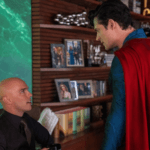
Superman has a fairly robust rogue’s gallery under his belt. You might not know this if you only watch comic book movies, where the Man of Steel faces alternating rounds betwen Lex Luthor and General Zod, but outside of Batman, Spider-Man, and maybe the X-Men, Kal-El has one of comicdom’s top shelf villain rosters. So […]
The post Superman 2: James Gunn Hints at Lex Luthor Rematch and Release Date in Retitled Sequel appeared first on Den of Geek.
Superman has a fairly robust rogue’s gallery under his belt. You might not know this if you only watch comic book movies, where the Man of Steel faces alternating rounds betwen Lex Luthor and General Zod, but outside of Batman, Spider-Man, and maybe the X-Men, Kal-El has one of comicdom’s top shelf villain rosters.
So it’s interesting that in his surprise Wednesday announcement about Superman 2, writer-director James Gunn not only revealed that the movie is now titled Man of Tomorrow and headed on the fast track for a July 9, 2027 release date, but that it seems likely to again star Nicholas Hoult’s Lex Luthor opposite David Corenswet’s Clark Kent—albeit not as you might have expected to see the bald evil genius.
cnx({
playerId: “106e33c0-3911-473c-b599-b1426db57530”,
}).render(“0270c398a82f44f49c23c16122516796”);
});
In the below social post with the title and date, we see a Jim Lee penciled drawing of Superman and Lex side by side, with the evil LuthorCorp CEO in some kind of mecha super-suit, and Superman holding a screwdriver and leaning on his nemesis’ shoulder. If we read the implications correctly… it looks like they’re teaming up?!
For the record, the image is dated 2025 and seems to be one Lee drew specifically for Gunn’s announcement. If so, however, it’s heavily influenced by the suit Luthor wore in the 2019 six-issue DC Comics event, DCeased, where an alternate reality DC Universe is infected by a zombie-like virus created by the inhabitants of Apokolips (remember them, Snyder fans?). Consequently Metropolis is wiped out in the virus, which saddens Luthor enough to lead to him teaming up with Superman to save what’s left of the rest of the world.
… For the record, we do NOT think that James Gunn is going to destroy Metropolis and go straight to some cataclysmic doom and gloom story in only his second Superman movie. Ahem, this is no longer the DCEU, right?
But it does seem like he is taking a page from that tale and others where in spite of their general animosity, a love of Metropolis and the like will bring Superman and Luthor into a state of detente and partnership. It certainly is ironic given how much virulent xenophobia and bigotry Hoult’s Luthor expressed toward immigrant Superman in this past summer’s film. If one wants to be completely guileless and “punk rock” in a Clark Kent sense, one might even assume the Man of Tomorrow’s big speech about being a good person got through to the narcissistic billionaire at the end of Superman.
… More likely though is that like Charles Xavier in a 20th Century Fox X-Men movie, Clark shouldn’t get too close to trusting his, um, old friend.
The announcement also raises the question of what threat could be bad enough to cause them to join forces? Perhaps a brainiac even more vain and egotistical than the LuthorCorp CEO?
The news of Man of Tomorrow getting fast tracked just two years after Superman, and one year after next summer’s anticipated Supergirl movie starring Milly Alcock, also suggests plans for Gunn’s DCU are changing fast after the fairly warm reception Superman received. The DC Universe’s cinematic kickoff indeed crossed $600 million worldwide, a first for a DC movie in some years. That’s a far cry from the heights of some of DC’s 2010s movies, but the bad taste those films left in audiences’ mouths seemed to presage steep drop-offs in their sequels and follow-ups.
In two years, then, we might be able to test whether like Batman Begins to The Dark Knight, if Superman and perhaps the greater DC Universe is on a different trajectory. Now if you’ll excuse us, it’s time to blast some Mighty Crabjoys.
The post Superman 2: James Gunn Hints at Lex Luthor Rematch and Release Date in Retitled Sequel appeared first on Den of Geek.
Extreme marathon running may carry colon cancer risk
A competitor climbs a dune, during the third stage of the 24rd Marathon des Sables in the Sahara desert, some 300 kilometers, south of Ouarzazate, Southern Morocco. A new prospective study from the Inova Schar Cancer Institute is prompting both curiosity and caution—suggesting that very high-volume endurance running might be linked to an increased risk […]
The post Extreme marathon running may carry colon cancer risk appeared first on Green Prophet.
Majara Residence, Hormuz
The Majara Residence on Iran’s Hormuz Island has been praised internationally for its vibrant architecture and community narrative – even winning an Aga Khan Award for Architecture. But field research of the superadobe construction suggests the reality on the ground tells a different story: one of habitat loss, fragile ecosystems at risk, and a disconnect between architectural acclaim and ecological responsibility.
Architect Ronak Roshan Gilvaei who works on Sustainable Design, Architectural Restoration & Urban Renewal weighs in for this Green Prophet exclusive.
Hormuz Island – just 8 km from Bandar Abbas in Iran – is a geological wonder, famous for its rainbow-coloured soil, unique marine biodiversity, and role as a nesting ground for critically endangered sea turtles. Studies have documented nesting by hawksbill and green turtles, especially on the island’s less accessible southeastern beaches.
Hormuz Island
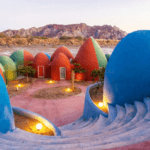
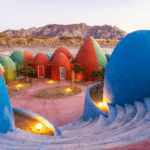
The Majara Residence (Persian: اقامتگاه ماجرا, where Majara translates to “adventure”) is a complex of roughly 200 colorful superadobe domes built on Hormuz Island as a seaside eco‑tourism project. Designed by ZAV Architects, it was completed around 2020.
Location of Majara Residence
At first glance and by its own descriptions, seems inspired by the philosophies of architects such as Nader Khalili, Francis Kéré, and Shigeru Ban. It could read as a model for sustainable development, particularly in its social dimension. However, my field visits and closer examination as an advocate for sustainable architecture and environmental conservation in Iran suggest the project’s execution contradicts the core principles of sustainability.
Its inclusion on shortlists for awards purportedly grounded in sustainability and environmental justice –– most recently the Aga Khan –– is surprising and concerning, especially given warnings and objections raised by activists, experts, and local communities in recent years. What has been labeled superficially as “revitalization” has, in practice, meant habitat invasion, erosion of indigenous values, and exploitation of local resources and people.
Like we learned from the Seychelles, these habitats require careful protection from light pollution, human traffic, and coastal development. Yet in recent years, tourism investors have eyed the same pristine stretches for high-profile projects, including the Majara Residence.
Turtle nesting site on the beach in front of the Majara Residences
Inspired by humanitarian architects like Nader Khalili and Francis Kéré, the project by ZAV Architects appeared, on paper, to support sustainable architecture and community empowerment. But its location – less than 80 metres from the high-tide line – puts it directly in sensitive turtle nesting zones. Standard conservation guidelines recommend at least a one-kilometre buffer from such areas.
The consequences go beyond the hotel’s 1.5-hectare footprint. Artificial lighting can disorient hatchlings, while heavy machinery, coastal vegetation clearance, and increased visitor pressure threaten the wider ecosystem.
Digging deeper into science papers, Hormuz Island has played a vital role in the life cycle of two protected sea turtle species over the past decades. According to local research and the scientific paper “Nesting of Hawksbill Turtle (Eretmochelys imbricata) on Hormuz Island, Iran” (2011–2012), the island has been recognized as an active and potential protected habitat for the critically endangered hawksbill turtle in Iran. My field observations are all documented here, and are summed up for a quick read below.
This study mentioned above confirms regular nesting events, the relative success of hatchling survival, and the pristine condition of some of the island’s beaches. Additionally, the paper “Turtles in Iranian Beaches of Oman Sea during 2008–2010” (BEPLS, 2014) highlights the simultaneous presence of both hawksbill and green turtles on Iran’s southern coasts, including Hormuz, and notes that numerous nests of these species have been observed on the island’s shores in past years.
Hormuz turtles
Although these studies lacked GPS-based nesting site mapping or granular habitat delineation to pinpoint exact nesting sites, this does not mean nesting does not occur in specific areas—rather, it underscores the need for more comprehensive research before any construction projects. Most nesting activity has been clearly observed in the southeastern part of the island, an area less affected by human intervention due to its inaccessibility. However, in recent years, due to its visual appeal, some investors—including the current developer of the Majara Residence have aggressively pursued tourism development projects and new hotel constructions on this land.
Examples include last year’s proposals by Next Office and Studio KAT, which faced protests from activists and locals, halting their progress.
Destruction of Native Vegetation
Before construction, the site hosted resilient species like tamarisk, glasswort, and saltwort – plants that stabilise soil, reduce erosion, and withstand Hormuz’s extreme heat and salinity. Around 2.5 hectares of this vegetation was removed, with no ecological restoration plan in place.
ZAV Architects, in their project on Hormuz Island, identified the dominant vegetation as Prosopis juliflora (mesquite) and described it as an invasive species with deep roots that can harm biodiversity and infrastructure. However, from a scientific and ecological perspective, although mesquite is non-native and semi-invasive, it plays a vital role in stabilizing the soil, preventing erosion, and reducing desertification under the harsh environmental conditions of Hormuz.
Removing this plant without replacing it with native species and without an ecological management plan not only leads to habitat degradation but also contradicts the principles of sustainable development in sensitive areas, potentially causing further environmental damage. Therefore, the hotel’s action to remove the mesquite without considering these scientific and ecological factors is unjustified and harmful.
Development of Hormuz, before and after.
The hotel’s basic ozonation and composting systems lack advanced treatment needed for sensitive coastal zones. Without independent monitoring, there’s no way to confirm that wastewater meets safety standards. On an island without a municipal sewage network, any leakage could threaten coral reefs, seagrass beds, and turtle habitats.
The architects promote the project as empowering Hormuz’s native residents. Yet reports indicate persistent economic challenges: water scarcity, high transport costs, and weak tourism management. The island’s own Sustainable Development Plan, developed with local participation, focuses on training, infrastructure, and sustainable livelihoods – a deeper approach than cultural tourism alone can provide.
Systems Thinking: A Missed Opportunity
Majara Residence, Hormuz
As systems thinker Russell Ackoff argued, environmental challenges must be addressed holistically, recognising the interdependence of ecological, social, and economic factors. Successful examples, like wildlife restoration in Yellowstone, such as bringing back the wolves to restore the forest, show that strategic, science-led interventions can restore balance.
On Hormuz, protecting sea turtles could have anchored an ecotourism model combining indigenous knowledge with conservation science – creating lasting benefits for both people and nature.
The Majara Hotel’s waste and sewage management system reportedly includes an ozonation unit with a daily capacity of 20 cubic meters, oil treatment up to 8 cubic meters, and compost production of 50 kg per day. However, the equipment used is basic, lacking advanced biological or physical-chemical treatment technologies. This is particularly alarming given the hotel’s location less than 70 meters from the shoreline, where any leakage or incomplete sewage treatment could severely endanger the island’s marine ecosystem.
Majara Residences interior
According to studies by the US Environmental Protection Agency (EPA, 2020) and the United Nations Environment Programme (UNEP, 2019), hotel wastewater contains fats, detergents, nutrients (nitrogen and phosphorus), micro-pollutants, and pathogenic microorganisms. Without advanced treatment processes—such as activated sludge reactors, biofilm systems, or ultrafiltration/nanofiltration membranes—this wastewater can degrade coral habitats, promote toxic algal blooms, reduce coastal water quality, and threaten public health (WHO, 2018).
The Majara Residence’s vibrant domes have captured global attention and won architectural accolades. But without rigorous environmental safeguards, it risks being remembered as an object lesson in how eco-tourism can turn extractive. Architecture awards that celebrate such projects without full ecological due diligence may inadvertently undermine the very sustainability principles they seek to promote.
Hormuz Island deserves development that honours its ecological fragility, cultural heritage, and the resilience of its people – not just in form and colour, but in function and legacy.
Contact: ronak.roshang@gmail.com | ronakroshan.com
The post When greenwashing overwrites ecology at the superadobe Majara Residence, Hormuz Island, Iran appeared first on Green Prophet.
Water conflicts in the Middle East region to watch in 2025
Rising temperatures, unpredictable rainfall, and more frequent droughts amplify existing disputes. Water scarcity can fuel unrest, as seen in Iran’s Khuzestan protests, and can undermine fragile peace deals in post-conflict states like Libya and Yemen.
The post Water conflicts in the Middle East region to watch in 2025 appeared first on Green Prophet.
Majara Residence, Hormuz
The Majara Residence on Iran’s Hormuz Island has been praised internationally for its vibrant architecture and community narrative – even winning an Aga Khan Award for Architecture. But field research of the superadobe construction suggests the reality on the ground tells a different story: one of habitat loss, fragile ecosystems at risk, and a disconnect between architectural acclaim and ecological responsibility.
Architect Ronak Roshan Gilvaei who works on Sustainable Design, Architectural Restoration & Urban Renewal weighs in for this Green Prophet exclusive.
Hormuz Island – just 8 km from Bandar Abbas in Iran – is a geological wonder, famous for its rainbow-coloured soil, unique marine biodiversity, and role as a nesting ground for critically endangered sea turtles. Studies have documented nesting by hawksbill and green turtles, especially on the island’s less accessible southeastern beaches.
Hormuz Island
The Majara Residence (Persian: اقامتگاه ماجرا, where Majara translates to “adventure”) is a complex of roughly 200 colorful superadobe domes built on Hormuz Island as a seaside eco‑tourism project. Designed by ZAV Architects, it was completed around 2020.
Location of Majara Residence
At first glance and by its own descriptions, seems inspired by the philosophies of architects such as Nader Khalili, Francis Kéré, and Shigeru Ban. It could read as a model for sustainable development, particularly in its social dimension. However, my field visits and closer examination as an advocate for sustainable architecture and environmental conservation in Iran suggest the project’s execution contradicts the core principles of sustainability.
Its inclusion on shortlists for awards purportedly grounded in sustainability and environmental justice –– most recently the Aga Khan –– is surprising and concerning, especially given warnings and objections raised by activists, experts, and local communities in recent years. What has been labeled superficially as “revitalization” has, in practice, meant habitat invasion, erosion of indigenous values, and exploitation of local resources and people.
Like we learned from the Seychelles, these habitats require careful protection from light pollution, human traffic, and coastal development. Yet in recent years, tourism investors have eyed the same pristine stretches for high-profile projects, including the Majara Residence.
Turtle nesting site on the beach in front of the Majara Residences
Inspired by humanitarian architects like Nader Khalili and Francis Kéré, the project by ZAV Architects appeared, on paper, to support sustainable architecture and community empowerment. But its location – less than 80 metres from the high-tide line – puts it directly in sensitive turtle nesting zones. Standard conservation guidelines recommend at least a one-kilometre buffer from such areas.
The consequences go beyond the hotel’s 1.5-hectare footprint. Artificial lighting can disorient hatchlings, while heavy machinery, coastal vegetation clearance, and increased visitor pressure threaten the wider ecosystem.
Digging deeper into science papers, Hormuz Island has played a vital role in the life cycle of two protected sea turtle species over the past decades. According to local research and the scientific paper “Nesting of Hawksbill Turtle (Eretmochelys imbricata) on Hormuz Island, Iran” (2011–2012), the island has been recognized as an active and potential protected habitat for the critically endangered hawksbill turtle in Iran. My field observations are all documented here, and are summed up for a quick read below.
This study mentioned above confirms regular nesting events, the relative success of hatchling survival, and the pristine condition of some of the island’s beaches. Additionally, the paper “Turtles in Iranian Beaches of Oman Sea during 2008–2010” (BEPLS, 2014) highlights the simultaneous presence of both hawksbill and green turtles on Iran’s southern coasts, including Hormuz, and notes that numerous nests of these species have been observed on the island’s shores in past years.
Hormuz turtles
Although these studies lacked GPS-based nesting site mapping or granular habitat delineation to pinpoint exact nesting sites, this does not mean nesting does not occur in specific areas—rather, it underscores the need for more comprehensive research before any construction projects. Most nesting activity has been clearly observed in the southeastern part of the island, an area less affected by human intervention due to its inaccessibility. However, in recent years, due to its visual appeal, some investors—including the current developer of the Majara Residence have aggressively pursued tourism development projects and new hotel constructions on this land.
Examples include last year’s proposals by Next Office and Studio KAT, which faced protests from activists and locals, halting their progress.
Destruction of Native Vegetation
Before construction, the site hosted resilient species like tamarisk, glasswort, and saltwort – plants that stabilise soil, reduce erosion, and withstand Hormuz’s extreme heat and salinity. Around 2.5 hectares of this vegetation was removed, with no ecological restoration plan in place.
ZAV Architects, in their project on Hormuz Island, identified the dominant vegetation as Prosopis juliflora (mesquite) and described it as an invasive species with deep roots that can harm biodiversity and infrastructure. However, from a scientific and ecological perspective, although mesquite is non-native and semi-invasive, it plays a vital role in stabilizing the soil, preventing erosion, and reducing desertification under the harsh environmental conditions of Hormuz.
Removing this plant without replacing it with native species and without an ecological management plan not only leads to habitat degradation but also contradicts the principles of sustainable development in sensitive areas, potentially causing further environmental damage. Therefore, the hotel’s action to remove the mesquite without considering these scientific and ecological factors is unjustified and harmful.
Development of Hormuz, before and after.
The hotel’s basic ozonation and composting systems lack advanced treatment needed for sensitive coastal zones. Without independent monitoring, there’s no way to confirm that wastewater meets safety standards. On an island without a municipal sewage network, any leakage could threaten coral reefs, seagrass beds, and turtle habitats.
The architects promote the project as empowering Hormuz’s native residents. Yet reports indicate persistent economic challenges: water scarcity, high transport costs, and weak tourism management. The island’s own Sustainable Development Plan, developed with local participation, focuses on training, infrastructure, and sustainable livelihoods – a deeper approach than cultural tourism alone can provide.
Systems Thinking: A Missed Opportunity
Majara Residence, Hormuz
As systems thinker Russell Ackoff argued, environmental challenges must be addressed holistically, recognising the interdependence of ecological, social, and economic factors. Successful examples, like wildlife restoration in Yellowstone, such as bringing back the wolves to restore the forest, show that strategic, science-led interventions can restore balance.
On Hormuz, protecting sea turtles could have anchored an ecotourism model combining indigenous knowledge with conservation science – creating lasting benefits for both people and nature.
The Majara Hotel’s waste and sewage management system reportedly includes an ozonation unit with a daily capacity of 20 cubic meters, oil treatment up to 8 cubic meters, and compost production of 50 kg per day. However, the equipment used is basic, lacking advanced biological or physical-chemical treatment technologies. This is particularly alarming given the hotel’s location less than 70 meters from the shoreline, where any leakage or incomplete sewage treatment could severely endanger the island’s marine ecosystem.
Majara Residences interior
According to studies by the US Environmental Protection Agency (EPA, 2020) and the United Nations Environment Programme (UNEP, 2019), hotel wastewater contains fats, detergents, nutrients (nitrogen and phosphorus), micro-pollutants, and pathogenic microorganisms. Without advanced treatment processes—such as activated sludge reactors, biofilm systems, or ultrafiltration/nanofiltration membranes—this wastewater can degrade coral habitats, promote toxic algal blooms, reduce coastal water quality, and threaten public health (WHO, 2018).
The Majara Residence’s vibrant domes have captured global attention and won architectural accolades. But without rigorous environmental safeguards, it risks being remembered as an object lesson in how eco-tourism can turn extractive. Architecture awards that celebrate such projects without full ecological due diligence may inadvertently undermine the very sustainability principles they seek to promote.
Hormuz Island deserves development that honours its ecological fragility, cultural heritage, and the resilience of its people – not just in form and colour, but in function and legacy.
Contact: ronak.roshang@gmail.com | ronakroshan.com
The post When greenwashing overwrites ecology at the superadobe Majara Residence, Hormuz Island, Iran appeared first on Green Prophet.
Saudi Arabia’s $650M bet on desalination
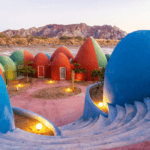
No Saudi water story is complete without NEOM, the high-profile giga-project selling a future of “100% renewable desalination,” circular brine chemistry, and hydrogen-powered industry. Ambition is welcome—Saudi needs moonshots to decouple water from oil.
The post Saudi Arabia’s $650M bet on desalination appeared first on Green Prophet.
Majara Residence, Hormuz
The Majara Residence on Iran’s Hormuz Island has been praised internationally for its vibrant architecture and community narrative – even winning an Aga Khan Award for Architecture. But field research of the superadobe construction suggests the reality on the ground tells a different story: one of habitat loss, fragile ecosystems at risk, and a disconnect between architectural acclaim and ecological responsibility.
Architect Ronak Roshan Gilvaei who works on Sustainable Design, Architectural Restoration & Urban Renewal weighs in for this Green Prophet exclusive.
Hormuz Island – just 8 km from Bandar Abbas in Iran – is a geological wonder, famous for its rainbow-coloured soil, unique marine biodiversity, and role as a nesting ground for critically endangered sea turtles. Studies have documented nesting by hawksbill and green turtles, especially on the island’s less accessible southeastern beaches.
Hormuz Island
The Majara Residence (Persian: اقامتگاه ماجرا, where Majara translates to “adventure”) is a complex of roughly 200 colorful superadobe domes built on Hormuz Island as a seaside eco‑tourism project. Designed by ZAV Architects, it was completed around 2020.
Location of Majara Residence
At first glance and by its own descriptions, seems inspired by the philosophies of architects such as Nader Khalili, Francis Kéré, and Shigeru Ban. It could read as a model for sustainable development, particularly in its social dimension. However, my field visits and closer examination as an advocate for sustainable architecture and environmental conservation in Iran suggest the project’s execution contradicts the core principles of sustainability.
Its inclusion on shortlists for awards purportedly grounded in sustainability and environmental justice –– most recently the Aga Khan –– is surprising and concerning, especially given warnings and objections raised by activists, experts, and local communities in recent years. What has been labeled superficially as “revitalization” has, in practice, meant habitat invasion, erosion of indigenous values, and exploitation of local resources and people.
Like we learned from the Seychelles, these habitats require careful protection from light pollution, human traffic, and coastal development. Yet in recent years, tourism investors have eyed the same pristine stretches for high-profile projects, including the Majara Residence.
Turtle nesting site on the beach in front of the Majara Residences
Inspired by humanitarian architects like Nader Khalili and Francis Kéré, the project by ZAV Architects appeared, on paper, to support sustainable architecture and community empowerment. But its location – less than 80 metres from the high-tide line – puts it directly in sensitive turtle nesting zones. Standard conservation guidelines recommend at least a one-kilometre buffer from such areas.
The consequences go beyond the hotel’s 1.5-hectare footprint. Artificial lighting can disorient hatchlings, while heavy machinery, coastal vegetation clearance, and increased visitor pressure threaten the wider ecosystem.
Digging deeper into science papers, Hormuz Island has played a vital role in the life cycle of two protected sea turtle species over the past decades. According to local research and the scientific paper “Nesting of Hawksbill Turtle (Eretmochelys imbricata) on Hormuz Island, Iran” (2011–2012), the island has been recognized as an active and potential protected habitat for the critically endangered hawksbill turtle in Iran. My field observations are all documented here, and are summed up for a quick read below.
This study mentioned above confirms regular nesting events, the relative success of hatchling survival, and the pristine condition of some of the island’s beaches. Additionally, the paper “Turtles in Iranian Beaches of Oman Sea during 2008–2010” (BEPLS, 2014) highlights the simultaneous presence of both hawksbill and green turtles on Iran’s southern coasts, including Hormuz, and notes that numerous nests of these species have been observed on the island’s shores in past years.
Hormuz turtles
Although these studies lacked GPS-based nesting site mapping or granular habitat delineation to pinpoint exact nesting sites, this does not mean nesting does not occur in specific areas—rather, it underscores the need for more comprehensive research before any construction projects. Most nesting activity has been clearly observed in the southeastern part of the island, an area less affected by human intervention due to its inaccessibility. However, in recent years, due to its visual appeal, some investors—including the current developer of the Majara Residence have aggressively pursued tourism development projects and new hotel constructions on this land.
Examples include last year’s proposals by Next Office and Studio KAT, which faced protests from activists and locals, halting their progress.
Destruction of Native Vegetation
Before construction, the site hosted resilient species like tamarisk, glasswort, and saltwort – plants that stabilise soil, reduce erosion, and withstand Hormuz’s extreme heat and salinity. Around 2.5 hectares of this vegetation was removed, with no ecological restoration plan in place.
ZAV Architects, in their project on Hormuz Island, identified the dominant vegetation as Prosopis juliflora (mesquite) and described it as an invasive species with deep roots that can harm biodiversity and infrastructure. However, from a scientific and ecological perspective, although mesquite is non-native and semi-invasive, it plays a vital role in stabilizing the soil, preventing erosion, and reducing desertification under the harsh environmental conditions of Hormuz.
Removing this plant without replacing it with native species and without an ecological management plan not only leads to habitat degradation but also contradicts the principles of sustainable development in sensitive areas, potentially causing further environmental damage. Therefore, the hotel’s action to remove the mesquite without considering these scientific and ecological factors is unjustified and harmful.
Development of Hormuz, before and after.
The hotel’s basic ozonation and composting systems lack advanced treatment needed for sensitive coastal zones. Without independent monitoring, there’s no way to confirm that wastewater meets safety standards. On an island without a municipal sewage network, any leakage could threaten coral reefs, seagrass beds, and turtle habitats.
The architects promote the project as empowering Hormuz’s native residents. Yet reports indicate persistent economic challenges: water scarcity, high transport costs, and weak tourism management. The island’s own Sustainable Development Plan, developed with local participation, focuses on training, infrastructure, and sustainable livelihoods – a deeper approach than cultural tourism alone can provide.
Systems Thinking: A Missed Opportunity
Majara Residence, Hormuz
As systems thinker Russell Ackoff argued, environmental challenges must be addressed holistically, recognising the interdependence of ecological, social, and economic factors. Successful examples, like wildlife restoration in Yellowstone, such as bringing back the wolves to restore the forest, show that strategic, science-led interventions can restore balance.
On Hormuz, protecting sea turtles could have anchored an ecotourism model combining indigenous knowledge with conservation science – creating lasting benefits for both people and nature.
The Majara Hotel’s waste and sewage management system reportedly includes an ozonation unit with a daily capacity of 20 cubic meters, oil treatment up to 8 cubic meters, and compost production of 50 kg per day. However, the equipment used is basic, lacking advanced biological or physical-chemical treatment technologies. This is particularly alarming given the hotel’s location less than 70 meters from the shoreline, where any leakage or incomplete sewage treatment could severely endanger the island’s marine ecosystem.
Majara Residences interior
According to studies by the US Environmental Protection Agency (EPA, 2020) and the United Nations Environment Programme (UNEP, 2019), hotel wastewater contains fats, detergents, nutrients (nitrogen and phosphorus), micro-pollutants, and pathogenic microorganisms. Without advanced treatment processes—such as activated sludge reactors, biofilm systems, or ultrafiltration/nanofiltration membranes—this wastewater can degrade coral habitats, promote toxic algal blooms, reduce coastal water quality, and threaten public health (WHO, 2018).
The Majara Residence’s vibrant domes have captured global attention and won architectural accolades. But without rigorous environmental safeguards, it risks being remembered as an object lesson in how eco-tourism can turn extractive. Architecture awards that celebrate such projects without full ecological due diligence may inadvertently undermine the very sustainability principles they seek to promote.
Hormuz Island deserves development that honours its ecological fragility, cultural heritage, and the resilience of its people – not just in form and colour, but in function and legacy.
Contact: ronak.roshang@gmail.com | ronakroshan.com
The post When greenwashing overwrites ecology at the superadobe Majara Residence, Hormuz Island, Iran appeared first on Green Prophet.
Egypt overhauls its irrigation system in anticipation of losing the Nile
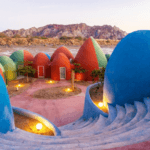
Egypt’s irrigation system has roots in millennia-old techniques, from Aswan Dam regulation to historic canal networks. The current program builds on this heritage, blending tradition with pressure-based systems and digital monitoring. Watch developments on the GERD dam opening this year from Ethiopia as water volume from the Nile that goes to Egypt may drop dramatically.
The post Egypt overhauls its irrigation system in anticipation of losing the Nile appeared first on Green Prophet.
Majara Residence, Hormuz
The Majara Residence on Iran’s Hormuz Island has been praised internationally for its vibrant architecture and community narrative – even winning an Aga Khan Award for Architecture. But field research of the superadobe construction suggests the reality on the ground tells a different story: one of habitat loss, fragile ecosystems at risk, and a disconnect between architectural acclaim and ecological responsibility.
Architect Ronak Roshan Gilvaei who works on Sustainable Design, Architectural Restoration & Urban Renewal weighs in for this Green Prophet exclusive.
Hormuz Island – just 8 km from Bandar Abbas in Iran – is a geological wonder, famous for its rainbow-coloured soil, unique marine biodiversity, and role as a nesting ground for critically endangered sea turtles. Studies have documented nesting by hawksbill and green turtles, especially on the island’s less accessible southeastern beaches.
Hormuz Island
The Majara Residence (Persian: اقامتگاه ماجرا, where Majara translates to “adventure”) is a complex of roughly 200 colorful superadobe domes built on Hormuz Island as a seaside eco‑tourism project. Designed by ZAV Architects, it was completed around 2020.
Location of Majara Residence
At first glance and by its own descriptions, seems inspired by the philosophies of architects such as Nader Khalili, Francis Kéré, and Shigeru Ban. It could read as a model for sustainable development, particularly in its social dimension. However, my field visits and closer examination as an advocate for sustainable architecture and environmental conservation in Iran suggest the project’s execution contradicts the core principles of sustainability.
Its inclusion on shortlists for awards purportedly grounded in sustainability and environmental justice –– most recently the Aga Khan –– is surprising and concerning, especially given warnings and objections raised by activists, experts, and local communities in recent years. What has been labeled superficially as “revitalization” has, in practice, meant habitat invasion, erosion of indigenous values, and exploitation of local resources and people.
Like we learned from the Seychelles, these habitats require careful protection from light pollution, human traffic, and coastal development. Yet in recent years, tourism investors have eyed the same pristine stretches for high-profile projects, including the Majara Residence.
Turtle nesting site on the beach in front of the Majara Residences
Inspired by humanitarian architects like Nader Khalili and Francis Kéré, the project by ZAV Architects appeared, on paper, to support sustainable architecture and community empowerment. But its location – less than 80 metres from the high-tide line – puts it directly in sensitive turtle nesting zones. Standard conservation guidelines recommend at least a one-kilometre buffer from such areas.
The consequences go beyond the hotel’s 1.5-hectare footprint. Artificial lighting can disorient hatchlings, while heavy machinery, coastal vegetation clearance, and increased visitor pressure threaten the wider ecosystem.
Digging deeper into science papers, Hormuz Island has played a vital role in the life cycle of two protected sea turtle species over the past decades. According to local research and the scientific paper “Nesting of Hawksbill Turtle (Eretmochelys imbricata) on Hormuz Island, Iran” (2011–2012), the island has been recognized as an active and potential protected habitat for the critically endangered hawksbill turtle in Iran. My field observations are all documented here, and are summed up for a quick read below.
This study mentioned above confirms regular nesting events, the relative success of hatchling survival, and the pristine condition of some of the island’s beaches. Additionally, the paper “Turtles in Iranian Beaches of Oman Sea during 2008–2010” (BEPLS, 2014) highlights the simultaneous presence of both hawksbill and green turtles on Iran’s southern coasts, including Hormuz, and notes that numerous nests of these species have been observed on the island’s shores in past years.
Hormuz turtles
Although these studies lacked GPS-based nesting site mapping or granular habitat delineation to pinpoint exact nesting sites, this does not mean nesting does not occur in specific areas—rather, it underscores the need for more comprehensive research before any construction projects. Most nesting activity has been clearly observed in the southeastern part of the island, an area less affected by human intervention due to its inaccessibility. However, in recent years, due to its visual appeal, some investors—including the current developer of the Majara Residence have aggressively pursued tourism development projects and new hotel constructions on this land.
Examples include last year’s proposals by Next Office and Studio KAT, which faced protests from activists and locals, halting their progress.
Destruction of Native Vegetation
Before construction, the site hosted resilient species like tamarisk, glasswort, and saltwort – plants that stabilise soil, reduce erosion, and withstand Hormuz’s extreme heat and salinity. Around 2.5 hectares of this vegetation was removed, with no ecological restoration plan in place.
ZAV Architects, in their project on Hormuz Island, identified the dominant vegetation as Prosopis juliflora (mesquite) and described it as an invasive species with deep roots that can harm biodiversity and infrastructure. However, from a scientific and ecological perspective, although mesquite is non-native and semi-invasive, it plays a vital role in stabilizing the soil, preventing erosion, and reducing desertification under the harsh environmental conditions of Hormuz.
Removing this plant without replacing it with native species and without an ecological management plan not only leads to habitat degradation but also contradicts the principles of sustainable development in sensitive areas, potentially causing further environmental damage. Therefore, the hotel’s action to remove the mesquite without considering these scientific and ecological factors is unjustified and harmful.
Development of Hormuz, before and after.
The hotel’s basic ozonation and composting systems lack advanced treatment needed for sensitive coastal zones. Without independent monitoring, there’s no way to confirm that wastewater meets safety standards. On an island without a municipal sewage network, any leakage could threaten coral reefs, seagrass beds, and turtle habitats.
The architects promote the project as empowering Hormuz’s native residents. Yet reports indicate persistent economic challenges: water scarcity, high transport costs, and weak tourism management. The island’s own Sustainable Development Plan, developed with local participation, focuses on training, infrastructure, and sustainable livelihoods – a deeper approach than cultural tourism alone can provide.
Systems Thinking: A Missed Opportunity
Majara Residence, Hormuz
As systems thinker Russell Ackoff argued, environmental challenges must be addressed holistically, recognising the interdependence of ecological, social, and economic factors. Successful examples, like wildlife restoration in Yellowstone, such as bringing back the wolves to restore the forest, show that strategic, science-led interventions can restore balance.
On Hormuz, protecting sea turtles could have anchored an ecotourism model combining indigenous knowledge with conservation science – creating lasting benefits for both people and nature.
The Majara Hotel’s waste and sewage management system reportedly includes an ozonation unit with a daily capacity of 20 cubic meters, oil treatment up to 8 cubic meters, and compost production of 50 kg per day. However, the equipment used is basic, lacking advanced biological or physical-chemical treatment technologies. This is particularly alarming given the hotel’s location less than 70 meters from the shoreline, where any leakage or incomplete sewage treatment could severely endanger the island’s marine ecosystem.
Majara Residences interior
According to studies by the US Environmental Protection Agency (EPA, 2020) and the United Nations Environment Programme (UNEP, 2019), hotel wastewater contains fats, detergents, nutrients (nitrogen and phosphorus), micro-pollutants, and pathogenic microorganisms. Without advanced treatment processes—such as activated sludge reactors, biofilm systems, or ultrafiltration/nanofiltration membranes—this wastewater can degrade coral habitats, promote toxic algal blooms, reduce coastal water quality, and threaten public health (WHO, 2018).
The Majara Residence’s vibrant domes have captured global attention and won architectural accolades. But without rigorous environmental safeguards, it risks being remembered as an object lesson in how eco-tourism can turn extractive. Architecture awards that celebrate such projects without full ecological due diligence may inadvertently undermine the very sustainability principles they seek to promote.
Hormuz Island deserves development that honours its ecological fragility, cultural heritage, and the resilience of its people – not just in form and colour, but in function and legacy.
Contact: ronak.roshang@gmail.com | ronakroshan.com
The post When greenwashing overwrites ecology at the superadobe Majara Residence, Hormuz Island, Iran appeared first on Green Prophet.