To Ignite a Personalization Practice, Run this Prepersonalization Workshop

Picture this. You’ve joined a squad at your company that’s designing new product features with an emphasis on automation or AI. Or your company has just implemented a personalization engine. Either way, you’re designing with data. Now what? When it comes to designing for personalization, there are many cautionary tales, no overnight successes, and few guides for the perplexed.
Between the fantasy of getting it right and the fear of it going wrong—like when we encounter “persofails” in the vein of a company repeatedly imploring everyday consumers to buy additional toilet seats—the personalization gap is real. It’s an especially confounding place to be a digital professional without a map, a compass, or a plan.
For those of you venturing into personalization, there’s no Lonely Planet and few tour guides because effective personalization is so specific to each organization’s talent, technology, and market position.
But you can ensure that your team has packed its bags sensibly.
There’s a DIY formula to increase your chances for success. At minimum, you’ll defuse your boss’s irrational exuberance. Before the party you’ll need to effectively prepare.
We call it prepersonalization.
Behind the music
Consider Spotify’s DJ feature, which debuted this past year.
We’re used to seeing the polished final result of a personalization feature. Before the year-end award, the making-of backstory, or the behind-the-scenes victory lap, a personalized feature had to be conceived, budgeted, and prioritized. Before any personalization feature goes live in your product or service, it lives amid a backlog of worthy ideas for expressing customer experiences more dynamically.
So how do you know where to place your personalization bets? How do you design consistent interactions that won’t trip up users or—worse—breed mistrust? We’ve found that for many budgeted programs to justify their ongoing investments, they first needed one or more workshops to convene key stakeholders and internal customers of the technology. Make yours count.
From Big Tech to fledgling startups, we’ve seen the same evolution up close with our clients. In our experiences with working on small and large personalization efforts, a program’s ultimate track record—and its ability to weather tough questions, work steadily toward shared answers, and organize its design and technology efforts—turns on how effectively these prepersonalization activities play out.
Time and again, we’ve seen effective workshops separate future success stories from unsuccessful efforts, saving countless time, resources, and collective well-being in the process.
A personalization practice involves a multiyear effort of testing and feature development. It’s not a switch-flip moment in your tech stack. It’s best managed as a backlog that often evolves through three steps:
- customer experience optimization (CXO, also known as A/B testing or experimentation)
- always-on automations (whether rules-based or machine-generated)
- mature features or standalone product development (such as Spotify’s DJ experience)
This is why we created our progressive personalization framework and why we’re field-testing an accompanying deck of cards: we believe that there’s a base grammar, a set of “nouns and verbs” that your organization can use to design experiences that are customized, personalized, or automated. You won’t need these cards. But we strongly recommend that you create something similar, whether that might be digital or physical.
Set your kitchen timer
How long does it take to cook up a prepersonalization workshop? The surrounding assessment activities that we recommend including can (and often do) span weeks. For the core workshop, we recommend aiming for two to three days. Here’s a summary of our broader approach along with details on the essential first-day activities.
The full arc of the wider workshop is threefold:
- Kickstart: This sets the terms of engagement as you focus on the opportunity as well as the readiness and drive of your team and your leadership. .
- Plan your work: This is the heart of the card-based workshop activities where you specify a plan of attack and the scope of work.
- Work your plan: This phase is all about creating a competitive environment for team participants to individually pitch their own pilots that each contain a proof-of-concept project, its business case, and its operating model.
Give yourself at least a day, split into two large time blocks, to power through a concentrated version of those first two phases.
Kickstart: Whet your appetite
We call the first lesson the “landscape of connected experience.” It explores the personalization possibilities in your organization. A connected experience, in our parlance, is any UX requiring the orchestration of multiple systems of record on the backend. This could be a content-management system combined with a marketing-automation platform. It could be a digital-asset manager combined with a customer-data platform.
Spark conversation by naming consumer examples and business-to-business examples of connected experience interactions that you admire, find familiar, or even dislike. This should cover a representative range of personalization patterns, including automated app-based interactions (such as onboarding sequences or wizards), notifications, and recommenders. We have a catalog of these in the cards. Here’s a list of 142 different interactions to jog your thinking.
This is all about setting the table. What are the possible paths for the practice in your organization? If you want a broader view, here’s a long-form primer and a strategic framework.
Assess each example that you discuss for its complexity and the level of effort that you estimate that it would take for your team to deliver that feature (or something similar). In our cards, we divide connected experiences into five levels: functions, features, experiences, complete products, and portfolios. Size your own build here. This will help to focus the conversation on the merits of ongoing investment as well as the gap between what you deliver today and what you want to deliver in the future.
Next, have your team plot each idea on the following 2×2 grid, which lays out the four enduring arguments for a personalized experience. This is critical because it emphasizes how personalization can not only help your external customers but also affect your own ways of working. It’s also a reminder (which is why we used the word argument earlier) of the broader effort beyond these tactical interventions.
Each team member should vote on where they see your product or service putting its emphasis. Naturally, you can’t prioritize all of them. The intention here is to flesh out how different departments may view their own upsides to the effort, which can vary from one to the next. Documenting your desired outcomes lets you know how the team internally aligns across representatives from different departments or functional areas.
The third and final kickstart activity is about naming your personalization gap. Is your customer journey well documented? Will data and privacy compliance be too big of a challenge? Do you have content metadata needs that you have to address? (We’re pretty sure that you do: it’s just a matter of recognizing the relative size of that need and its remedy.) In our cards, we’ve noted a number of program risks, including common team dispositions. Our Detractor card, for example, lists six stakeholder behaviors that hinder progress.
Effectively collaborating and managing expectations is critical to your success. Consider the potential barriers to your future progress. Press the participants to name specific steps to overcome or mitigate those barriers in your organization. As studies have shown, personalization efforts face many common barriers.
At this point, you’ve hopefully discussed sample interactions, emphasized a key area of benefit, and flagged key gaps? Good—you’re ready to continue.
Hit that test kitchen
Next, let’s look at what you’ll need to bring your personalization recipes to life. Personalization engines, which are robust software suites for automating and expressing dynamic content, can intimidate new customers. Their capabilities are sweeping and powerful, and they present broad options for how your organization can conduct its activities. This presents the question: Where do you begin when you’re configuring a connected experience?
What’s important here is to avoid treating the installed software like it were a dream kitchen from some fantasy remodeling project (as one of our client executives memorably put it). These software engines are more like test kitchens where your team can begin devising, tasting, and refining the snacks and meals that will become a part of your personalization program’s regularly evolving menu.
The ultimate menu of the prioritized backlog will come together over the course of the workshop. And creating “dishes” is the way that you’ll have individual team stakeholders construct personalized interactions that serve their needs or the needs of others.
The dishes will come from recipes, and those recipes have set ingredients.
Verify your ingredients
Like a good product manager, you’ll make sure—andyou’ll validate with the right stakeholders present—that you have all the ingredients on hand to cook up your desired interaction (or that you can work out what needs to be added to your pantry). These ingredients include the audience that you’re targeting, content and design elements, the context for the interaction, and your measure for how it’ll come together.
This isn’t just about discovering requirements. Documenting your personalizations as a series of if-then statements lets the team:
- compare findings toward a unified approach for developing features, not unlike when artists paint with the same palette;
- specify a consistent set of interactions that users find uniform or familiar;
- and develop parity across performance measurements and key performance indicators too.
This helps you streamline your designs and your technical efforts while you deliver a shared palette of core motifs of your personalized or automated experience.
Compose your recipe
What ingredients are important to you? Think of a who-what-when-why construct:
- Who are your key audience segments or groups?
- What kind of content will you give them, in what design elements, and under what circumstances?
- And for which business and user benefits?
We first developed these cards and card categories five years ago. We regularly play-test their fit with conference audiences and clients. And we still encounter new possibilities. But they all follow an underlying who-what-when-why logic.
Here are three examples for a subscription-based reading app, which you can generally follow along with right to left in the cards in the accompanying photo below.
- Nurture personalization: When a guest or an unknown visitor interacts with a product title, a banner or alert bar appears that makes it easier for them to encounter a related title they may want to read, saving them time.
- Welcome automation: When there’s a newly registered user, an email is generated to call out the breadth of the content catalog and to make them a happier subscriber.
- Winback automation: Before their subscription lapses or after a recent failed renewal, a user is sent an email that gives them a promotional offer to suggest that they reconsider renewing or to remind them to renew.
A useful preworkshop activity may be to think through a first draft of what these cards might be for your organization, although we’ve also found that this process sometimes flows best through cocreating the recipes themselves. Start with a set of blank cards, and begin labeling and grouping them through the design process, eventually distilling them to a refined subset of highly useful candidate cards.
You can think of the later stages of the workshop as moving from recipes toward a cookbook in focus—like a more nuanced customer-journey mapping. Individual “cooks” will pitch their recipes to the team, using a common jobs-to-be-done format so that measurability and results are baked in, and from there, the resulting collection will be prioritized for finished design and delivery to production.
Better kitchens require better architecture
Simplifying a customer experience is a complicated effort for those who are inside delivering it. Beware anyone who says otherwise. With that being said, “Complicated problems can be hard to solve, but they are addressable with rules and recipes.”
When personalization becomes a laugh line, it’s because a team is overfitting: they aren’t designing with their best data. Like a sparse pantry, every organization has metadata debt to go along with its technical debt, and this creates a drag on personalization effectiveness. Your AI’s output quality, for example, is indeed limited by your IA. Spotify’s poster-child prowess today was unfathomable before they acquired a seemingly modest metadata startup that now powers its underlying information architecture.
You can definitely stand the heat…
Personalization technology opens a doorway into a confounding ocean of possible designs. Only a disciplined and highly collaborative approach will bring about the necessary focus and intention to succeed. So banish the dream kitchen. Instead, hit the test kitchen to save time, preserve job satisfaction and security, and safely dispense with the fanciful ideas that originate upstairs of the doers in your organization. There are meals to serve and mouths to feed.
This workshop framework gives you a fighting shot at lasting success as well as sound beginnings. Wiring up your information layer isn’t an overnight affair. But if you use the same cookbook and shared recipes, you’ll have solid footing for success. We designed these activities to make your organization’s needs concrete and clear, long before the hazards pile up.
While there are associated costs toward investing in this kind of technology and product design, your ability to size up and confront your unique situation and your digital capabilities is time well spent. Don’t squander it. The proof, as they say, is in the pudding.
User Research Is Storytelling
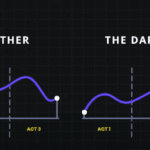
Ever since I was a boy, I’ve been fascinated with movies. I loved the characters and the excitement—but most of all the stories. I wanted to be an actor. And I believed that I’d get to do the things that Indiana Jones did and go on exciting adventures. I even dreamed up ideas for movies that my friends and I could make and star in. But they never went any further. I did, however, end up working in user experience (UX). Now, I realize that there’s an element of theater to UX—I hadn’t really considered it before, but user research is storytelling. And to get the most out of user research, you need to tell a good story where you bring stakeholders—the product team and decision makers—along and get them interested in learning more.
Think of your favorite movie. More than likely it follows a three-act structure that’s commonly seen in storytelling: the setup, the conflict, and the resolution. The first act shows what exists today, and it helps you get to know the characters and the challenges and problems that they face. Act two introduces the conflict, where the action is. Here, problems grow or get worse. And the third and final act is the resolution. This is where the issues are resolved and the characters learn and change. I believe that this structure is also a great way to think about user research, and I think that it can be especially helpful in explaining user research to others.
Use storytelling as a structure to do research
It’s sad to say, but many have come to see research as being expendable. If budgets or timelines are tight, research tends to be one of the first things to go. Instead of investing in research, some product managers rely on designers or—worse—their own opinion to make the “right” choices for users based on their experience or accepted best practices. That may get teams some of the way, but that approach can so easily miss out on solving users’ real problems. To remain user-centered, this is something we should avoid. User research elevates design. It keeps it on track, pointing to problems and opportunities. Being aware of the issues with your product and reacting to them can help you stay ahead of your competitors.
In the three-act structure, each act corresponds to a part of the process, and each part is critical to telling the whole story. Let’s look at the different acts and how they align with user research.
Act one: setup
The setup is all about understanding the background, and that’s where foundational research comes in. Foundational research (also called generative, discovery, or initial research) helps you understand users and identify their problems. You’re learning about what exists today, the challenges users have, and how the challenges affect them—just like in the movies. To do foundational research, you can conduct contextual inquiries or diary studies (or both!), which can help you start to identify problems as well as opportunities. It doesn’t need to be a huge investment in time or money.
Erika Hall writes about minimum viable ethnography, which can be as simple as spending 15 minutes with a user and asking them one thing: “‘Walk me through your day yesterday.’ That’s it. Present that one request. Shut up and listen to them for 15 minutes. Do your damndest to keep yourself and your interests out of it. Bam, you’re doing ethnography.” According to Hall, “[This] will probably prove quite illuminating. In the highly unlikely case that you didn’t learn anything new or useful, carry on with enhanced confidence in your direction.”
This makes total sense to me. And I love that this makes user research so accessible. You don’t need to prepare a lot of documentation; you can just recruit participants and do it! This can yield a wealth of information about your users, and it’ll help you better understand them and what’s going on in their lives. That’s really what act one is all about: understanding where users are coming from.
Jared Spool talks about the importance of foundational research and how it should form the bulk of your research. If you can draw from any additional user data that you can get your hands on, such as surveys or analytics, that can supplement what you’ve heard in the foundational studies or even point to areas that need further investigation. Together, all this data paints a clearer picture of the state of things and all its shortcomings. And that’s the beginning of a compelling story. It’s the point in the plot where you realize that the main characters—or the users in this case—are facing challenges that they need to overcome. Like in the movies, this is where you start to build empathy for the characters and root for them to succeed. And hopefully stakeholders are now doing the same. Their sympathy may be with their business, which could be losing money because users can’t complete certain tasks. Or maybe they do empathize with users’ struggles. Either way, act one is your initial hook to get the stakeholders interested and invested.
Once stakeholders begin to understand the value of foundational research, that can open doors to more opportunities that involve users in the decision-making process. And that can guide product teams toward being more user-centered. This benefits everyone—users, the product, and stakeholders. It’s like winning an Oscar in movie terms—it often leads to your product being well received and successful. And this can be an incentive for stakeholders to repeat this process with other products. Storytelling is the key to this process, and knowing how to tell a good story is the only way to get stakeholders to really care about doing more research.
This brings us to act two, where you iteratively evaluate a design or concept to see whether it addresses the issues.
Act two: conflict
Act two is all about digging deeper into the problems that you identified in act one. This usually involves directional research, such as usability tests, where you assess a potential solution (such as a design) to see whether it addresses the issues that you found. The issues could include unmet needs or problems with a flow or process that’s tripping users up. Like act two in a movie, more issues will crop up along the way. It’s here that you learn more about the characters as they grow and develop through this act.
Usability tests should typically include around five participants according to Jakob Nielsen, who found that that number of users can usually identify most of the problems: “As you add more and more users, you learn less and less because you will keep seeing the same things again and again… After the fifth user, you are wasting your time by observing the same findings repeatedly but not learning much new.”
There are parallels with storytelling here too; if you try to tell a story with too many characters, the plot may get lost. Having fewer participants means that each user’s struggles will be more memorable and easier to relay to other stakeholders when talking about the research. This can help convey the issues that need to be addressed while also highlighting the value of doing the research in the first place.
Researchers have run usability tests in person for decades, but you can also conduct usability tests remotely using tools like Microsoft Teams, Zoom, or other teleconferencing software. This approach has become increasingly popular since the beginning of the pandemic, and it works well. You can think of in-person usability tests like going to a play and remote sessions as more like watching a movie. There are advantages and disadvantages to each. In-person usability research is a much richer experience. Stakeholders can experience the sessions with other stakeholders. You also get real-time reactions—including surprise, agreement, disagreement, and discussions about what they’re seeing. Much like going to a play, where audiences get to take in the stage, the costumes, the lighting, and the actors’ interactions, in-person research lets you see users up close, including their body language, how they interact with the moderator, and how the scene is set up.
If in-person usability testing is like watching a play—staged and controlled—then conducting usability testing in the field is like immersive theater where any two sessions might be very different from one another. You can take usability testing into the field by creating a replica of the space where users interact with the product and then conduct your research there. Or you can go out to meet users at their location to do your research. With either option, you get to see how things work in context, things come up that wouldn’t have in a lab environment—and conversion can shift in entirely different directions. As researchers, you have less control over how these sessions go, but this can sometimes help you understand users even better. Meeting users where they are can provide clues to the external forces that could be affecting how they use your product. In-person usability tests provide another level of detail that’s often missing from remote usability tests.
That’s not to say that the “movies”—remote sessions—aren’t a good option. Remote sessions can reach a wider audience. They allow a lot more stakeholders to be involved in the research and to see what’s going on. And they open the doors to a much wider geographical pool of users. But with any remote session there is the potential of time wasted if participants can’t log in or get their microphone working.
The benefit of usability testing, whether remote or in person, is that you get to see real users interact with the designs in real time, and you can ask them questions to understand their thought processes and grasp of the solution. This can help you not only identify problems but also glean why they’re problems in the first place. Furthermore, you can test hypotheses and gauge whether your thinking is correct. By the end of the sessions, you’ll have a much clearer picture of how usable the designs are and whether they work for their intended purposes. Act two is the heart of the story—where the excitement is—but there can be surprises too. This is equally true of usability tests. Often, participants will say unexpected things, which change the way that you look at things—and these twists in the story can move things in new directions.
Unfortunately, user research is sometimes seen as expendable. And too often usability testing is the only research process that some stakeholders think that they ever need. In fact, if the designs that you’re evaluating in the usability test aren’t grounded in a solid understanding of your users (foundational research), there’s not much to be gained by doing usability testing in the first place. That’s because you’re narrowing the focus of what you’re getting feedback on, without understanding the users’ needs. As a result, there’s no way of knowing whether the designs might solve a problem that users have. It’s only feedback on a particular design in the context of a usability test.
On the other hand, if you only do foundational research, while you might have set out to solve the right problem, you won’t know whether the thing that you’re building will actually solve that. This illustrates the importance of doing both foundational and directional research.
In act two, stakeholders will—hopefully—get to watch the story unfold in the user sessions, which creates the conflict and tension in the current design by surfacing their highs and lows. And in turn, this can help motivate stakeholders to address the issues that come up.
Act three: resolution
While the first two acts are about understanding the background and the tensions that can propel stakeholders into action, the third part is about resolving the problems from the first two acts. While it’s important to have an audience for the first two acts, it’s crucial that they stick around for the final act. That means the whole product team, including developers, UX practitioners, business analysts, delivery managers, product managers, and any other stakeholders that have a say in the next steps. It allows the whole team to hear users’ feedback together, ask questions, and discuss what’s possible within the project’s constraints. And it lets the UX research and design teams clarify, suggest alternatives, or give more context behind their decisions. So you can get everyone on the same page and get agreement on the way forward.
This act is mostly told in voiceover with some audience participation. The researcher is the narrator, who paints a picture of the issues and what the future of the product could look like given the things that the team has learned. They give the stakeholders their recommendations and their guidance on creating this vision.
Nancy Duarte in the Harvard Business Review offers an approach to structuring presentations that follow a persuasive story. “The most effective presenters use the same techniques as great storytellers: By reminding people of the status quo and then revealing the path to a better way, they set up a conflict that needs to be resolved,” writes Duarte. “That tension helps them persuade the audience to adopt a new mindset or behave differently.”
This type of structure aligns well with research results, and particularly results from usability tests. It provides evidence for “what is”—the problems that you’ve identified. And “what could be”—your recommendations on how to address them. And so on and so forth.
You can reinforce your recommendations with examples of things that competitors are doing that could address these issues or with examples where competitors are gaining an edge. Or they can be visual, like quick mockups of how a new design could look that solves a problem. These can help generate conversation and momentum. And this continues until the end of the session when you’ve wrapped everything up in the conclusion by summarizing the main issues and suggesting a way forward. This is the part where you reiterate the main themes or problems and what they mean for the product—the denouement of the story. This stage gives stakeholders the next steps and hopefully the momentum to take those steps!
While we are nearly at the end of this story, let’s reflect on the idea that user research is storytelling. All the elements of a good story are there in the three-act structure of user research:
- Act one: You meet the protagonists (the users) and the antagonists (the problems affecting users). This is the beginning of the plot. In act one, researchers might use methods including contextual inquiry, ethnography, diary studies, surveys, and analytics. The output of these methods can include personas, empathy maps, user journeys, and analytics dashboards.
- Act two: Next, there’s character development. There’s conflict and tension as the protagonists encounter problems and challenges, which they must overcome. In act two, researchers might use methods including usability testing, competitive benchmarking, and heuristics evaluation. The output of these can include usability findings reports, UX strategy documents, usability guidelines, and best practices.
- Act three: The protagonists triumph and you see what a better future looks like. In act three, researchers may use methods including presentation decks, storytelling, and digital media. The output of these can be: presentation decks, video clips, audio clips, and pictures.
The researcher has multiple roles: they’re the storyteller, the director, and the producer. The participants have a small role, but they are significant characters (in the research). And the stakeholders are the audience. But the most important thing is to get the story right and to use storytelling to tell users’ stories through research. By the end, the stakeholders should walk away with a purpose and an eagerness to resolve the product’s ills.
So the next time that you’re planning research with clients or you’re speaking to stakeholders about research that you’ve done, think about how you can weave in some storytelling. Ultimately, user research is a win-win for everyone, and you just need to get stakeholders interested in how the story ends.
From Beta to Bedrock: Build Products that Stick.
As a product builder over too many years to mention, I’ve lost count of the number of times I’ve seen promising ideas go from zero to hero in a few weeks, only to fizzle out within months.
Financial products, which is the field I work in, are no exception. With people’s real hard-earned money on the line, user expectations running high, and a crowded market, it’s tempting to throw as many features at the wall as possible and hope something sticks. But this approach is a recipe for disaster. Here’s why:
The pitfalls of feature-first development
When you start building a financial product from the ground up, or are migrating existing customer journeys from paper or telephony channels onto online banking or mobile apps, it’s easy to get caught up in the excitement of creating new features. You might think, “If I can just add one more thing that solves this particular user problem, they’ll love me!” But what happens when you inevitably hit a roadblock because the narcs (your security team!) don’t like it? When a hard-fought feature isn’t as popular as you thought, or it breaks due to unforeseen complexity?
This is where the concept of Minimum Viable Product (MVP) comes in. Jason Fried’s book Getting Real and his podcast Rework often touch on this idea, even if he doesn’t always call it that. An MVP is a product that provides just enough value to your users to keep them engaged, but not so much that it becomes overwhelming or difficult to maintain. It sounds like an easy concept but it requires a razor sharp eye, a ruthless edge and having the courage to stick by your opinion because it is easy to be seduced by “the Columbo Effect”… when there’s always “just one more thing…” that someone wants to add.
The problem with most finance apps, however, is that they often become a reflection of the internal politics of the business rather than an experience solely designed around the customer. This means that the focus is on delivering as many features and functionalities as possible to satisfy the needs and desires of competing internal departments, rather than providing a clear value proposition that is focused on what the people out there in the real world want. As a result, these products can very easily bloat to become a mixed bag of confusing, unrelated and ultimately unlovable customer experiences—a feature salad, you might say.
The importance of bedrock
So what’s a better approach? How can we build products that are stable, user-friendly, and—most importantly—stick?
That’s where the concept of “bedrock” comes in. Bedrock is the core element of your product that truly matters to users. It’s the fundamental building block that provides value and stays relevant over time.
In the world of retail banking, which is where I work, the bedrock has got to be in and around the regular servicing journeys. People open their current account once in a blue moon but they look at it every day. They sign up for a credit card every year or two, but they check their balance and pay their bill at least once a month.
Identifying the core tasks that people want to do and then relentlessly striving to make them easy to do, dependable, and trustworthy is where the gravy’s at.
But how do you get to bedrock? By focusing on the “MVP” approach, prioritizing simplicity, and iterating towards a clear value proposition. This means cutting out unnecessary features and focusing on delivering real value to your users.
It also means having some guts, because your colleagues might not always instantly share your vision to start with. And controversially, sometimes it can even mean making it clear to customers that you’re not going to come to their house and make their dinner. The occasional “opinionated user interface design” (i.e. clunky workaround for edge cases) might sometimes be what you need to use to test a concept or buy you space to work on something more important.
Practical strategies for building financial products that stick
So what are the key strategies I’ve learned from my own experience and research?
- Start with a clear “why”: What problem are you trying to solve? For whom? Make sure your mission is crystal clear before building anything. Make sure it aligns with your company’s objectives, too.
- Focus on a single, core feature and obsess on getting that right before moving on to something else: Resist the temptation to add too many features at once. Instead, choose one that delivers real value and iterate from there.
- Prioritize simplicity over complexity: Less is often more when it comes to financial products. Cut out unnecessary bells and whistles and keep the focus on what matters most.
- Embrace continuous iteration: Bedrock isn’t a fixed destination—it’s a dynamic process. Continuously gather user feedback, refine your product, and iterate towards that bedrock state.
- Stop, look and listen: Don’t just test your product as part of your delivery process—test it repeatedly in the field. Use it yourself. Run A/B tests. Gather user feedback. Talk to people who use it, and refine accordingly.
The bedrock paradox
There’s an interesting paradox at play here: building towards bedrock means sacrificing some short-term growth potential in favour of long-term stability. But the payoff is worth it—products built with a focus on bedrock will outlast and outperform their competitors, and deliver sustained value to users over time.
So, how do you start your journey towards bedrock? Take it one step at a time. Start by identifying those core elements that truly matter to your users. Focus on building and refining a single, powerful feature that delivers real value. And above all, test obsessively—for, in the words of Abraham Lincoln, Alan Kay, or Peter Drucker (whomever you believe!!), “The best way to predict the future is to create it.”
An Holistic Framework for Shared Design Leadership
Picture this: You’re in a meeting room at your tech company, and two people are having what looks like the same conversation about the same design problem. One is talking about whether the team has the right skills to tackle it. The other is diving deep into whether the solution actually solves the user’s problem. Same room, same problem, completely different lenses.
This is the beautiful, sometimes messy reality of having both a Design Manager and a Lead Designer on the same team. And if you’re wondering how to make this work without creating confusion, overlap, or the dreaded “too many cooks” scenario, you’re asking the right question.
The traditional answer has been to draw clean lines on an org chart. The Design Manager handles people, the Lead Designer handles craft. Problem solved, right? Except clean org charts are fantasy. In reality, both roles care deeply about team health, design quality, and shipping great work.
The magic happens when you embrace the overlap instead of fighting it—when you start thinking of your design org as a design organism.
The Anatomy of a Healthy Design Team
Here’s what I’ve learned from years of being on both sides of this equation: think of your design team as a living organism. The Design Manager tends to the mind (the psychological safety, the career growth, the team dynamics). The Lead Designer tends to the body (the craft skills, the design standards, the hands-on work that ships to users).
But just like mind and body aren’t completely separate systems, so, too, do these roles overlap in important ways. You can’t have a healthy person without both working in harmony. The trick is knowing where those overlaps are and how to navigate them gracefully.
When we look at how healthy teams actually function, three critical systems emerge. Each requires both roles to work together, but with one taking primary responsibility for keeping that system strong.
The Nervous System: People & Psychology
Primary caretaker: Design Manager
Supporting role: Lead Designer
The nervous system is all about signals, feedback, and psychological safety. When this system is healthy, information flows freely, people feel safe to take risks, and the team can adapt quickly to new challenges.
The Design Manager is the primary caretaker here. They’re monitoring the team’s psychological pulse, ensuring feedback loops are healthy, and creating the conditions for people to grow. They’re hosting career conversations, managing workload, and making sure no one burns out.
But the Lead Designer plays a crucial supporting role. They’re providing sensory input about craft development needs, spotting when someone’s design skills are stagnating, and helping identify growth opportunities that the Design Manager might miss.
Design Manager tends to:
- Career conversations and growth planning
- Team psychological safety and dynamics
- Workload management and resource allocation
- Performance reviews and feedback systems
- Creating learning opportunities
Lead Designer supports by:
- Providing craft-specific feedback on team member development
- Identifying design skill gaps and growth opportunities
- Offering design mentorship and guidance
- Signaling when team members are ready for more complex challenges
The Muscular System: Craft & Execution
Primary caretaker: Lead Designer
Supporting role: Design Manager
The muscular system is about strength, coordination, and skill development. When this system is healthy, the team can execute complex design work with precision, maintain consistent quality, and adapt their craft to new challenges.
The Lead Designer is the primary caretaker here. They’re setting design standards, providing craft coaching, and ensuring that shipping work meets the quality bar. They’re the ones who can tell you if a design decision is sound or if we’re solving the right problem.
But the Design Manager plays a crucial supporting role. They’re ensuring the team has the resources and support to do their best craft work, like proper nutrition and recovery time for an athlete.
Lead Designer tends to:
- Definition of design standards and system usage
- Feedback on what design work meets the standard
- Experience direction for the product
- Design decisions and product-wide alignment
- Innovation and craft advancement
Design Manager supports by:
- Ensuring design standards are understood and adopted across the team
- Confirming experience direction is being followed
- Supporting practices and systems that scale without bottlenecking
- Facilitating design alignment across teams
- Providing resources and removing obstacles to great craft work
The Circulatory System: Strategy & Flow
Shared caretakers: Both Design Manager and Lead Designer
The circulatory system is about how information, decisions, and energy flow through the team. When this system is healthy, strategic direction is clear, priorities are aligned, and the team can respond quickly to new opportunities or challenges.
This is where true partnership happens. Both roles are responsible for keeping the circulation strong, but they’re bringing different perspectives to the table.
Lead Designer contributes:
- User needs are met by the product
- Overall product quality and experience
- Strategic design initiatives
- Research-based user needs for each initiative
Design Manager contributes:
- Communication to team and stakeholders
- Stakeholder management and alignment
- Cross-functional team accountability
- Strategic business initiatives
Both collaborate on:
- Co-creation of strategy with leadership
- Team goals and prioritization approach
- Organizational structure decisions
- Success measures and frameworks
Keeping the Organism Healthy
The key to making this partnership sing is understanding that all three systems need to work together. A team with great craft skills but poor psychological safety will burn out. A team with great culture but weak craft execution will ship mediocre work. A team with both but poor strategic circulation will work hard on the wrong things.
Be Explicit About Which System You’re Tending
When you’re in a meeting about a design problem, it helps to acknowledge which system you’re primarily focused on. “I’m thinking about this from a team capacity perspective” (nervous system) or “I’m looking at this through the lens of user needs” (muscular system) gives everyone context for your input.
This isn’t about staying in your lane. It’s about being transparent as to which lens you’re using, so the other person knows how to best add their perspective.
Create Healthy Feedback Loops
The most successful partnerships I’ve seen establish clear feedback loops between the systems:
Nervous system signals to muscular system: “The team is struggling with confidence in their design skills” → Lead Designer provides more craft coaching and clearer standards.
Muscular system signals to nervous system: “The team’s craft skills are advancing faster than their project complexity” → Design Manager finds more challenging growth opportunities.
Both systems signal to circulatory system: “We’re seeing patterns in team health and craft development that suggest we need to adjust our strategic priorities.”
Handle Handoffs Gracefully
The most critical moments in this partnership are when something moves from one system to another. This might be when a design standard (muscular system) needs to be rolled out across the team (nervous system), or when a strategic initiative (circulatory system) needs specific craft execution (muscular system).
Make these transitions explicit. “I’ve defined the new component standards. Can you help me think through how to get the team up to speed?” or “We’ve agreed on this strategic direction. I’m going to focus on the specific user experience approach from here.”
Stay Curious, Not Territorial
The Design Manager who never thinks about craft, or the Lead Designer who never considers team dynamics, is like a doctor who only looks at one body system. Great design leadership requires both people to care about the whole organism, even when they’re not the primary caretaker.
This means asking questions rather than making assumptions. “What do you think about the team’s craft development in this area?” or “How do you see this impacting team morale and workload?” keeps both perspectives active in every decision.
When the Organism Gets Sick
Even with clear roles, this partnership can go sideways. Here are the most common failure modes I’ve seen:
System Isolation
The Design Manager focuses only on the nervous system and ignores craft development. The Lead Designer focuses only on the muscular system and ignores team dynamics. Both people retreat to their comfort zones and stop collaborating.
The symptoms: Team members get mixed messages, work quality suffers, morale drops.
The treatment: Reconnect around shared outcomes. What are you both trying to achieve? Usually it’s great design work that ships on time from a healthy team. Figure out how both systems serve that goal.
Poor Circulation
Strategic direction is unclear, priorities keep shifting, and neither role is taking responsibility for keeping information flowing.
The symptoms: Team members are confused about priorities, work gets duplicated or dropped, deadlines are missed.
The treatment: Explicitly assign responsibility for circulation. Who’s communicating what to whom? How often? What’s the feedback loop?
Autoimmune Response
One person feels threatened by the other’s expertise. The Design Manager thinks the Lead Designer is undermining their authority. The Lead Designer thinks the Design Manager doesn’t understand craft.
The symptoms: Defensive behavior, territorial disputes, team members caught in the middle.
The treatment: Remember that you’re both caretakers of the same organism. When one system fails, the whole team suffers. When both systems are healthy, the team thrives.
The Payoff
Yes, this model requires more communication. Yes, it requires both people to be secure enough to share responsibility for team health. But the payoff is worth it: better decisions, stronger teams, and design work that’s both excellent and sustainable.
When both roles are healthy and working well together, you get the best of both worlds: deep craft expertise and strong people leadership. When one person is out sick, on vacation, or overwhelmed, the other can help maintain the team’s health. When a decision requires both the people perspective and the craft perspective, you’ve got both right there in the room.
Most importantly, the framework scales. As your team grows, you can apply the same system thinking to new challenges. Need to launch a design system? Lead Designer tends to the muscular system (standards and implementation), Design Manager tends to the nervous system (team adoption and change management), and both tend to circulation (communication and stakeholder alignment).
The Bottom Line
The relationship between a Design Manager and Lead Designer isn’t about dividing territories. It’s about multiplying impact. When both roles understand they’re tending to different aspects of the same healthy organism, magic happens.
The mind and body work together. The team gets both the strategic thinking and the craft excellence they need. And most importantly, the work that ships to users benefits from both perspectives.
So the next time you’re in that meeting room, wondering why two people are talking about the same problem from different angles, remember: you’re watching shared leadership in action. And if it’s working well, both the mind and body of your design team are getting stronger.
The Brain Science Behind Successful Marketing

The Brain Science Behind Successful Marketing written by John Jantsch read more at Duct Tape Marketing
Catch the Full Episode: Overview On this episode of the Duct Tape Marketing Podcast, John Jantsch interviews Michael Aaron Flicker, founder and CEO of ZenoSci Ventures and co-founder (with Richard Shotton) of the Consumer Behavior Lab. Michael shares insights from their new book, “Hacking the Human Mind: The Behavioral Science Secrets Behind 17 of […]
The Brain Science Behind Successful Marketing written by John Jantsch read more at Duct Tape Marketing
Catch the Full Episode:
![Michael Aaron Flicker]() Overview
Overview
On this episode of the Duct Tape Marketing Podcast, John Jantsch interviews Michael Aaron Flicker, founder and CEO of ZenoSci Ventures and co-founder (with Richard Shotton) of the Consumer Behavior Lab. Michael shares insights from their new book, “Hacking the Human Mind: The Behavioral Science Secrets Behind 17 of the World’s Best Brands.” They discuss how the world’s top brands—sometimes knowingly, sometimes not—leverage deep principles of behavioral science to drive memorable marketing, build loyalty, and create legendary campaigns.
About the Guest
Michael Aaron Flicker is the founder and CEO of ZenoSci Ventures and co-founder of the Consumer Behavior Lab, an organization dedicated to applying the science of human behavior to media and marketing. Alongside renowned behavioral scientist Richard Shotton, Michael explores how behavioral science can be practically applied to build more effective brands, campaigns, and customer journeys.
- Website: consumerbehaviorlab.com
- Book & Masterclass: consumerbehaviorlab.com
- Podcast: Behavioral Science for Brands
Actionable Insights
- Great brands often leverage behavioral science—even if they’re not aware of the academic research behind their strategies.
- Marketers should focus on concrete, image-rich messaging (e.g., “a thousand songs in your pocket”) rather than abstract claims or feature lists; concrete language is proven to be more memorable and persuasive.
- Specificity and the illusion of effort (e.g., “17 brands,” “5,127 prototypes”) increase credibility and audience trust.
- Creating peak moments—unexpected, memorable experiences—can dramatically elevate brand loyalty (e.g., a popsicle hotline at an average hotel).
- Behavioral science helps decode why people really buy; understanding these principles arms you to design smarter campaigns and better experiences.
- Marketers must use these tactics ethically; understanding human shortcuts is about guiding, not manipulating, decisions.
- The best way to apply these principles is to test them: run A/B tests, observe outcomes, and iterate—even small businesses can experiment and learn.
- Success comes from a mindset open to science, measurement, and continuous observation—move beyond gut instinct to evidence-based marketing.
Great Moments (with Timestamps)
- 00:55 – What Does It Mean to “Hack the Human Mind”?
Why the book starts with brands, not academic studies, and always ends with “so what?” - 02:00 – Ground-Level Psychology
Why both big brands and small business owners have direct insight into consumer behavior. - 03:20 – Debunking the Feature Stack
The Five Guys story: Why less is more, and focus beats feature overload. - 06:53 – The Power of Concrete Messaging
How Apple’s “a thousand songs in your pocket” leverages proven behavioral science. - 09:21 – Why “17 Brands”?
Specificity and the illusion of effort make numbers more credible and memorable. - 11:00 – The Peak-End Rule and Creating Brand Moments
Why a popsicle hotline at an average motel generates top-tier reviews. - 13:32 – How Any Business Can Create Peak Moments
Small, intentional actions can create powerful, memorable experiences for any brand. - 15:10 – Ethics and the “Dark Side” of Behavioral Science
Why marketers must use these insights responsibly and educate consumers. - 17:20 – How to Get Started in Behavioral Science Marketing
Adopt a science-based, test-and-learn mindset—not just gut instinct. - 18:52 – Measurement and Testing
Why even small businesses should observe, experiment, and iterate.
Insights
“Great brands use behavioral science principles—sometimes knowingly, sometimes by instinct—to create memorable, effective marketing.”
“Concrete, image-rich language is four times more memorable than abstract claims. Show, don’t just tell.”
“Specificity and visible effort—like a precise number of prototypes—build trust and credibility.”
“A single, unexpected peak moment can make an average experience legendary in the minds of customers.”
“Behavioral science is about understanding humanity’s natural shortcuts and designing better, not more manipulative, marketing.”
Consumer Behavior Lab (00:00.365)
perfect.
John Jantsch (00:02.467)
Hello and welcome to another episode of the Duct Tape Marketing Podcast. This is John Jantsch. My guest today is Michael Aaron Flicker. He’s the founder and CEO of ZenoSci Ventures and co-founder of the Consumer Behavior Lab alongside renowned behavioral scientist Richard Schotton. The CBL’s mission is to explore how behavioral science can be applied to improve the effectiveness and efficiency of media and marketing. Michael Aaron and Richard’s book.
is what we’re going to talk about today, hacking the human mind, the behavioral science secrets behind 17 of the world’s best brands. So I go welcome the show.
Consumer Behavior Lab (00:42.191)
Thanks so much for having me, John. Excited to be here with you.
John Jantsch (00:44.909)
So let’s start, a lot of times I have to start with the title of a book. So what does it really mean to hack the human mind in the context of marketing and branding?
Consumer Behavior Lab (00:55.723)
So, so many books about behavioral science, about the academics of marketing start with the studies or start with the, with esoteric research. And we said, what if we turned it around? And what if we said some of the best brands in the world have insights into human psychology that they’re taking advantage of whether they know it or not. So let’s take those examples.
break them down, understand what they’re doing, and then explain some of the science behind it so that you can have confidence using it in your own business for your own brand. So we wanted to start with the brands rather than with the academic studies and make sure that we always ended it with, what? So what do I do with this knowledge so that I can apply it to the brands or the businesses that you’re running?
John Jantsch (01:48.579)
So you mentioned something I was curious about. said whether they know it or not. I mean, how often did you find that brands were like, what are you talking about? I mean, we just, it’s like, that’s why my mom said you should treat people. Is that not good?
Consumer Behavior Lab (02:00.014)
I think what we find is that great marketing strategists, great marketing creatives have an insight into human psychology in a way that many of us do not have. But we also found folks that are selling hot dogs on the street, those that are running florist shops on the corner market have those same insights because they’re this close to the consumer.
They’re next to the consumer, they’re selling every day. And so at both extremes in the vaulted agencies and brands of the world, and at the ground level, when you’re actually selling to people every day, you learn things about human psychology that get put into practice. so it was, so our, our, our belief is that most of the campaigns, most of the brands we looked at, they understood that they had access to something special.
We don’t think they knew many of the academic studies behind it that proved why it was likely to work.
John Jantsch (03:01.687)
Yeah. So in some ways you were validating something they had already discovered, but didn’t realize it was a secret. So were there any myths or best practices in quotes that you found that you could challenge head on or that you were even trying to challenge head on?
Consumer Behavior Lab (03:05.902)
It’s a nice way to say it.
Consumer Behavior Lab (03:20.375)
I don’t think we sought, we set out to challenge this, but one of the most common things we see marketers do is they have something they want to sell and then they start stacking the RTBs, the reasons to believe this thing goes faster and is quieter and by the way, it’ll clean your teeth while you do all those other things. And you know, we did not set out to debunk that, but we opened the book with a story about five guys.
which is, if you’re an American listener, one of America’s fastest growing, better burger chains. And that founder, Jerry Morrell, started with an insight that he was just walking along a Maryland boardwalk where he sees one company stall with a massive line when everybody else’s stalls were empty. And Thrasher’s fries on the Maryland boardwalk
John Jantsch (03:48.697)
Mm-hmm.
Consumer Behavior Lab (04:16.63)
had this massive line. And he got to thinking, is this stall that only sells one thing fries, doing something better than everybody else that sold burgers and milkshakes and sodas? And so anyway, that’s one of the founding beliefs of Five Guys. And even to today, $1.6 billion franchise, they don’t sell chicken, they don’t sell salads, they don’t sell ice cream, they only sell burgers and fries. And there’s some interesting academic
studies that back that up.
John Jantsch (04:47.213)
Yeah, yeah.
I can think just in my own experience of some kind of local places that only do like fried chicken or something. And they’re just, they’re kind of legendary because they, I think there’s something about the experience of that too. It’s like, we know why we’re going there. So let’s get into the lab work. mean, you, you and Richard are both, I mean, you have consumer behavior labs. So there is a little bit of laboratory work involved in that, right. In the research. How do you take insights?
Consumer Behavior Lab (05:15.55)
That’s right.
John Jantsch (05:19.006)
I don’t know, academic behavioral science and turn them into like real campaigns or product design.
Consumer Behavior Lab (05:26.528)
I think what we’re always looking for is that there’s an incredible wealth of knowledge happening in the universities that stops short of, so what do we do about it? And so it’s this goldmine of insights and goldmine of observations that gets validated. But then the question is, so what do you do? And so what we’ve been looking for is saying, well, we have high performing campaigns in the UK. They have something called.
John Jantsch (05:38.497)
Yeah, yeah.
Consumer Behavior Lab (05:55.786)
the IPA effectiveness database, is campaigns that are proven to drive sales. And there’s a lot of data supporting that. So you look at famously effective campaigns, and then you look at, what’s the academics that could help understand that. And there’s not always a match, but when you can find a match, you can mine the academics and you can match it to the effective work. Now we have a starting spot.
But if that match is just kind of a fun uncover, we don’t think that matters. Then we have to make sure you can apply it to a business or a brand that you might be working on. And then we feel we have some material that’s worthy of conversation.
John Jantsch (06:39.641)
Do you want to give me a couple of concrete, specific, detailed examples about, I don’t mean a whole campaign necessarily, but here’s one human behavior that we discovered you could impact this by doing it. Give us an example.
Consumer Behavior Lab (06:53.515)
So often as marketers, we get this idea that we can just paint in the picture of the mind of somebody, how amazing our brand or our product is, that they’re just going to buy it. And what the data tells us is that may be true, but how you paint it really matters. And a brand that we dissected in the book was Apple, but not all of Apple, specifically when Steve Jobs
reveals the iPod and he stands up in stage and he holds the iPod up and what he says is it’ll be a thousand songs in your pocket. And up until that point, everybody else was saying five gigabytes of storage, 128 kilobytes of this. And so what we got thinking was, well, what’s the science behind why a thousand songs in your pocket really connects with people?
And the study that we went to was in 1972, Ian Begg, Western Ontario University, recruits 25 students and he reads them 22 word phrases. Some phrases are impossible amount, rusty engine, flaming forest, and others are apparent fact, common fate. And when he asked the group to remember as many terms as they could, they can recall
just about 23%, just about one out of five. But here’s the observation that matters. They can only remember 9 % of the abstract words, like impossible amount, but 36 % of the concrete terms, like white horse. That’s a four-fold increase if they can picture it in their minds. And so what it teaches us is that great taglines, great phrases,
Conjure an image in your mind red bull. It gives you wings Eminem it melts in your mouth Not in your hand skittles taste the rainbow Maxwell’s house good to the last drop you can picture what I’m saying as you say it and that really can make the same idea much more sticky and much more concrete in the mind of the buyer
John Jantsch (09:09.594)
Great example. I was curious when I read the subtitle, did you choose 17 different, was there some sort of like psychological trick being played or hack being played by the number 17?
Consumer Behavior Lab (09:21.606)
the answer is yes. The answer is yes. And, you know, there’s, there’s a few things at play here, but the illusion of effort is something that Richard and I are really, are really interested in. And the basic psychological principle here is that by getting to a very specific number, it shows a lot more intentionality and a lot more purpose. We think if we had said 20 of the world’s best brands, know, we just roll right over it.
There’s some interesting science behind it, but that’s why. Yes, we’re trying to show specificity. We’re trying to show the effort that went into that. And we know that that has caught more people’s attention because of it.
John Jantsch (10:03.354)
Yeah, 3000 % increase as opposed to 3217. Way more believable, right?
Consumer Behavior Lab (10:09.916)
In our book, we dissect a brand Dyson. And I don’t know if everybody knows this is a famous vacuum cleaner. James Dyson is the inventor. And when he invents it, his first ad that he puts into the market was 5,127 prototypes to get to the world’s first bagless vacuum. He loves it so much in his autobiography. It’s the first line of his autobiography. Look at the effort to get that bagless vacuum. It’s just more believable.
John Jantsch (10:35.508)
the
Consumer Behavior Lab (10:39.721)
than if he had said 5200 prototypes.
John Jantsch (10:44.056)
Yeah, yeah, yeah, yeah. you, since you did profile and you, actually chose 17 brands, were there any like that really surprised you? mean, somebody doing something behaviorally significant or savvy that, that you didn’t expect.
Consumer Behavior Lab (11:00.714)
You know, I think there was one that had a big impact that I wouldn’t have originally thought. And it’s this concept that comes from Daniel Kahneman, Nobel Prize winner economics. 1993 Kahneman and his colleague, Donald Radelmeier come up with a study on colonoscopy patients. And here’s how the study goes. The colonoscopy patients are going through an actual procedure and every 60 seconds,
they register their pain level. At the end of the experience, they get two chances to give a retrospective rating. One right after the experience is over, and then another one a month later. And what you find is that those retrospective ratings do not correspond with the total pain level at all. In fact, the retrospective ratings, whether it was the hour after or a month later, coincide with two
critical moments, the peak intensity that happened during the experience and the final moment of the procedure. so Kahneman calls this the peak and rule. So that’s kind of interesting. Like this is where academic stops. But what does that mean for brands and marketers? There’s a LA hotel called the Magic Castle Hotel. It was featured in Chip and Dan Heath’s book, The Power of Moments. And the Magic Castle Hotel
has top 5 % of all TripAdvisor hotels in LA. 94 % of their reviews are very good or excellent, better than the Four Seasons in Beverly Hills. But what’s surprising about this hotel is it’s a 1950s motel. Gated decor, mediocre rooms, small swimming pool in the courtyard. But what have they done so well? And what does almost every review talk about? They have a popsicle hotline in the pool. And you pick up the phone.
John Jantsch (12:44.74)
Mm.
Consumer Behavior Lab (12:59.165)
day or night, and they will bring out on a silver platter as many popsicles as you’d like to eat. It’s a peak moment in a average hotel, and that makes everybody love going there, and everybody loves to dial the phone. So thinking about how you can use what would otherwise be a very hard to advertise LA motel and make it into an all-star in the city, you don’t have to redo everything.
John Jantsch (13:05.242)
Yeah,
Consumer Behavior Lab (13:26.736)
In fact, if you could just come up something that everybody loves, a lot more people will be endeared to you.
John Jantsch (13:32.858)
Well, and I suspect also one of the key ingredients is it’s kind of unexpected. Like, who does that? Right.
Consumer Behavior Lab (13:37.98)
I think you’re right. Yeah, I mean, I think that the point of the peak is that it stands apart from everything else. If they had just the softest pillows, somehow you think it might not make as much of a difference, but something fun and social in a courtyard surrounded by all these relatively uninspired rooms, it stands out.
John Jantsch (14:02.298)
Yeah. And I think the beauty of that message, I mean, obviously it’s a hotel, they’ve got a different application, but almost any business could do something like that, couldn’t they? mean, something that just really has somebody go, you got to see what these guys did.
Consumer Behavior Lab (14:16.416)
I think it can be a customer experience like that. It could also be, we had a guest on our podcast a few weeks ago and they were talking about, go every month they go to this shore town and when they get there, they always go to their favorite restaurant. And the favorite restaurant has flowers on some of the tables.
But whenever they come in, he brings over the flowers and places it on the table they sat at. And they say, now the table’s ready for you. It’s a small act. It’s intentional. He’s just using this little vase with three flowers sticking out of it. But it makes the person feel special. That’s a peak moment that requires no extra money, requires no grand strategy, but it does require intentionality and consistency. And that’s another example of how anybody can use it.
John Jantsch (14:50.68)
Yes.
John Jantsch (15:10.522)
All right, let’s go to the dark side, shall we? Understanding these things, what risk do we run in exploiting, manipulating, using them to not necessarily do what’s in the best interest perhaps of the customer?
Consumer Behavior Lab (15:13.286)
Yes.
Consumer Behavior Lab (15:30.951)
So we would say, first of all, that these insights into human behavior and human psychology are facts. And understanding them is first about understanding why we are naturally prone. We have a quote from Kahneman in the beginning of the book, thinking is to humans like swimming is to cats. They can do it, they just prefer not to.
Humans naturally want shortcuts. naturally want to think as little as possible to get to the decisions we need. first, understanding these is about understanding humanity and human psychology. Second, we write books for everybody to read so everybody can be aware of them. So we’re educating marketers about how they can use them for positive ends. And we want consumers to understand that these are
our natural leanings and inclinations that we got to be aware of. But yeah, for sure there’s ethics in behavioral science, like there’s ethics in marketing, like there’s ethics in AI. And we have to be aware that we’ve got to use these for ethical and moral purposes.
John Jantsch (16:43.07)
Years ago, had Dr. Childani on the show wrote influence, know, probably the earliest. Yeah, yeah. And, and he told me during that interview that he actually wrote the book, so people wouldn’t be exploited. And of course, you know, then, unfortunately, you know, people turned around and used a lot of what was in it, you know, in a way that wasn’t intended necessarily. So if a marketer is listening to this, and they want to hack their own campaign,
Consumer Behavior Lab (16:47.59)
a seminal book in our field. Yeah.
John Jantsch (17:12.154)
or customer journeys or whatever it is they’re working on. Are there certain habits or mindsets that they’re going to need to adopt? mean, where do they start?
Consumer Behavior Lab (17:20.678)
Yeah. So we would say that this is a field, behavioral science is a field that’s really blown out in Europe and in the United Kingdom. Here in America, it’s a much more nascent budding place. So if you’re interested in the approach of behavioral science and how it could prove marketing, lots of material online, lots available, of course, including our book.
But in order to get started, think you have to have an interest in the academics and the science that powers why we do what we do. If you’re a marketer that believes everything’s done on hunches or on gut instinct, it’s going to be hard to embrace this type of marketing because this is based on a belief that you can decode human behavior through science and through observation.
It’s not that you can guarantee what’s going to happen, but you can make your campaigns more likely to be successful if you use this science-backed thinking. So we’re increasing the probability that you’re going to have good outcomes in your marketing.
John Jantsch (18:33.754)
The flip side of that mindset though is measurement, mean, understanding, okay, this is our hunch, if this is our hypothesis based on research, how do we prove that we were right? And is that become a stumbling block for a lot of folks?
Consumer Behavior Lab (18:38.757)
you
Consumer Behavior Lab (18:52.269)
We would say that there’s a massive industry around consumer insights that has its place for some marketers, but for every marketer doing tests and seeing the outcomes, everybody can do. So if you are an e-commerce based or a web based, A-B tests are very easy to do. If you’re not, we would advocate for observational research.
John Jantsch (18:59.876)
Mm-hmm.
Consumer Behavior Lab (19:19.043)
do something and see what happens. And you could do that on a small scale and you can watch the outcomes and then you can continue to innovate or go down this path. So what we would say is, if you’re a small business owner, if you’re a solopreneur, use these tactics and then find ways to test them small and learn from those tests.
John Jantsch (19:42.01)
Mike Irwin, I appreciate you stopping by to talk about Hacking the Human Mind. Is there some place you’d invite people to connect with you?
Consumer Behavior Lab (19:48.866)
We have our website, the consumerbehaviorlab.com, where you can learn about the book, about the masterclass. And then we also have a podcast that’s been much shorter than John’s called Behavioral Science for Brands that we invite everybody to take a listen to.
John Jantsch (20:06.383)
Well, again, I appreciate you taking a few moments to stop by and hopefully we’ll run into you one of these days out there on the road.
Consumer Behavior Lab (20:11.791)
Thank you, John.
Sign up to receive email updates
Enter your name and email address below and I’ll send you periodic updates about the podcast.
Blade Was the First Superhero Movie to Look Like the Future

When Blade premiered in 1998, superhero cinema was on life support. Batman & Robin had turned the genre into a caricature the year before, Marvel Comics was broke and desperate, and a shared cinematic universe seemed unthinkable. Superheroes were fading into irrelevance. Then Wesley Snipes stepped across a blood-soaked floor wearing black leather, carrying a […]
The post Blade Was the First Superhero Movie to Look Like the Future appeared first on Den of Geek.
Nintendo’s breakout title was not Mario Bros. or The Legend of Zelda, but rather Donkey Kong, with the eponymous ape headlining the company’s 1981 arcade game that helped Nintendo establish a prominent foothold in the American gaming industry. Since then Donkey Kong has become a fixture for the company, either as a supporting character for Mario-led ensemble games or his own line of starring titles across Nintendo’s many home and handheld consoles. This has continued into the company’s fledgling Nintendo Switch 2 era, with the console’s Donkey Kong Bananza the most positively buzzed-about title from the Switch 2’s launch library.
Donkey Kong has a longstanding history within the video game industry, though the number of games that he primarily stars in aren’t quite as prolific as some of his other Nintendo counterparts. With that said, Donkey Kong has starred in at least one game on virtually every major Nintendo system and remains a cornerstone property for the company. Here are the top 10 best Donkey Kong games ranked, not counting his supporting character ensemble appearances.
cnx({
playerId: “106e33c0-3911-473c-b599-b1426db57530”,
}).render(“0270c398a82f44f49c23c16122516796”);
});
10. Donkey Kong 64 (1999)
We’re starting off this list with a relatively divisive entry, as many have not inaccurately derided 1999’s Donkey Kong 64 as an overstuffed collect-a-thon on the Nintendo 64. To this common criticism’s credit, the game does have you replay many of the same levels with different characters—something 2004’s Super Mario 64 DS also did without as much backlash—but that overlooks the point. Indeed, not only catapulting Donkey Kong and his friends into the world of 3D platforming, Donkey Kong 64 rose above its contemporaries in the genre.
There is an under-appreciated depth to Donkey Kong 64, particularly in its rich level design and atmospheric musical score composed by Grant Kirkhope. What a lot of retrospective reviews also don’t take into account is that there was a ton of 3D platforming slop flooding the market after the success of Super Mario 64 and Banjo-Kazooie, slop that Donkey Kong 64 clearly stood a cut above during its release. Certainly not without its flaws, Donkey Kong 64 deserves far more love than it gets these days, or at least a less dubious reputation.
9. Donkey Kong Jungle Beat (2004)
Nintendo home consoles have a longstanding legacy of quirky peripherals, a tradition that was continued by the Nintendo GameCube at the dawn of the 21st century. After introducing the DK Bongos, a bongo drum peripheral for the GameCube and 2003’s Donkey Konga, the peripheral was given more optimized gameplay experience in 2004’s Donkey Kong Jungle Beat. The game continues the rhythm-based gameplay from Donkey Konga, albeit within a side-scrolling platformer controlled by the drums.
One of the most accessible Donkey Kong games in terms of difficulty, Jungle Beat takes the DK Bongos to their logical apex in usage. More than just providing a unique mechanic in moving across the levels, there is something fundamentally cathartic about pounding on a set of bongos to pummel an imposing boss. A forgotten entry in the Donkey Kong franchise because of its signature peripheral, Donkey Kong Jungle Beat should receive an update given the possibilities through Nintendo’s continued motion control support.
8. Mario vs. Donkey Kong (2004)
While Mario and Donkey Kong may be nominal buddies now, palling around throughout various Nintendo sports titles, Mario Kart, and Mario Party, there was a time when they were bitter rivals. That antagonistic history is revisited in 2004’s Mario vs. Donkey Kong for the Game Boy Advance, the spiritual successor to 1994’s Donkey Kong on the original Game Boy. The game’s offbeat story has Mario own and run his own toy factory, which is raided by Donkey Kong for the factory’s popular line of wind-up Mini-Mario figures.
Mario vs. Donkey Kong ups the ante from the puzzle-solving gameplay and traversal present in the 1994 Game Boy game, adding a new wrinkle with the presence of the Mini-Marios which have to be navigated to safety. The game received a surprise remake on the Nintendo Switch in 2024, making the controls more intuitive to the modern console while significantly upping the technical presentation. While we’re certainly happy that Mario and Donkey Kong play nice again these days, Mario vs. Donkey Kong is a fresh take on one of gaming’s oldest beefs.
7. Donkey Kong Country Returns (2010)
After completely revitalizing the Metroid franchise, developer Retro Studios did the same for Donkey Kong with 2010’s Donkey Kong Country Returns for the Wii. Returning to the side-scrolling platforming that made Rare’s original Donkey Kong Country trilogy such a major success on the Super Nintendo, the game has Donkey and Diddy Kong take on a new villain, the Tiki Tak Tribe. In a change-up from previous titles in the series, the game also allows for two-player simultaneous co-op, with the second player controlling Diddy.
Donkey Kong Country Returns is a welcome, hurm, return to form for the franchise, although not without a few bumps in its execution. Boasting a faster pace than the original trilogy, the Wii revival is markedly more difficult than many games in the series, something that highlights how frustrating the console’s motion controls can be. The game received slightly enhanced remasters on the Nintendo 3DS and Switch, upgrading the visual presentation, though its gameplay flaws are still present and these remasters don’t add all that much to the overall experience.
6. Donkey Kong Country 3: Dixie Kong’s Double Trouble! (1996)
At the twilight of the Super Nintendo’s lifecycle, and after the Nintendo 64 had already launched, Rare released one final Donkey Kong Country game for the SNES: 1996’s Donkey Kong Country 3: Dixie Kong’s Double Trouble! Just as Donkey Kong Country 2 ditched Donkey Kong himself, its sequel also discards Diddy, replacing him with the new playable character Kiddy Kong. Together, Dixie and Kiddy set out to rescue Donkey and Diddy from Baron K. Rool in a northern region with its geography inspired by Scandinavia and Canada.
Though Donkey Kong Country 3 may be the weakest entry of the original trilogy, it is by no means a bad game and brings some fresh changes to the series, specifically, an open hub map and vehicles. But the game just doesn’t quite feel as inspired as its two predecessors, even with the protagonist swap to introduce Kiddy. A solid if seemingly obligatory coda to the original Donkey Kong Country trilogy, Donkey Kong Country 3 retains the core appeal as it goes through well-worn territory.
5. Donkey Kong Country: Tropical Freeze (2014)
Relegated to being a supporting character for years, Cranky Kong makes his playable debut with 2014’s Donkey Kong Country: Tropical Freeze for the Wii U, joined by a returning Dixie. The game has Donkey Kong’s birthday party interrupted by the attacking Snowmads, an army of arctic animals plotting to conquer Donkey Kong Island and plunge it into endless winter. The Kongs battle their way back to the heart of their native island, defeat the Snowmads and defrost their home from its newly icy condition.
Tropical Freeze is an all-around improvement over Donkey Kong Country Returns, significantly refining the gameplay mechanics and level design. At the same time, the difficulty remains as high as ever while the overall number of levels is reduced from its predecessor. A solid addition to the series, the definitive Tropical Freeze experience is its enhanced remaster on the Nintendo Switch, adding Funky Kong as a playable character.
4. Donkey Kong Country (1994)
To anyone who was around and playing video games in 1994, the original Donkey Kong Country was a huge deal when it debuted on the Super Nintendo that year. With its crisp, pre-rendered graphics, there was nothing else that looked that good on the console market at the time, helping steer the industry towards more 3D aesthetics. The game’s story is simple: King K. Rool raids Donkey Kong Island and steals Donkey Kong’s vast stash of bananas, prompting the ape and his nephew Diddy, in his first appearance, to recover their purloined fruit.
If it was just about that initial wow factor from its pre-rendered presentation, we wouldn’t still be talking about Donkey Kong Country over 30 years after its launch. But more than just its eye-catching visuals, the game completely redefined Donkey Kong down to his character design and reestablished him as a core Nintendo property. That legacy stems from a combination of impressive technical presentation, an instant-classic score composed primarily by Grant Kirkhope, and an engaging side-scrolling platformer experience that this first game all brings to the table.
3. Donkey Kong (1994)
Initially 1994’s Donkey Kong on the Game Boy looks and feels like a smoother, more intuitive port of the classic 1981 arcade game of the same name. However, after completing the four levels from the arcade title, the 1994 game expands into a full-on adventure as Donkey Kong kidnaps Mario’s girlfriend Pauline again and hightails it across 97 additional levels in nine-themed worlds. Joining Donkey Kong in trying to stay one step ahead of Mario is Donkey Kong Jr. while the mustached plumber gains a new set of moves to keep up with the apes.
The Game Boy Donkey Kong is a love letter to both the original arcade and its 1982 sequel Donkey Kong Jr. while ambitiously building upon these foundations. At its core, the game is more of a puzzle-solving experience than a platforming one, with that distinction more evident in the level design as players progress. That helps elevate 1994’s Donkey Kong tremendously from similar games in the franchise and a refreshing twist on a familiar premise.
2. Donkey Kong Country 2: Diddy’s Kong Quest (1995)
If Donkey Kong Country revolutionized the way we looked at side-scrolling platformers, its 1995 sequel Donkey Kong Country 2: Diddy’s Kong Quest used that as a springboard to make the ultimate side-scrolling Donkey Kong experience. As the title suggests, Diddy steps up as the protagonist, teaming up with his newly introduced girlfriend Dixie Kong to rescue Donkey from Kaptain K. Rool. The duo travel to the pirate warlord’s hideout on Crocodile Isle where they each use their unique abilities to traverse 52 levels and rescue Diddy’s uncle.
Donkey Kong Country 2 is one of those cases where bigger does actually mean better, with more secrets, more animal buddies to temporarily control, and more enemy types to take down. The level design is more ambitious and just how differently Diddy and Dixie each play make for a much deeper and richer experience than its predecessor. An all-around improvement over the original Donkey Kong Country, the sequel stands as the apex of side-scrollers and one of the best games that developer Rare ever made.
1. Donkey Kong Bananza (2025)
Released a full month after the Nintendo Switch 2’s launch, Donkey Kong Bananza became the most buzzed-about game from the console’s library, even over Mario Kart World. This praise is well-earned, with Donkey Kong Bananza successfully catapulting its heroic ape into a full-on 3D platformer experience built around the character’s notable strength by placing him in destructible environments. The game has Donkey Kong travel to Ingot Isle to harvest Banandium Gems, teaming up with a teenage Pauline against the sinister VoidCo mining company eager to obtain the Banandium Root, no matter the cost to the environment.
From its immersive level design, side-scrolling detours straight out of the original Donkey Kong Country in a fun and emotional tribute, and a redesigned Donkey Kong character design with plenty of personality, Donkey Kong Bananza repositions DKas a marquee Nintendo franchise. But for all its celebration of the entire history of all things Donkey Kong, Bananza is just a lot of fun, with its key gameplay mechanic of literally tearing through environments being incredibly cathartic. This game lets players go nuts and bash and smash everything around them. A subtle reinvention of what’s possible for a Donkey Kong game, Donkey Kong Bananza is Nintendo’s best 3D platformer since at least 2017’s Super Mario Odyssey, and the most unabashedly fun Donkey Kong game in, well, ever.
The post Donkey Kong Video Games Ranked from Fun to Absolute Bananas appeared first on Den of Geek.
Metal Gear Solid 2 Is a Misunderstood Gem

Between the release of 2023’s Metal Gear Solid: Master Collection Vol. 1 and Metal Gear Solid Delta: Snake Eater, Konami has reinvigorated its Metal Gear legacy after years of dormancy. While this has particularly renewed the discourse and reappraisal of 2004’s Metal Gear Solid 3, it also brings to mind how long 2001’s Metal Gear […]
The post Metal Gear Solid 2 Is a Misunderstood Gem appeared first on Den of Geek.
Nintendo’s breakout title was not Mario Bros. or The Legend of Zelda, but rather Donkey Kong, with the eponymous ape headlining the company’s 1981 arcade game that helped Nintendo establish a prominent foothold in the American gaming industry. Since then Donkey Kong has become a fixture for the company, either as a supporting character for Mario-led ensemble games or his own line of starring titles across Nintendo’s many home and handheld consoles. This has continued into the company’s fledgling Nintendo Switch 2 era, with the console’s Donkey Kong Bananza the most positively buzzed-about title from the Switch 2’s launch library.
Donkey Kong has a longstanding history within the video game industry, though the number of games that he primarily stars in aren’t quite as prolific as some of his other Nintendo counterparts. With that said, Donkey Kong has starred in at least one game on virtually every major Nintendo system and remains a cornerstone property for the company. Here are the top 10 best Donkey Kong games ranked, not counting his supporting character ensemble appearances.
cnx({
playerId: “106e33c0-3911-473c-b599-b1426db57530”,
}).render(“0270c398a82f44f49c23c16122516796”);
});
10. Donkey Kong 64 (1999)
We’re starting off this list with a relatively divisive entry, as many have not inaccurately derided 1999’s Donkey Kong 64 as an overstuffed collect-a-thon on the Nintendo 64. To this common criticism’s credit, the game does have you replay many of the same levels with different characters—something 2004’s Super Mario 64 DS also did without as much backlash—but that overlooks the point. Indeed, not only catapulting Donkey Kong and his friends into the world of 3D platforming, Donkey Kong 64 rose above its contemporaries in the genre.
There is an under-appreciated depth to Donkey Kong 64, particularly in its rich level design and atmospheric musical score composed by Grant Kirkhope. What a lot of retrospective reviews also don’t take into account is that there was a ton of 3D platforming slop flooding the market after the success of Super Mario 64 and Banjo-Kazooie, slop that Donkey Kong 64 clearly stood a cut above during its release. Certainly not without its flaws, Donkey Kong 64 deserves far more love than it gets these days, or at least a less dubious reputation.
9. Donkey Kong Jungle Beat (2004)
Nintendo home consoles have a longstanding legacy of quirky peripherals, a tradition that was continued by the Nintendo GameCube at the dawn of the 21st century. After introducing the DK Bongos, a bongo drum peripheral for the GameCube and 2003’s Donkey Konga, the peripheral was given more optimized gameplay experience in 2004’s Donkey Kong Jungle Beat. The game continues the rhythm-based gameplay from Donkey Konga, albeit within a side-scrolling platformer controlled by the drums.
One of the most accessible Donkey Kong games in terms of difficulty, Jungle Beat takes the DK Bongos to their logical apex in usage. More than just providing a unique mechanic in moving across the levels, there is something fundamentally cathartic about pounding on a set of bongos to pummel an imposing boss. A forgotten entry in the Donkey Kong franchise because of its signature peripheral, Donkey Kong Jungle Beat should receive an update given the possibilities through Nintendo’s continued motion control support.
8. Mario vs. Donkey Kong (2004)
While Mario and Donkey Kong may be nominal buddies now, palling around throughout various Nintendo sports titles, Mario Kart, and Mario Party, there was a time when they were bitter rivals. That antagonistic history is revisited in 2004’s Mario vs. Donkey Kong for the Game Boy Advance, the spiritual successor to 1994’s Donkey Kong on the original Game Boy. The game’s offbeat story has Mario own and run his own toy factory, which is raided by Donkey Kong for the factory’s popular line of wind-up Mini-Mario figures.
Mario vs. Donkey Kong ups the ante from the puzzle-solving gameplay and traversal present in the 1994 Game Boy game, adding a new wrinkle with the presence of the Mini-Marios which have to be navigated to safety. The game received a surprise remake on the Nintendo Switch in 2024, making the controls more intuitive to the modern console while significantly upping the technical presentation. While we’re certainly happy that Mario and Donkey Kong play nice again these days, Mario vs. Donkey Kong is a fresh take on one of gaming’s oldest beefs.
7. Donkey Kong Country Returns (2010)
After completely revitalizing the Metroid franchise, developer Retro Studios did the same for Donkey Kong with 2010’s Donkey Kong Country Returns for the Wii. Returning to the side-scrolling platforming that made Rare’s original Donkey Kong Country trilogy such a major success on the Super Nintendo, the game has Donkey and Diddy Kong take on a new villain, the Tiki Tak Tribe. In a change-up from previous titles in the series, the game also allows for two-player simultaneous co-op, with the second player controlling Diddy.
Donkey Kong Country Returns is a welcome, hurm, return to form for the franchise, although not without a few bumps in its execution. Boasting a faster pace than the original trilogy, the Wii revival is markedly more difficult than many games in the series, something that highlights how frustrating the console’s motion controls can be. The game received slightly enhanced remasters on the Nintendo 3DS and Switch, upgrading the visual presentation, though its gameplay flaws are still present and these remasters don’t add all that much to the overall experience.
6. Donkey Kong Country 3: Dixie Kong’s Double Trouble! (1996)
At the twilight of the Super Nintendo’s lifecycle, and after the Nintendo 64 had already launched, Rare released one final Donkey Kong Country game for the SNES: 1996’s Donkey Kong Country 3: Dixie Kong’s Double Trouble! Just as Donkey Kong Country 2 ditched Donkey Kong himself, its sequel also discards Diddy, replacing him with the new playable character Kiddy Kong. Together, Dixie and Kiddy set out to rescue Donkey and Diddy from Baron K. Rool in a northern region with its geography inspired by Scandinavia and Canada.
Though Donkey Kong Country 3 may be the weakest entry of the original trilogy, it is by no means a bad game and brings some fresh changes to the series, specifically, an open hub map and vehicles. But the game just doesn’t quite feel as inspired as its two predecessors, even with the protagonist swap to introduce Kiddy. A solid if seemingly obligatory coda to the original Donkey Kong Country trilogy, Donkey Kong Country 3 retains the core appeal as it goes through well-worn territory.
5. Donkey Kong Country: Tropical Freeze (2014)
Relegated to being a supporting character for years, Cranky Kong makes his playable debut with 2014’s Donkey Kong Country: Tropical Freeze for the Wii U, joined by a returning Dixie. The game has Donkey Kong’s birthday party interrupted by the attacking Snowmads, an army of arctic animals plotting to conquer Donkey Kong Island and plunge it into endless winter. The Kongs battle their way back to the heart of their native island, defeat the Snowmads and defrost their home from its newly icy condition.
Tropical Freeze is an all-around improvement over Donkey Kong Country Returns, significantly refining the gameplay mechanics and level design. At the same time, the difficulty remains as high as ever while the overall number of levels is reduced from its predecessor. A solid addition to the series, the definitive Tropical Freeze experience is its enhanced remaster on the Nintendo Switch, adding Funky Kong as a playable character.
4. Donkey Kong Country (1994)
To anyone who was around and playing video games in 1994, the original Donkey Kong Country was a huge deal when it debuted on the Super Nintendo that year. With its crisp, pre-rendered graphics, there was nothing else that looked that good on the console market at the time, helping steer the industry towards more 3D aesthetics. The game’s story is simple: King K. Rool raids Donkey Kong Island and steals Donkey Kong’s vast stash of bananas, prompting the ape and his nephew Diddy, in his first appearance, to recover their purloined fruit.
If it was just about that initial wow factor from its pre-rendered presentation, we wouldn’t still be talking about Donkey Kong Country over 30 years after its launch. But more than just its eye-catching visuals, the game completely redefined Donkey Kong down to his character design and reestablished him as a core Nintendo property. That legacy stems from a combination of impressive technical presentation, an instant-classic score composed primarily by Grant Kirkhope, and an engaging side-scrolling platformer experience that this first game all brings to the table.
3. Donkey Kong (1994)
Initially 1994’s Donkey Kong on the Game Boy looks and feels like a smoother, more intuitive port of the classic 1981 arcade game of the same name. However, after completing the four levels from the arcade title, the 1994 game expands into a full-on adventure as Donkey Kong kidnaps Mario’s girlfriend Pauline again and hightails it across 97 additional levels in nine-themed worlds. Joining Donkey Kong in trying to stay one step ahead of Mario is Donkey Kong Jr. while the mustached plumber gains a new set of moves to keep up with the apes.
The Game Boy Donkey Kong is a love letter to both the original arcade and its 1982 sequel Donkey Kong Jr. while ambitiously building upon these foundations. At its core, the game is more of a puzzle-solving experience than a platforming one, with that distinction more evident in the level design as players progress. That helps elevate 1994’s Donkey Kong tremendously from similar games in the franchise and a refreshing twist on a familiar premise.
2. Donkey Kong Country 2: Diddy’s Kong Quest (1995)
If Donkey Kong Country revolutionized the way we looked at side-scrolling platformers, its 1995 sequel Donkey Kong Country 2: Diddy’s Kong Quest used that as a springboard to make the ultimate side-scrolling Donkey Kong experience. As the title suggests, Diddy steps up as the protagonist, teaming up with his newly introduced girlfriend Dixie Kong to rescue Donkey from Kaptain K. Rool. The duo travel to the pirate warlord’s hideout on Crocodile Isle where they each use their unique abilities to traverse 52 levels and rescue Diddy’s uncle.
Donkey Kong Country 2 is one of those cases where bigger does actually mean better, with more secrets, more animal buddies to temporarily control, and more enemy types to take down. The level design is more ambitious and just how differently Diddy and Dixie each play make for a much deeper and richer experience than its predecessor. An all-around improvement over the original Donkey Kong Country, the sequel stands as the apex of side-scrollers and one of the best games that developer Rare ever made.
1. Donkey Kong Bananza (2025)
Released a full month after the Nintendo Switch 2’s launch, Donkey Kong Bananza became the most buzzed-about game from the console’s library, even over Mario Kart World. This praise is well-earned, with Donkey Kong Bananza successfully catapulting its heroic ape into a full-on 3D platformer experience built around the character’s notable strength by placing him in destructible environments. The game has Donkey Kong travel to Ingot Isle to harvest Banandium Gems, teaming up with a teenage Pauline against the sinister VoidCo mining company eager to obtain the Banandium Root, no matter the cost to the environment.
From its immersive level design, side-scrolling detours straight out of the original Donkey Kong Country in a fun and emotional tribute, and a redesigned Donkey Kong character design with plenty of personality, Donkey Kong Bananza repositions DKas a marquee Nintendo franchise. But for all its celebration of the entire history of all things Donkey Kong, Bananza is just a lot of fun, with its key gameplay mechanic of literally tearing through environments being incredibly cathartic. This game lets players go nuts and bash and smash everything around them. A subtle reinvention of what’s possible for a Donkey Kong game, Donkey Kong Bananza is Nintendo’s best 3D platformer since at least 2017’s Super Mario Odyssey, and the most unabashedly fun Donkey Kong game in, well, ever.
The post Donkey Kong Video Games Ranked from Fun to Absolute Bananas appeared first on Den of Geek.
Star Trek: Strange New Worlds Season 3 Episode 8 Review — Four-and-a-Half Vulcans

This Star Trek: Strange New Worlds review contains spoilers for season 3 episode 8. It’s a truth universally acknowledged that even the best television shows have average episodes. Star Trek: Strange New Worlds fans are more spoiled than most, simply because we don’t get them very often. In fact, subpar episodes of this series tend to […]
The post Star Trek: Strange New Worlds Season 3 Episode 8 Review — Four-and-a-Half Vulcans appeared first on Den of Geek.
Nintendo’s breakout title was not Mario Bros. or The Legend of Zelda, but rather Donkey Kong, with the eponymous ape headlining the company’s 1981 arcade game that helped Nintendo establish a prominent foothold in the American gaming industry. Since then Donkey Kong has become a fixture for the company, either as a supporting character for Mario-led ensemble games or his own line of starring titles across Nintendo’s many home and handheld consoles. This has continued into the company’s fledgling Nintendo Switch 2 era, with the console’s Donkey Kong Bananza the most positively buzzed-about title from the Switch 2’s launch library.
Donkey Kong has a longstanding history within the video game industry, though the number of games that he primarily stars in aren’t quite as prolific as some of his other Nintendo counterparts. With that said, Donkey Kong has starred in at least one game on virtually every major Nintendo system and remains a cornerstone property for the company. Here are the top 10 best Donkey Kong games ranked, not counting his supporting character ensemble appearances.
cnx({
playerId: “106e33c0-3911-473c-b599-b1426db57530”,
}).render(“0270c398a82f44f49c23c16122516796”);
});
10. Donkey Kong 64 (1999)
We’re starting off this list with a relatively divisive entry, as many have not inaccurately derided 1999’s Donkey Kong 64 as an overstuffed collect-a-thon on the Nintendo 64. To this common criticism’s credit, the game does have you replay many of the same levels with different characters—something 2004’s Super Mario 64 DS also did without as much backlash—but that overlooks the point. Indeed, not only catapulting Donkey Kong and his friends into the world of 3D platforming, Donkey Kong 64 rose above its contemporaries in the genre.
There is an under-appreciated depth to Donkey Kong 64, particularly in its rich level design and atmospheric musical score composed by Grant Kirkhope. What a lot of retrospective reviews also don’t take into account is that there was a ton of 3D platforming slop flooding the market after the success of Super Mario 64 and Banjo-Kazooie, slop that Donkey Kong 64 clearly stood a cut above during its release. Certainly not without its flaws, Donkey Kong 64 deserves far more love than it gets these days, or at least a less dubious reputation.
9. Donkey Kong Jungle Beat (2004)
Nintendo home consoles have a longstanding legacy of quirky peripherals, a tradition that was continued by the Nintendo GameCube at the dawn of the 21st century. After introducing the DK Bongos, a bongo drum peripheral for the GameCube and 2003’s Donkey Konga, the peripheral was given more optimized gameplay experience in 2004’s Donkey Kong Jungle Beat. The game continues the rhythm-based gameplay from Donkey Konga, albeit within a side-scrolling platformer controlled by the drums.
One of the most accessible Donkey Kong games in terms of difficulty, Jungle Beat takes the DK Bongos to their logical apex in usage. More than just providing a unique mechanic in moving across the levels, there is something fundamentally cathartic about pounding on a set of bongos to pummel an imposing boss. A forgotten entry in the Donkey Kong franchise because of its signature peripheral, Donkey Kong Jungle Beat should receive an update given the possibilities through Nintendo’s continued motion control support.
8. Mario vs. Donkey Kong (2004)
While Mario and Donkey Kong may be nominal buddies now, palling around throughout various Nintendo sports titles, Mario Kart, and Mario Party, there was a time when they were bitter rivals. That antagonistic history is revisited in 2004’s Mario vs. Donkey Kong for the Game Boy Advance, the spiritual successor to 1994’s Donkey Kong on the original Game Boy. The game’s offbeat story has Mario own and run his own toy factory, which is raided by Donkey Kong for the factory’s popular line of wind-up Mini-Mario figures.
Mario vs. Donkey Kong ups the ante from the puzzle-solving gameplay and traversal present in the 1994 Game Boy game, adding a new wrinkle with the presence of the Mini-Marios which have to be navigated to safety. The game received a surprise remake on the Nintendo Switch in 2024, making the controls more intuitive to the modern console while significantly upping the technical presentation. While we’re certainly happy that Mario and Donkey Kong play nice again these days, Mario vs. Donkey Kong is a fresh take on one of gaming’s oldest beefs.
7. Donkey Kong Country Returns (2010)
After completely revitalizing the Metroid franchise, developer Retro Studios did the same for Donkey Kong with 2010’s Donkey Kong Country Returns for the Wii. Returning to the side-scrolling platforming that made Rare’s original Donkey Kong Country trilogy such a major success on the Super Nintendo, the game has Donkey and Diddy Kong take on a new villain, the Tiki Tak Tribe. In a change-up from previous titles in the series, the game also allows for two-player simultaneous co-op, with the second player controlling Diddy.
Donkey Kong Country Returns is a welcome, hurm, return to form for the franchise, although not without a few bumps in its execution. Boasting a faster pace than the original trilogy, the Wii revival is markedly more difficult than many games in the series, something that highlights how frustrating the console’s motion controls can be. The game received slightly enhanced remasters on the Nintendo 3DS and Switch, upgrading the visual presentation, though its gameplay flaws are still present and these remasters don’t add all that much to the overall experience.
6. Donkey Kong Country 3: Dixie Kong’s Double Trouble! (1996)
At the twilight of the Super Nintendo’s lifecycle, and after the Nintendo 64 had already launched, Rare released one final Donkey Kong Country game for the SNES: 1996’s Donkey Kong Country 3: Dixie Kong’s Double Trouble! Just as Donkey Kong Country 2 ditched Donkey Kong himself, its sequel also discards Diddy, replacing him with the new playable character Kiddy Kong. Together, Dixie and Kiddy set out to rescue Donkey and Diddy from Baron K. Rool in a northern region with its geography inspired by Scandinavia and Canada.
Though Donkey Kong Country 3 may be the weakest entry of the original trilogy, it is by no means a bad game and brings some fresh changes to the series, specifically, an open hub map and vehicles. But the game just doesn’t quite feel as inspired as its two predecessors, even with the protagonist swap to introduce Kiddy. A solid if seemingly obligatory coda to the original Donkey Kong Country trilogy, Donkey Kong Country 3 retains the core appeal as it goes through well-worn territory.
5. Donkey Kong Country: Tropical Freeze (2014)
Relegated to being a supporting character for years, Cranky Kong makes his playable debut with 2014’s Donkey Kong Country: Tropical Freeze for the Wii U, joined by a returning Dixie. The game has Donkey Kong’s birthday party interrupted by the attacking Snowmads, an army of arctic animals plotting to conquer Donkey Kong Island and plunge it into endless winter. The Kongs battle their way back to the heart of their native island, defeat the Snowmads and defrost their home from its newly icy condition.
Tropical Freeze is an all-around improvement over Donkey Kong Country Returns, significantly refining the gameplay mechanics and level design. At the same time, the difficulty remains as high as ever while the overall number of levels is reduced from its predecessor. A solid addition to the series, the definitive Tropical Freeze experience is its enhanced remaster on the Nintendo Switch, adding Funky Kong as a playable character.
4. Donkey Kong Country (1994)
To anyone who was around and playing video games in 1994, the original Donkey Kong Country was a huge deal when it debuted on the Super Nintendo that year. With its crisp, pre-rendered graphics, there was nothing else that looked that good on the console market at the time, helping steer the industry towards more 3D aesthetics. The game’s story is simple: King K. Rool raids Donkey Kong Island and steals Donkey Kong’s vast stash of bananas, prompting the ape and his nephew Diddy, in his first appearance, to recover their purloined fruit.
If it was just about that initial wow factor from its pre-rendered presentation, we wouldn’t still be talking about Donkey Kong Country over 30 years after its launch. But more than just its eye-catching visuals, the game completely redefined Donkey Kong down to his character design and reestablished him as a core Nintendo property. That legacy stems from a combination of impressive technical presentation, an instant-classic score composed primarily by Grant Kirkhope, and an engaging side-scrolling platformer experience that this first game all brings to the table.
3. Donkey Kong (1994)
Initially 1994’s Donkey Kong on the Game Boy looks and feels like a smoother, more intuitive port of the classic 1981 arcade game of the same name. However, after completing the four levels from the arcade title, the 1994 game expands into a full-on adventure as Donkey Kong kidnaps Mario’s girlfriend Pauline again and hightails it across 97 additional levels in nine-themed worlds. Joining Donkey Kong in trying to stay one step ahead of Mario is Donkey Kong Jr. while the mustached plumber gains a new set of moves to keep up with the apes.
The Game Boy Donkey Kong is a love letter to both the original arcade and its 1982 sequel Donkey Kong Jr. while ambitiously building upon these foundations. At its core, the game is more of a puzzle-solving experience than a platforming one, with that distinction more evident in the level design as players progress. That helps elevate 1994’s Donkey Kong tremendously from similar games in the franchise and a refreshing twist on a familiar premise.
2. Donkey Kong Country 2: Diddy’s Kong Quest (1995)
If Donkey Kong Country revolutionized the way we looked at side-scrolling platformers, its 1995 sequel Donkey Kong Country 2: Diddy’s Kong Quest used that as a springboard to make the ultimate side-scrolling Donkey Kong experience. As the title suggests, Diddy steps up as the protagonist, teaming up with his newly introduced girlfriend Dixie Kong to rescue Donkey from Kaptain K. Rool. The duo travel to the pirate warlord’s hideout on Crocodile Isle where they each use their unique abilities to traverse 52 levels and rescue Diddy’s uncle.
Donkey Kong Country 2 is one of those cases where bigger does actually mean better, with more secrets, more animal buddies to temporarily control, and more enemy types to take down. The level design is more ambitious and just how differently Diddy and Dixie each play make for a much deeper and richer experience than its predecessor. An all-around improvement over the original Donkey Kong Country, the sequel stands as the apex of side-scrollers and one of the best games that developer Rare ever made.
1. Donkey Kong Bananza (2025)
Released a full month after the Nintendo Switch 2’s launch, Donkey Kong Bananza became the most buzzed-about game from the console’s library, even over Mario Kart World. This praise is well-earned, with Donkey Kong Bananza successfully catapulting its heroic ape into a full-on 3D platformer experience built around the character’s notable strength by placing him in destructible environments. The game has Donkey Kong travel to Ingot Isle to harvest Banandium Gems, teaming up with a teenage Pauline against the sinister VoidCo mining company eager to obtain the Banandium Root, no matter the cost to the environment.
From its immersive level design, side-scrolling detours straight out of the original Donkey Kong Country in a fun and emotional tribute, and a redesigned Donkey Kong character design with plenty of personality, Donkey Kong Bananza repositions DKas a marquee Nintendo franchise. But for all its celebration of the entire history of all things Donkey Kong, Bananza is just a lot of fun, with its key gameplay mechanic of literally tearing through environments being incredibly cathartic. This game lets players go nuts and bash and smash everything around them. A subtle reinvention of what’s possible for a Donkey Kong game, Donkey Kong Bananza is Nintendo’s best 3D platformer since at least 2017’s Super Mario Odyssey, and the most unabashedly fun Donkey Kong game in, well, ever.
The post Donkey Kong Video Games Ranked from Fun to Absolute Bananas appeared first on Den of Geek.
Asynchronous Design Critique: Giving Feedback

Feedback, in whichever form it takes, and whatever it may be called, is one of the most effective soft skills that we have at our disposal to collaboratively get our designs to a better place while growing our own skills and perspectives.
Feedback is also one of the most underestimated tools, and often by assuming that we’re already good at it, we settle, forgetting that it’s a skill that can be trained, grown, and improved. Poor feedback can create confusion in projects, bring down morale, and affect trust and team collaboration over the long term. Quality feedback can be a transformative force.
Practicing our skills is surely a good way to improve, but the learning gets even faster when it’s paired with a good foundation that channels and focuses the practice. What are some foundational aspects of giving good feedback? And how can feedback be adjusted for remote and distributed work environments?
On the web, we can identify a long tradition of asynchronous feedback: from the early days of open source, code was shared and discussed on mailing lists. Today, developers engage on pull requests, designers comment in their favorite design tools, project managers and scrum masters exchange ideas on tickets, and so on.
Design critique is often the name used for a type of feedback that’s provided to make our work better, collaboratively. So it shares a lot of the principles with feedback in general, but it also has some differences.
The content
The foundation of every good critique is the feedback’s content, so that’s where we need to start. There are many models that you can use to shape your content. The one that I personally like best—because it’s clear and actionable—is this one from Lara Hogan.
While this equation is generally used to give feedback to people, it also fits really well in a design critique because it ultimately answers some of the core questions that we work on: What? Where? Why? How? Imagine that you’re giving some feedback about some design work that spans multiple screens, like an onboarding flow: there are some pages shown, a flow blueprint, and an outline of the decisions made. You spot something that could be improved. If you keep the three elements of the equation in mind, you’ll have a mental model that can help you be more precise and effective.
Here is a comment that could be given as a part of some feedback, and it might look reasonable at a first glance: it seems to superficially fulfill the elements in the equation. But does it?
Not sure about the buttons’ styles and hierarchy—it feels off. Can you change them?
Observation for design feedback doesn’t just mean pointing out which part of the interface your feedback refers to, but it also refers to offering a perspective that’s as specific as possible. Are you providing the user’s perspective? Your expert perspective? A business perspective? The project manager’s perspective? A first-time user’s perspective?
When I see these two buttons, I expect one to go forward and one to go back.
Impact is about the why. Just pointing out a UI element might sometimes be enough if the issue may be obvious, but more often than not, you should add an explanation of what you’re pointing out.
When I see these two buttons, I expect one to go forward and one to go back. But this is the only screen where this happens, as before we just used a single button and an “×” to close. This seems to be breaking the consistency in the flow.
The question approach is meant to provide open guidance by eliciting the critical thinking in the designer receiving the feedback. Notably, in Lara’s equation she provides a second approach: request, which instead provides guidance toward a specific solution. While that’s a viable option for feedback in general, for design critiques, in my experience, defaulting to the question approach usually reaches the best solutions because designers are generally more comfortable in being given an open space to explore.
The difference between the two can be exemplified with, for the question approach:
When I see these two buttons, I expect one to go forward and one to go back. But this is the only screen where this happens, as before we just used a single button and an “×” to close. This seems to be breaking the consistency in the flow. Would it make sense to unify them?
Or, for the request approach:
When I see these two buttons, I expect one to go forward and one to go back. But this is the only screen where this happens, as before we just used a single button and an “×” to close. This seems to be breaking the consistency in the flow. Let’s make sure that all screens have the same pair of forward and back buttons.
At this point in some situations, it might be useful to integrate with an extra why: why you consider the given suggestion to be better.
When I see these two buttons, I expect one to go forward and one to go back. But this is the only screen where this happens, as before we just used a single button and an “×” to close. This seems to be breaking the consistency in the flow. Let’s make sure that all screens have the same two forward and back buttons so that users don’t get confused.
Choosing the question approach or the request approach can also at times be a matter of personal preference. A while ago, I was putting a lot of effort into improving my feedback: I did rounds of anonymous feedback, and I reviewed feedback with other people. After a few rounds of this work and a year later, I got a positive response: my feedback came across as effective and grounded. Until I changed teams. To my shock, my next round of feedback from one specific person wasn’t that great. The reason is that I had previously tried not to be prescriptive in my advice—because the people who I was previously working with preferred the open-ended question format over the request style of suggestions. But now in this other team, there was one person who instead preferred specific guidance. So I adapted my feedback for them to include requests.
One comment that I heard come up a few times is that this kind of feedback is quite long, and it doesn’t seem very efficient. No… but also yes. Let’s explore both sides.
No, this style of feedback is actually efficient because the length here is a byproduct of clarity, and spending time giving this kind of feedback can provide exactly enough information for a good fix. Also if we zoom out, it can reduce future back-and-forth conversations and misunderstandings, improving the overall efficiency and effectiveness of collaboration beyond the single comment. Imagine that in the example above the feedback were instead just, “Let’s make sure that all screens have the same two forward and back buttons.” The designer receiving this feedback wouldn’t have much to go by, so they might just apply the change. In later iterations, the interface might change or they might introduce new features—and maybe that change might not make sense anymore. Without the why, the designer might imagine that the change is about consistency… but what if it wasn’t? So there could now be an underlying concern that changing the buttons would be perceived as a regression.
Yes, this style of feedback is not always efficient because the points in some comments don’t always need to be exhaustive, sometimes because certain changes may be obvious (“The font used doesn’t follow our guidelines”) and sometimes because the team may have a lot of internal knowledge such that some of the whys may be implied.
So the equation above isn’t meant to suggest a strict template for feedback but a mnemonic to reflect and improve the practice. Even after years of active work on my critiques, I still from time to time go back to this formula and reflect on whether what I just wrote is effective.
The tone
Well-grounded content is the foundation of feedback, but that’s not really enough. The soft skills of the person who’s providing the critique can multiply the likelihood that the feedback will be well received and understood. Tone alone can make the difference between content that’s rejected or welcomed, and it’s been demonstrated that only positive feedback creates sustained change in people.
Since our goal is to be understood and to have a positive working environment, tone is essential to work on. Over the years, I’ve tried to summarize the required soft skills in a formula that mirrors the one for content: the receptivity equation.
Respectful feedback comes across as grounded, solid, and constructive. It’s the kind of feedback that, whether it’s positive or negative, is perceived as useful and fair.
Timing refers to when the feedback happens. To-the-point feedback doesn’t have much hope of being well received if it’s given at the wrong time. Questioning the entire high-level information architecture of a new feature when it’s about to ship might still be relevant if that questioning highlights a major blocker that nobody saw, but it’s way more likely that those concerns will have to wait for a later rework. So in general, attune your feedback to the stage of the project. Early iteration? Late iteration? Polishing work in progress? These all have different needs. The right timing will make it more likely that your feedback will be well received.
Attitude is the equivalent of intent, and in the context of person-to-person feedback, it can be referred to as radical candor. That means checking before we write to see whether what we have in mind will truly help the person and make the project better overall. This might be a hard reflection at times because maybe we don’t want to admit that we don’t really appreciate that person. Hopefully that’s not the case, but that can happen, and that’s okay. Acknowledging and owning that can help you make up for that: how would I write if I really cared about them? How can I avoid being passive aggressive? How can I be more constructive?
Form is relevant especially in a diverse and cross-cultural work environments because having great content, perfect timing, and the right attitude might not come across if the way that we write creates misunderstandings. There might be many reasons for this: sometimes certain words might trigger specific reactions; sometimes nonnative speakers might not understand all the nuances of some sentences; sometimes our brains might just be different and we might perceive the world differently—neurodiversity must be taken into consideration. Whatever the reason, it’s important to review not just what we write but how.
A few years back, I was asking for some feedback on how I give feedback. I received some good advice but also a comment that surprised me. They pointed out that when I wrote “Oh, […],” I made them feel stupid. That wasn’t my intent! I felt really bad, and I just realized that I provided feedback to them for months, and every time I might have made them feel stupid. I was horrified… but also thankful. I made a quick fix: I added “oh” in my list of replaced words (your choice between: macOS’s text replacement, aText, TextExpander, or others) so that when I typed “oh,” it was instantly deleted.
Something to highlight because it’s quite frequent—especially in teams that have a strong group spirit—is that people tend to beat around the bush. It’s important to remember here that a positive attitude doesn’t mean going light on the feedback—it just means that even when you provide hard, difficult, or challenging feedback, you do so in a way that’s respectful and constructive. The nicest thing that you can do for someone is to help them grow.
We have a great advantage in giving feedback in written form: it can be reviewed by another person who isn’t directly involved, which can help to reduce or remove any bias that might be there. I found that the best, most insightful moments for me have happened when I’ve shared a comment and I’ve asked someone who I highly trusted, “How does this sound?,” “How can I do it better,” and even “How would you have written it?”—and I’ve learned a lot by seeing the two versions side by side.
The format
Asynchronous feedback also has a major inherent advantage: we can take more time to refine what we’ve written to make sure that it fulfills two main goals: the clarity of communication and the actionability of the suggestions.
Let’s imagine that someone shared a design iteration for a project. You are reviewing it and leaving a comment. There are many ways to do this, and of course context matters, but let’s try to think about some elements that may be useful to consider.
In terms of clarity, start by grounding the critique that you’re about to give by providing context. Specifically, this means describing where you’re coming from: do you have a deep knowledge of the project, or is this the first time that you’re seeing it? Are you coming from a high-level perspective, or are you figuring out the details? Are there regressions? Which user’s perspective are you taking when providing your feedback? Is the design iteration at a point where it would be okay to ship this, or are there major things that need to be addressed first?
Providing context is helpful even if you’re sharing feedback within a team that already has some information on the project. And context is absolutely essential when giving cross-team feedback. If I were to review a design that might be indirectly related to my work, and if I had no knowledge about how the project arrived at that point, I would say so, highlighting my take as external.
We often focus on the negatives, trying to outline all the things that could be done better. That’s of course important, but it’s just as important—if not more—to focus on the positives, especially if you saw progress from the previous iteration. This might seem superfluous, but it’s important to keep in mind that design is a discipline where there are hundreds of possible solutions for every problem. So pointing out that the design solution that was chosen is good and explaining why it’s good has two major benefits: it confirms that the approach taken was solid, and it helps to ground your negative feedback. In the longer term, sharing positive feedback can help prevent regressions on things that are going well because those things will have been highlighted as important. As a bonus, positive feedback can also help reduce impostor syndrome.
There’s one powerful approach that combines both context and a focus on the positives: frame how the design is better than the status quo (compared to a previous iteration, competitors, or benchmarks) and why, and then on that foundation, you can add what could be improved. This is powerful because there’s a big difference between a critique that’s for a design that’s already in good shape and a critique that’s for a design that isn’t quite there yet.
Another way that you can improve your feedback is to depersonalize the feedback: the comments should always be about the work, never about the person who made it. It’s “This button isn’t well aligned” versus “You haven’t aligned this button well.” This is very easy to change in your writing by reviewing it just before sending.
In terms of actionability, one of the best approaches to help the designer who’s reading through your feedback is to split it into bullet points or paragraphs, which are easier to review and analyze one by one. For longer pieces of feedback, you might also consider splitting it into sections or even across multiple comments. Of course, adding screenshots or signifying markers of the specific part of the interface you’re referring to can also be especially useful.
One approach that I’ve personally used effectively in some contexts is to enhance the bullet points with four markers using emojis. So a red square 🟥 means that it’s something that I consider blocking; a yellow diamond 🔶 is something that I can be convinced otherwise, but it seems to me that it should be changed; and a green circle 🟢 is a detailed, positive confirmation. I also use a blue spiral 🌀 for either something that I’m not sure about, an exploration, an open alternative, or just a note. But I’d use this approach only on teams where I’ve already established a good level of trust because if it happens that I have to deliver a lot of red squares, the impact could be quite demoralizing, and I’d reframe how I’d communicate that a bit.
Let’s see how this would work by reusing the example that we used earlier as the first bullet point in this list:
- 🔶 Navigation—When I see these two buttons, I expect one to go forward and one to go back. But this is the only screen where this happens, as before we just used a single button and an “×” to close. This seems to be breaking the consistency in the flow. Let’s make sure that all screens have the same two forward and back buttons so that users don’t get confused.
- 🟢 Overall—I think the page is solid, and this is good enough to be our release candidate for a version 1.0.
- 🟢 Metrics—Good improvement in the buttons on the metrics area; the improved contrast and new focus style make them more accessible.
- 🟥 Button Style—Using the green accent in this context creates the impression that it’s a positive action because green is usually perceived as a confirmation color. Do we need to explore a different color?
- 🔶Tiles—Given the number of items on the page, and the overall page hierarchy, it seems to me that the tiles shouldn’t be using the Subtitle 1 style but the Subtitle 2 style. This will keep the visual hierarchy more consistent.
- 🌀 Background—Using a light texture works well, but I wonder whether it adds too much noise in this kind of page. What is the thinking in using that?
What about giving feedback directly in Figma or another design tool that allows in-place feedback? In general, I find these difficult to use because they hide discussions and they’re harder to track, but in the right context, they can be very effective. Just make sure that each of the comments is separate so that it’s easier to match each discussion to a single task, similar to the idea of splitting mentioned above.
One final note: say the obvious. Sometimes we might feel that something is obviously good or obviously wrong, and so we don’t say it. Or sometimes we might have a doubt that we don’t express because the question might sound stupid. Say it—that’s okay. You might have to reword it a little bit to make the reader feel more comfortable, but don’t hold it back. Good feedback is transparent, even when it may be obvious.
There’s another advantage of asynchronous feedback: written feedback automatically tracks decisions. Especially in large projects, “Why did we do this?” could be a question that pops up from time to time, and there’s nothing better than open, transparent discussions that can be reviewed at any time. For this reason, I recommend using software that saves these discussions, without hiding them once they are resolved.
Content, tone, and format. Each one of these subjects provides a useful model, but working to improve eight areas—observation, impact, question, timing, attitude, form, clarity, and actionability—is a lot of work to put in all at once. One effective approach is to take them one by one: first identify the area that you lack the most (either from your perspective or from feedback from others) and start there. Then the second, then the third, and so on. At first you’ll have to put in extra time for every piece of feedback that you give, but after a while, it’ll become second nature, and your impact on the work will multiply.
Thanks to Brie Anne Demkiw and Mike Shelton for reviewing the first draft of this article.
Asynchronous Design Critique: Getting Feedback

“Any comment?” is probably one of the worst ways to ask for feedback. It’s vague and open ended, and it doesn’t provide any indication of what we’re looking for. Getting good feedback starts earlier than we might expect: it starts with the request.
It might seem counterintuitive to start the process of receiving feedback with a question, but that makes sense if we realize that getting feedback can be thought of as a form of design research. In the same way that we wouldn’t do any research without the right questions to get the insights that we need, the best way to ask for feedback is also to craft sharp questions.
Design critique is not a one-shot process. Sure, any good feedback workflow continues until the project is finished, but this is particularly true for design because design work continues iteration after iteration, from a high level to the finest details. Each level needs its own set of questions.
And finally, as with any good research, we need to review what we got back, get to the core of its insights, and take action. Question, iteration, and review. Let’s look at each of those.
The question
Being open to feedback is essential, but we need to be precise about what we’re looking for. Just saying “Any comment?”, “What do you think?”, or “I’d love to get your opinion” at the end of a presentation—whether it’s in person, over video, or through a written post—is likely to get a number of varied opinions or, even worse, get everyone to follow the direction of the first person who speaks up. And then… we get frustrated because vague questions like those can turn a high-level flows review into people instead commenting on the borders of buttons. Which might be a hearty topic, so it might be hard at that point to redirect the team to the subject that you had wanted to focus on.
But how do we get into this situation? It’s a mix of factors. One is that we don’t usually consider asking as a part of the feedback process. Another is how natural it is to just leave the question implied, expecting the others to be on the same page. Another is that in nonprofessional discussions, there’s often no need to be that precise. In short, we tend to underestimate the importance of the questions, so we don’t work on improving them.
The act of asking good questions guides and focuses the critique. It’s also a form of consent: it makes it clear that you’re open to comments and what kind of comments you’d like to get. It puts people in the right mental state, especially in situations when they weren’t expecting to give feedback.
There isn’t a single best way to ask for feedback. It just needs to be specific, and specificity can take many shapes. A model for design critique that I’ve found particularly useful in my coaching is the one of stage versus depth.
“Stage” refers to each of the steps of the process—in our case, the design process. In progressing from user research to the final design, the kind of feedback evolves. But within a single step, one might still review whether some assumptions are correct and whether there’s been a proper translation of the amassed feedback into updated designs as the project has evolved. A starting point for potential questions could derive from the layers of user experience. What do you want to know: Project objectives? User needs? Functionality? Content? Interaction design? Information architecture? UI design? Navigation design? Visual design? Branding?
Here’re a few example questions that are precise and to the point that refer to different layers:
- Functionality: Is automating account creation desirable?
- Interaction design: Take a look through the updated flow and let me know whether you see any steps or error states that I might’ve missed.
- Information architecture: We have two competing bits of information on this page. Is the structure effective in communicating them both?
- UI design: What are your thoughts on the error counter at the top of the page that makes sure that you see the next error, even if the error is out of the viewport?
- Navigation design: From research, we identified these second-level navigation items, but once you’re on the page, the list feels too long and hard to navigate. Are there any suggestions to address this?
- Visual design: Are the sticky notifications in the bottom-right corner visible enough?
The other axis of specificity is about how deep you’d like to go on what’s being presented. For example, we might have introduced a new end-to-end flow, but there was a specific view that you found particularly challenging and you’d like a detailed review of that. This can be especially useful from one iteration to the next where it’s important to highlight the parts that have changed.
There are other things that we can consider when we want to achieve more specific—and more effective—questions.
A simple trick is to remove generic qualifiers from your questions like “good,” “well,” “nice,” “bad,” “okay,” and “cool.” For example, asking, “When the block opens and the buttons appear, is this interaction good?” might look specific, but you can spot the “good” qualifier, and convert it to an even better question: “When the block opens and the buttons appear, is it clear what the next action is?”
Sometimes we actually do want broad feedback. That’s rare, but it can happen. In that sense, you might still make it explicit that you’re looking for a wide range of opinions, whether at a high level or with details. Or maybe just say, “At first glance, what do you think?” so that it’s clear that what you’re asking is open ended but focused on someone’s impression after their first five seconds of looking at it.
Sometimes the project is particularly expansive, and some areas may have already been explored in detail. In these situations, it might be useful to explicitly say that some parts are already locked in and aren’t open to feedback. It’s not something that I’d recommend in general, but I’ve found it useful to avoid falling again into rabbit holes of the sort that might lead to further refinement but aren’t what’s most important right now.
Asking specific questions can completely change the quality of the feedback that you receive. People with less refined critique skills will now be able to offer more actionable feedback, and even expert designers will welcome the clarity and efficiency that comes from focusing only on what’s needed. It can save a lot of time and frustration.
The iteration
Design iterations are probably the most visible part of the design work, and they provide a natural checkpoint for feedback. Yet a lot of design tools with inline commenting tend to show changes as a single fluid stream in the same file, and those types of design tools make conversations disappear once they’re resolved, update shared UI components automatically, and compel designs to always show the latest version—unless these would-be helpful features were to be manually turned off. The implied goal that these design tools seem to have is to arrive at just one final copy with all discussions closed, probably because they inherited patterns from how written documents are collaboratively edited. That’s probably not the best way to approach design critiques, but even if I don’t want to be too prescriptive here: that could work for some teams.
The asynchronous design-critique approach that I find most effective is to create explicit checkpoints for discussion. I’m going to use the term iteration post for this. It refers to a write-up or presentation of the design iteration followed by a discussion thread of some kind. Any platform that can accommodate this structure can use this. By the way, when I refer to a “write-up or presentation,” I’m including video recordings or other media too: as long as it’s asynchronous, it works.
Using iteration posts has many advantages:
- It creates a rhythm in the design work so that the designer can review feedback from each iteration and prepare for the next.
- It makes decisions visible for future review, and conversations are likewise always available.
- It creates a record of how the design changed over time.
- Depending on the tool, it might also make it easier to collect feedback and act on it.
These posts of course don’t mean that no other feedback approach should be used, just that iteration posts could be the primary rhythm for a remote design team to use. And other feedback approaches (such as live critique, pair designing, or inline comments) can build from there.
I don’t think there’s a standard format for iteration posts. But there are a few high-level elements that make sense to include as a baseline:
- The goal
- The design
- The list of changes
- The questions
Each project is likely to have a goal, and hopefully it’s something that’s already been summarized in a single sentence somewhere else, such as the client brief, the product manager’s outline, or the project owner’s request. So this is something that I’d repeat in every iteration post—literally copy and pasting it. The idea is to provide context and to repeat what’s essential to make each iteration post complete so that there’s no need to find information spread across multiple posts. If I want to know about the latest design, the latest iteration post will have all that I need.
This copy-and-paste part introduces another relevant concept: alignment comes from repetition. So having posts that repeat information is actually very effective toward making sure that everyone is on the same page.
The design is then the actual series of information-architecture outlines, diagrams, flows, maps, wireframes, screens, visuals, and any other kind of design work that’s been done. In short, it’s any design artifact. For the final stages of work, I prefer the term blueprint to emphasize that I’ll be showing full flows instead of individual screens to make it easier to understand the bigger picture.
It can also be useful to label the artifacts with clear titles because that can make it easier to refer to them. Write the post in a way that helps people understand the work. It’s not too different from organizing a good live presentation.
For an efficient discussion, you should also include a bullet list of the changes from the previous iteration to let people focus on what’s new, which can be especially useful for larger pieces of work where keeping track, iteration after iteration, could become a challenge.
And finally, as noted earlier, it’s essential that you include a list of the questions to drive the design critique in the direction you want. Doing this as a numbered list can also help make it easier to refer to each question by its number.
Not all iterations are the same. Earlier iterations don’t need to be as tightly focused—they can be more exploratory and experimental, maybe even breaking some of the design-language guidelines to see what’s possible. Then later, the iterations start settling on a solution and refining it until the design process reaches its end and the feature ships.
I want to highlight that even if these iteration posts are written and conceived as checkpoints, by no means do they need to be exhaustive. A post might be a draft—just a concept to get a conversation going—or it could be a cumulative list of each feature that was added over the course of each iteration until the full picture is done.
Over time, I also started using specific labels for incremental iterations: i1, i2, i3, and so on. This might look like a minor labelling tip, but it can help in multiple ways:
- Unique—It’s a clear unique marker. Within each project, one can easily say, “This was discussed in i4,” and everyone knows where they can go to review things.
- Unassuming—It works like versions (such as v1, v2, and v3) but in contrast, versions create the impression of something that’s big, exhaustive, and complete. Iterations must be able to be exploratory, incomplete, partial.
- Future proof—It resolves the “final” naming problem that you can run into with versions. No more files named “final final complete no-really-its-done.” Within each project, the largest number always represents the latest iteration.
To mark when a design is complete enough to be worked on, even if there might be some bits still in need of attention and in turn more iterations needed, the wording release candidate (RC) could be used to describe it: “with i8, we reached RC” or “i12 is an RC.”
The review
What usually happens during a design critique is an open discussion, with a back and forth between people that can be very productive. This approach is particularly effective during live, synchronous feedback. But when we work asynchronously, it’s more effective to use a different approach: we can shift to a user-research mindset. Written feedback from teammates, stakeholders, or others can be treated as if it were the result of user interviews and surveys, and we can analyze it accordingly.
This shift has some major benefits that make asynchronous feedback particularly effective, especially around these friction points:
- It removes the pressure to reply to everyone.
- It reduces the frustration from swoop-by comments.
- It lessens our personal stake.
The first friction point is feeling a pressure to reply to every single comment. Sometimes we write the iteration post, and we get replies from our team. It’s just a few of them, it’s easy, and it doesn’t feel like a problem. But other times, some solutions might require more in-depth discussions, and the amount of replies can quickly increase, which can create a tension between trying to be a good team player by replying to everyone and doing the next design iteration. This might be especially true if the person who’s replying is a stakeholder or someone directly involved in the project who we feel that we need to listen to. We need to accept that this pressure is absolutely normal, and it’s human nature to try to accommodate people who we care about. Sometimes replying to all comments can be effective, but if we treat a design critique more like user research, we realize that we don’t have to reply to every comment, and in asynchronous spaces, there are alternatives:
- One is to let the next iteration speak for itself. When the design evolves and we post a follow-up iteration, that’s the reply. You might tag all the people who were involved in the previous discussion, but even that’s a choice, not a requirement.
- Another is to briefly reply to acknowledge each comment, such as “Understood. Thank you,” “Good points—I’ll review,” or “Thanks. I’ll include these in the next iteration.” In some cases, this could also be just a single top-level comment along the lines of “Thanks for all the feedback everyone—the next iteration is coming soon!”
- Another is to provide a quick summary of the comments before moving on. Depending on your workflow, this can be particularly useful as it can provide a simplified checklist that you can then use for the next iteration.
The second friction point is the swoop-by comment, which is the kind of feedback that comes from someone outside the project or team who might not be aware of the context, restrictions, decisions, or requirements—or of the previous iterations’ discussions. On their side, there’s something that one can hope that they might learn: they could start to acknowledge that they’re doing this and they could be more conscious in outlining where they’re coming from. Swoop-by comments often trigger the simple thought “We’ve already discussed this…”, and it can be frustrating to have to repeat the same reply over and over.
Let’s begin by acknowledging again that there’s no need to reply to every comment. If, however, replying to a previously litigated point might be useful, a short reply with a link to the previous discussion for extra details is usually enough. Remember, alignment comes from repetition, so it’s okay to repeat things sometimes!
Swoop-by commenting can still be useful for two reasons: they might point out something that still isn’t clear, and they also have the potential to stand in for the point of view of a user who’s seeing the design for the first time. Sure, you’ll still be frustrated, but that might at least help in dealing with it.
The third friction point is the personal stake we could have with the design, which could make us feel defensive if the review were to feel more like a discussion. Treating feedback as user research helps us create a healthy distance between the people giving us feedback and our ego (because yes, even if we don’t want to admit it, it’s there). And ultimately, treating everything in aggregated form allows us to better prioritize our work.
Always remember that while you need to listen to stakeholders, project owners, and specific advice, you don’t have to accept every piece of feedback. You have to analyze it and make a decision that you can justify, but sometimes “no” is the right answer.
As the designer leading the project, you’re in charge of that decision. Ultimately, everyone has their specialty, and as the designer, you’re the one who has the most knowledge and the most context to make the right decision. And by listening to the feedback that you’ve received, you’re making sure that it’s also the best and most balanced decision.
Thanks to Brie Anne Demkiw and Mike Shelton for reviewing the first draft of this article.